St. Louis’ Gooey Butter Cake Is Deliciously Over-the-Top, and Its Origin Story Is Just as Rich
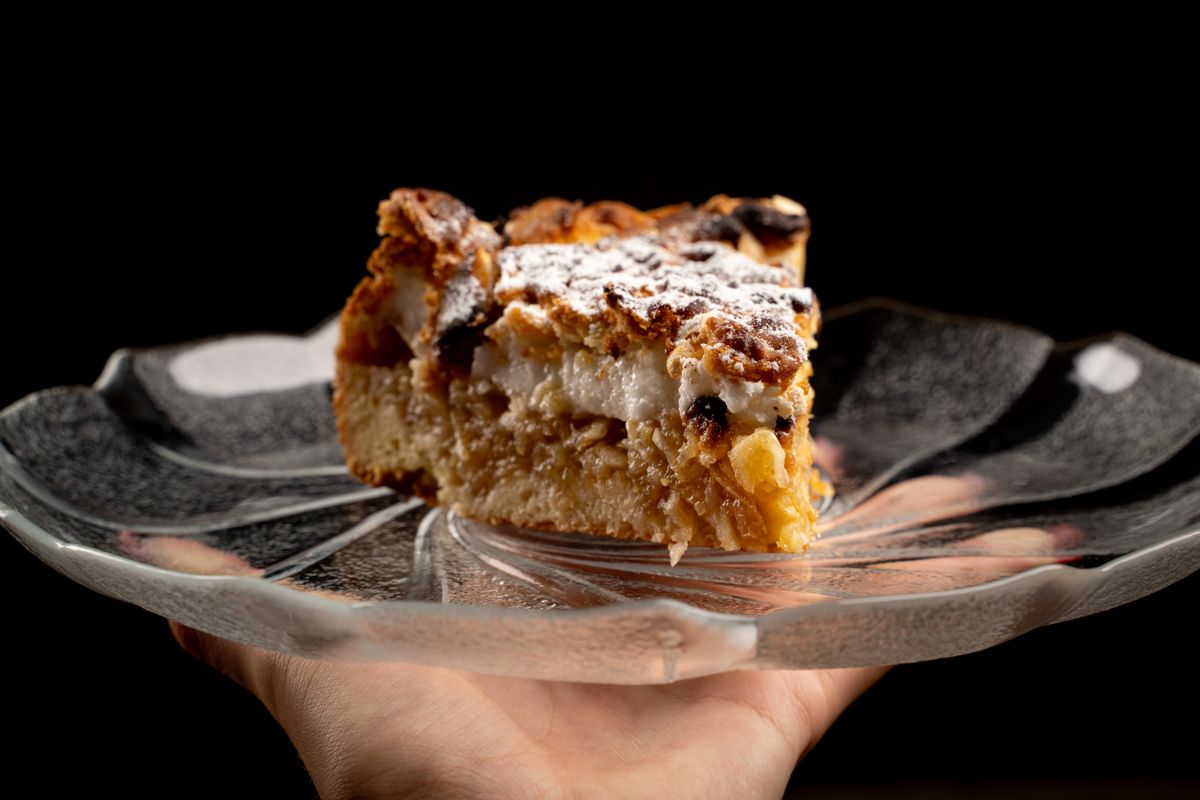
St. Louis gooey butter cake makes its intentions clear before the first bite: a tender base, a sticky butter-rich topping and a snowfall of powdered sugar. Its unmistakable texture comes from that contrast between the supporting cake and the soft layer above it. In the traditional bakery style, a sweet yeast dough sits beneath a filling made with butter, sugar, eggs and corn syrup, not the cream cheese topping familiar from many modern recipes.
The origin story is famously less precise. A popular local legend credits a baker’s mistake, often placed in the 1930s, with creating an unexpectedly gooey coffee cake that customers loved. But competing accounts name different people and dates, and no single invention story has been conclusively established. What is clear is that St. Louis embraced the result, turning an unusually rich cake into a regional fixture rather than an occasional baking curiosity.
The Famous Baking Accident Is a Legend, Not a Settled Fact
The most repeated account involves a German or German-American baker preparing a conventional cake and getting the ingredient proportions wrong. Instead of throwing out the unusually sticky result, the baker reportedly sold it, and discovered an audience. It is an appealing story of thrift and improvisation, particularly when connected to the Depression. Still, even reliable recipe histories introduce it with phrases such as “legend has it,” which should not disappear when the tale is retold.
A competing family account places an important episode in late 1942 or early 1943. Richard Danzer recalled baker Johnny Hoffman contacting his father, Herman Danzer, after a mistake produced something promising. In that telling, the two bakers worked together to refine the result. That account does not comfortably fit a definitive claim that the finished cake was invented in a particular year during the 1930s. The disagreement is part of the historical record, not a gap to fill with certainty.
The wider baking context is more helpful than naming a winner. German-style butter cakes, known as butterkuchen, were already part of the food culture of Midwestern communities. Similar preparations also existed in Louisville, Kentucky. Former St. Louis Post-Dispatch food editor Judy Evans has discussed those connections, suggesting that the dish may have traveled between cities with German populations and bakery traditions. The familiar St. Louis specialty developed within that broader world of rich, yeast-based cakes.
That background explains why the supposed mistake could become a recognizable product rather than an isolated mishap. Bakers had a format to adapt, and customers already understood coffee cake as something to eat with a drink or share during the day. The exact moment of invention remains uncertain, but the link between a sweet bread base and an indulgent topping shows up in traditional recipes still published today.
Related: 8 Things You Should Never Put Down the Drain: What to Do Instead
The “Gooey” Part Is More Than Extra Butter
The cake’s texture depends on two different layers doing different jobs. The yeast dough supplies structure and a slight chew, while the butter-and-sugar filling remains softer. Corn syrup gives the topping its characteristic gooey consistency. In Serious Eats’ recipe explanation, the topping thickens and caramelizes slightly during baking, producing a rich surface without turning the entire dessert into a dry, uniform crumb.
A traditional-style recipe from pastry chef Helen Fletcher illustrates the construction. Published by St. Louis Magazine, it begins with a sweet yeast dough containing milk, butter, sugar, an egg yolk, vanilla and flour. After rising, the dough is rolled and fitted into a nine-inch-square pan, covering the bottom and sides. A separate filling combines sugar, butter, salt, egg, corn syrup, flour, water and vanilla. It is a layered preparation, not simply a standard butter cake taken out of the oven early.
The baking endpoint is especially important. Fletcher’s instructions call for a lightly browned crust and a still-wiggly filling, then cooling before finishing with powdered sugar. Her warning is direct: “Do not overbake, or the gooey part will be too firm.” That guidance belongs to a complete recipe with specified ingredients, pan, and temperatures; it shouldn’t be turned into a general instruction to underbake any cake batter.
Recipe variations can change the flavor while preserving the basic contrast. The Serious Eats version uses dark brown sugar for deeper molasses and butterscotch notes, plus a little nutmeg in the dough. Fletcher suggests adding melted semisweet chocolate to the filling for a chocolate version. These are documented adaptations, not requirements for every traditional cake, and their differences help explain why one bakery’s slice may not taste exactly like another’s.
One Name Now Covers Two Distinct Cake Traditions
For many home bakers, gooey butter cake means a different formula: a cake-mix base topped with a cream cheese-and-sugar mixture. That version is generally easier because it eliminates the yeast-dough stage. Serious Eats describes it as more cheesecake-like and less chewy than the bakery-style cake. Neither description needs to become an argument about whether a family’s favorite dessert “counts”; the important point is recognizing that the methods produce different textures.
The distinction also prevents confusion when choosing a recipe. Someone seeking a sweet, chewy yeast base should not expect a boxed-mix preparation to reproduce it exactly. Conversely, someone remembering a tangy cream cheese topping may find that ingredient absent from a traditional bakery formula. Both preparations circulate under the same name, so the ingredient list is more informative than the title alone.
Within St. Louis, the cake’s identity extends beyond a single recipe. It appears in grocery stores, coffee shops and specialist bakeries, and it is commonly treated as coffee cake rather than reserved for a formal dessert course. Modern flavors include chocolate, lemon, and red velvet, while local coverage still recognizes straightforward, buttery versions. That range shows how a regional food can remain familiar even as individual businesses interpret it differently.
The lasting attraction is not difficult to understand. Gooey butter cake delivers a clear contrast: enough structure to serve in a piece, enough softness to make the topping feel extravagant. Its invention may remain disputed, but its appeal does not require a perfectly documented accident. St. Louis made the cake its own through repeated baking, selling, and sharing, and by insisting that, here, a little stickiness is exactly the point.