Fort Greene livery cab driver shot in face after minor crash as early-morning attack raises wider safety fears
A minor collision should have ended with exchanged information, insurance calls and an inconvenient morning. Instead, a 50-year-old livery cab driver was left bleeding from his face as an armed man disappeared into a Brooklyn residential complex.
The shooting unfolded at approximately 4:15 a.m. Friday, July 24, on North Portland Avenue between Park and Myrtle avenues in Fort Greene. The driver survived, but the attack has opened a far larger and darker question about what can happen to professional drivers when an ordinary traffic encounter turns violent before most of the city is awake.
A small crash became a close-range shooting
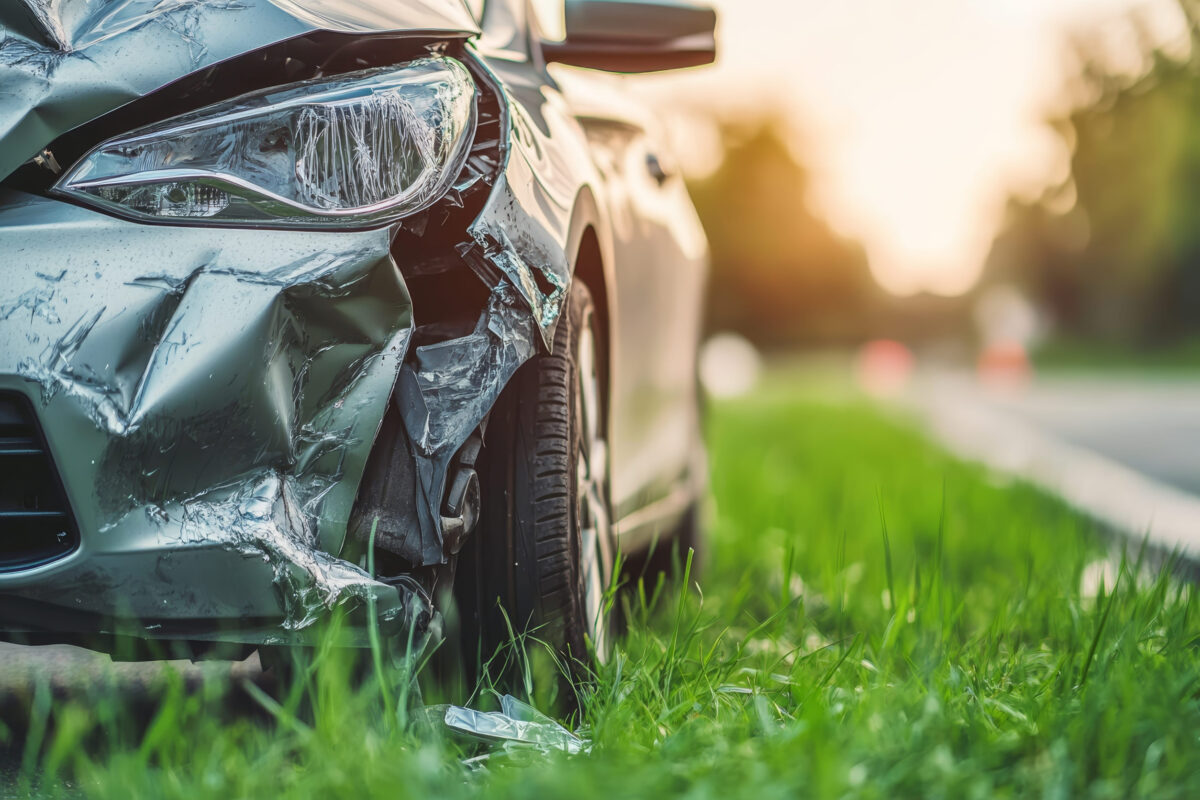
Police said the driver’s black SUV had been involved in a minor collision with a transport van. Shortly afterward, a gunman approached the driver’s side window and opened fire, striking the 50-year-old in his right cheek.
The victim remained awake and was able to speak with emergency workers as he was taken to NewYork-Presbyterian Brooklyn Methodist Hospital, where he was listed in stable condition.
That sequence gives the case its most disturbing feature. There was no reported high-speed chase, major wreck or prolonged public confrontation before the shooting.
What began as a routine collision suddenly placed a driver within inches of a gunman, trapped behind a steering wheel with little room to escape.
The entire case may depend on the crash
Detectives were working to determine how the collision was connected to the gunfire. Police had not established whether the shooter had been traveling in either vehicle, whether an argument followed the crash or whether the collision simply created the opportunity for the attack.
The shooting should therefore not be described as confirmed road rage, an ambush or an attempted robbery without supporting evidence. Each possibility would tell a dramatically different story, and none had been confirmed during the early stages of the investigation.
Investigators will likely need to reconstruct the incident second by second. They must establish where the transport van stopped, how the black SUV was positioned, and where the gunman came from before approaching the window.
Even a brief recording from a dashboard camera, nearby building or passing vehicle could clarify whether the attacker emerged from the van or arrived from somewhere else.
The collision itself may also contain evidence. Damage to the vehicles could help police determine how the crash occurred and whether either driver tried to move away afterward.
Police had not publicly disclosed whether investigators recovered surveillance video, shell casings, a weapon or other physical evidence from the scene.
Another Brooklyn driver was attacked at the same early-morning hour
The timing adds an unsettling dimension. Thirteen days before the Fort Greene shooting, another young car-service driver was shot during an attempted robbery and carjacking in Brooklyn at approximately 4:15 a.m.
The July 11 attack occurred on Parkside Avenue near Bedford Avenue in Prospect-Lefferts Gardens.
There is no publicly reported evidence connecting the two shootings. The circumstances were also different.
In the earlier case, police said a passenger demanded the driver’s money, phone and vehicle keys before shooting him in the neck and fleeing.
Still, the matching hour is difficult to ignore. Two Brooklyn professional drivers were shot shortly after 4 a.m. within less than two weeks, when streets are quieter, witnesses may be scarce, and many businesses are closed.
That coincidence does not prove a crime pattern, but it exposes a predictable window of vulnerability for people who work while much of the city sleeps.
The earlier victim, identified as 21-year-old Danish Sarwar, was reportedly unconscious for more than a week. His family said he could not move or feel his left arm and faced a long recovery after the bullet struck his neck.
His brother, who also worked as a driver, said the attack left him questioning whether either of them should return to the profession.
Behind the wheel, there was almost nowhere to run

A vehicle can feel like protection until an armed person reaches the window. A seated driver is surrounded by a steering wheel, door, center console, and seat belt.
Starting the vehicle or pulling away may take longer than the gunman needs to raise a weapon.
That physical disadvantage is particularly severe for livery and car-service workers. New York City classifies livery vehicles as for-hire cars dispatched through licensed bases to collect passengers.
The driver’s workplace is not a controlled office. It is a mobile space that strangers can approach, enter or block.
Drivers regularly pull over, lower windows, respond to dispatch instructions and stop at unfamiliar addresses, often without knowing who may be waiting nearby.
In the Fort Greene case, the minor crash may have removed even the limited protection that movement provides. Once the SUV stopped, the driver became a stationary target.
The attack shows how a car can shift from a source of income to a confined crime scene in seconds.
“Stable condition” is not the end of the story
The driver’s stable condition is encouraging, but that phrase should not be mistaken for a complete recovery. It describes his immediate medical status after the shooting.
It does not tell us whether he will need additional treatment, when he can return to work, or how the attack may affect him emotionally.
Police had not released the victim’s identity or detailed the full extent of his injuries. It would therefore be inaccurate to assume that he suffered permanent damage or that he will quickly return to normal life.
What is known is that he was shot in the cheek at close range and transported to a hospital while conscious.
The earlier July 11 attack illustrates how incomplete the word “stable” can be. Initial reports said that the driver was expected to survive, but later accounts described a far more difficult recovery.
The Fort Greene victim’s outcome may be very different, but the comparison offers an important warning. Survival is the first measure of relief, not necessarily the final chapter.
Recovery can continue long after police tape is removed and the street reopens.
One gunshot can create a second financial crisis

For a professional driver, physical recovery is only one part of the damage. Time spent in a hospital or away from the road may mean canceled trips and lost income.
Damage from the collision or gunfire may also keep the vehicle out of service, even after the driver is medically cleared to leave the hospital.
The initial reports did not say whether the driver owned the black SUV, leased it or worked through a livery base. They also did not explain who would cover repairs, medical costs or lost earnings.
Those unanswered financial questions matter because the victim’s vehicle may be both his workplace and one of his largest expenses.
A single bullet can therefore punish the victim repeatedly. It can injure the body, remove the ability to work, and damage the equipment required to earn a living.
The gunman may disappear in seconds, while the financial consequences remain for weeks or months.
The burden may also extend to relatives who rely on the driver’s income. Many professional drivers work long or irregular shifts because each completed trip matters.
Even without permanent injury, fear alone may make returning to the same early-morning routes difficult.
The gunman’s escape carried fear into a residential complex
Police described the suspect as a large-built man wearing a black shirt and gray shorts. After the shooting, he reportedly ran from North Portland Avenue and entered a nearby building at the Walt Whitman NYCHA complex.
No arrest had been announced in the initial report.
That escape route complicates the investigation, but it should not be used to blame residents of the housing development. Police had not said that the gunman lived there or had any established connection to the complex.
He may have entered the building because he knew the property, because someone was waiting inside, or simply because it offered a route away from the street.
For residents, however, the distinction may offer little immediate comfort. An armed suspect reportedly moving into a residential building can turn an outside crime into a source of fear for families inside.
People who had no connection to the crash or shooting suddenly faced police activity around their homes and uncertainty about whether the attacker remained nearby.
The escape also highlights the limits of urban surveillance. New York contains countless private cameras, building systems and vehicle recorders, yet a suspect can still vanish through darkness, poor camera angles or multiple exits.
Police had not disclosed whether clear footage captured the gunman’s face or movements.
Two investigations now test the limits of driver protection

The Fort Greene shooting and the July 11 attempted carjacking are separate investigations, but they raise the same basic concern.
Drivers are expected to transport strangers and navigate unpredictable streets, yet their protection often depends on a locked door, a camera and the hope that help arrives quickly.
Dashcams may document an attacker, but they do not necessarily stop a bullet. Emergency buttons may alert dispatchers or police, but they cannot eliminate the seconds in which a driver is trapped.
Partitions may provide some protection, although many modern livery and app-based vehicles are not equipped with the barriers traditionally associated with yellow cabs.
The earlier July 11 case showed the value of video after an attack. Police released dashcam images of the suspect, who had reportedly been picked up for what was supposed to be a trip to New Jersey.
He escaped with the driver’s phone and cash but left without the vehicle.
The Fort Greene investigation may similarly depend on digital evidence. Trip records, dispatch logs, phone data and video could help establish why the driver was on North Portland Avenue and whether anyone connected to his work knew his location.
Police had not said whether any passenger or recent fare was linked to the shooting.
What we know and what remains dangerously unclear
We know that a 50-year-old livery driver was shot in his right cheek after his black SUV collided with a transport van.
We know he was conscious, able to speak with emergency workers, and listed in stable condition.
We also know the gunman fled toward a Walt Whitman Houses building and remained wanted during the initial hours of the investigation.
What we do not know is just as important. Police had not established a motive, identified a relationship between the shooter and either vehicle, or confirmed that the attack was caused by road rage.
It was also unclear whether the gunman said anything before firing or whether the victim had any opportunity to escape.
Anyone with relevant information can contact the NYPD Crime Stoppers hotline anonymously at 800-577-TIPS.
For now, the Fort Greene case remains a story about an ordinary disruption that became an act of extraordinary violence.
A minor crash stopped a livery driver’s vehicle for only a few moments. Those moments were enough for someone to walk to his window, pull a trigger, and turn the city’s early-morning silence into another warning for the people who keep New York moving after dark.