Harrison Ford’s ‘Whims’ Attack on Trump Takes on New Weight After Major 2026 Climate Rollbacks
Harrison Ford’s warning about President Donald Trump was delivered in October 2025, but developments in Washington have made it even more relevant in 2026.
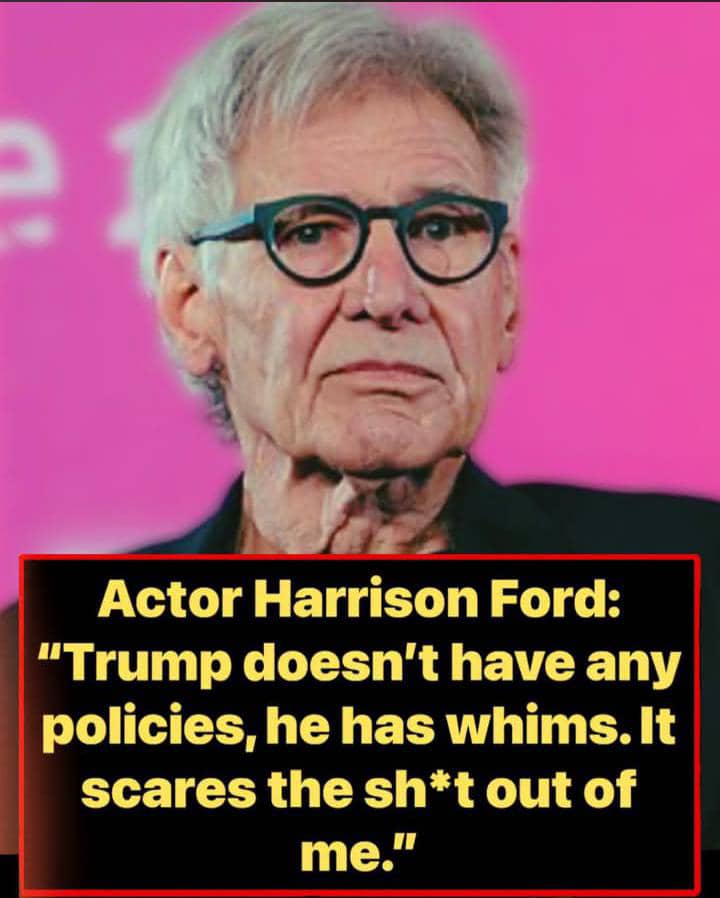
“Trump doesn’t have any policies; he has whims. It scares the shit out of me,” Ford told The Guardian while discussing the president’s environmental agenda. The actor also accused Trump of governing through “ignorance,” “hubris” and dishonesty.
Ford’s claim that Trump has no policies was clearly rhetorical. The administration has published an extensive energy plan, issued formal rules and carried out sweeping regulatory changes. What Ford appears to fear is not the absence of government action, but a style of leadership that he believes is unpredictable, dismissive of science, and willing to reverse environmental protections rapidly.
That debate is no longer theoretical. In 2026, the Trump administration has moved deeper into fossil fuel expansion, vehicle deregulation and an aggressive effort to reshape how the federal government responds to climate change.
Ford’s Warning Collides With a Historic EPA Decision
The biggest development came on February 12, 2026, when the Environmental Protection Agency rescinded the 2009 greenhouse-gas endangerment finding.
That finding had established that greenhouse gases threaten public health and welfare. It became the legal foundation for federal greenhouse-gas standards covering new cars, trucks and engines.
By eliminating it, the EPA also repealed federal greenhouse-gas standards for light, medium and heavy-duty highway vehicles. Manufacturers are no longer required under those regulations to measure, report or control greenhouse-gas emissions from their vehicles and engines. The action did not remove traditional air-pollution rules covering substances such as soot and smog-forming pollutants.
EPA Administrator Lee Zeldin described the move as relief from years of expensive federal restrictions. He argued that the finding had produced “trillions of dollars in hidden costs for Americans”. He said the administration was following what it considered the proper interpretation of the Clean Air Act.
The administration estimates that the rollback will save more than $1.3 trillion in regulatory costs. Critics dispute the administration’s reasoning and argue that eliminating the finding weakens one of the country’s most important tools for addressing climate change. Multiple legal challenges are underway, meaning the fight could eventually return to the Supreme Court.
For Ford, this is exactly the kind of federal retreat he was warning about. His language was theatrical, but the consequences he described are now tied to a concrete regulatory transformation affecting vehicles sold across the United States.
Trump Calls It Energy Dominance, Not Climate Retreat
The White House rejects the idea that its approach is chaotic or based on presidential whims. It presents the administration’s actions as parts of a coordinated campaign to lower costs, expand domestic energy and reduce dependence on foreign suppliers.
In February 2026, the White House said Trump’s agenda had opened more federal land to oil, gas and coal development, increased drilling approvals and supported record levels of liquefied natural-gas exports. It also highlighted investments in nuclear energy and a $625 million commitment to support the coal industry.
The administration has also connected energy policy to one of 2026’s largest economic concerns: the enormous electricity demand created by artificial-intelligence data centers.
In March, Amazon, Google, Meta, Microsoft, OpenAI, Oracle and xAI signed what the White House called a Ratepayer Protection Pledge. The companies agreed to secure new electricity supplies and pay for infrastructure upgrades connected to their data centers rather than passing those costs directly to households.
That initiative complicates any simple description of Trump’s agenda as merely anti-environmental. The administration supports some lower-carbon technologies, particularly nuclear energy, but it has rejected federal attempts to force a rapid transition away from oil, gas and coal.
Trump has made his position unmistakable. Speaking at the United Nations in 2025, he called climate change “the greatest con job ever perpetrated on the world” and warned countries against what he described as a green-energy scam.
Supporters see an economic strategy built around abundant energy, lower vehicle costs and industrial growth. Ford sees a dangerous refusal to confront the long-term effects of greenhouse-gas emissions.
The disagreement is not really about whether Trump has an agenda. It is about whether that agenda protects Americans from economic hardship or exposes them to greater environmental risk.
Ford Carried the Argument Directly Into 2026
Ford has not abandoned the issue since making his fiery remarks.
During a May 2026 commencement address at Arizona State University, he told graduates that the world his generation was handing them was “a real mess.” He urged them to build new solutions, defend people who lack power, and bring divided communities together.
The speech was less personal than his attack on Trump, but the underlying message was the same. Ford believes leadership should be judged by whether it protects the natural systems people depend on, including clean water, forests, pollinators and a stable climate.
His involvement is not a newly discovered celebrity hobby. Ford has worked with Conservation International since the late 1980s and serves as the organization’s vice chair. He has repeatedly used his public profile to advocate for biodiversity protection and climate action.
Still, Ford’s most explosive statement requires context. Saying Trump has “whims” is an opinion, not a neutral description of the administration. Saying he knows of no “greater criminal in history” was also Ford’s personal condemnation, not an allegation that Trump had been convicted of an environmental crime.
The documented facts are strong enough without exaggeration. Trump’s administration has dismantled major federal vehicle-emissions rules, promoted expanded fossil fuel production and withdrawn from international climate commitments. It argues those decisions protect consumer choice, national security and economic growth. Ford believes they sacrifice the future for short-term political and financial gain.
That is why his 2025 outburst still lands in 2026. Ford may have delivered the line months ago, but the policies now moving through Washington have ensured that the argument behind it is far from over.