“I Have No Rights”: Minnesota Lawsuit Turns ICE Raids Into a National Test of Constitutional Power.
A five-year-old girl should not have to carry the weight of federal immigration policy on her way to get ice cream. But in Minnesota, according to a lawsuit filed by the American Civil Liberties Union and its partners, ordinary family routines became moments of fear after federal immigration agents surged into the Twin Cities.
Parents carried passport cards to run errands. Neighbors used whistles to warn one another when agents appeared. People who had lived in Minnesota for years began thinking twice before driving, shopping, working, or standing outside their own homes.
The case, known as Hussen v. Noem, is more than another political fight over immigration. It is a direct constitutional challenge to how federal power is being used on American streets. The lawsuit accuses the Trump administration, the Department of Homeland Security, Immigration and Customs Enforcement, Customs and Border Protection, and related officials of authorizing or carrying out racial profiling, suspicionless stops, and warrantless arrests in Minnesota.
The plaintiffs say Somali and Latino residents were targeted not because of individualized evidence, but because of how they looked, how they spoke, or where federal agents assumed they were from. That is the heart of the case. It asks whether the government can use race, accent, and perceived ethnicity as shortcuts for suspicion.
The answer should matter to every American, because the case raises a broader constitutional question about federal power.
A Normal Errand, Then Agents at the Driveway
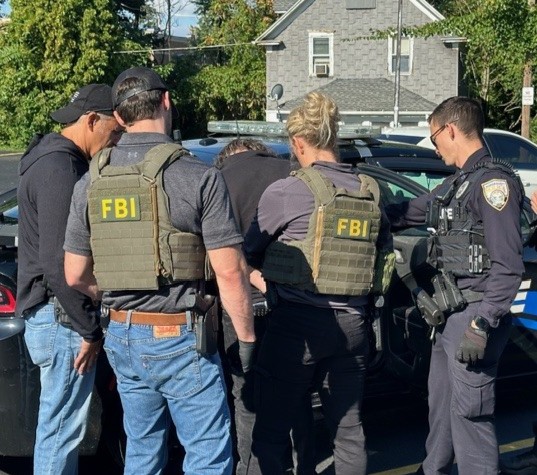
One of the most powerful accounts in the ACLU’s reporting involves a Latino U.S. citizen identified as R.M. because of fear of retaliation. He and his family had stayed home while immigration agents patrolled the area. Then his young daughter asked for ice cream. She reportedly told her family she was brave enough to go.
So they went. When they returned, ICE agents were blocking the family’s driveway. R.M. brought his frightened daughter inside, then came back out to record what was happening. According to his account, an agent approached him on his own property, asked where he was from, and demanded identification. When R.M. asked why his documents were needed, the agent allegedly pointed to his accent as the reason.
That detail cuts through the legal language like a blade. An accent is not a warrant. An accent is not probable cause. An accent is not proof that someone is undocumented, removable, or guilty of anything.
R.M. said he was handcuffed and pulled toward a van before agents eventually released him after he said he had a passport card. In court testimony, he described the moment with a sentence that now defines the human stakes of the case: “I have no rights.”
That is not just fear talking. It is the sound of someone watching the protections he believed he had collapse in real time, and it leads directly to the lawsuit’s central claim.
The Lawsuit’s Central Claim

The ACLU, the ACLU of Minnesota, Covington & Burling LLP, Greene Espel PLLP, and Robins Kaplan LLP filed the class-action complaint on behalf of three Minnesota residents and a proposed class of similarly situated people. The lawsuit challenges three alleged practices: stopping people to question them about immigration status without reasonable suspicion, arresting people without warrants or probable cause, and targeting Somali and Latino residents because of perceived race or ethnicity.
The complaint argues that these practices violate the Fourth Amendment’s protection against unreasonable seizures and equal protection principles that bar discriminatory enforcement. It frames the dispute as a question of whether federal agents can stop or arrest people without the lawful basis required by the Constitution.
The case is not framed as a complaint about one bad stop or one careless officer. It alleges something broader: a dragnet. According to the complaint, masked federal agents in large numbers changed civic life in the Twin Cities by making ordinary activities feel dangerous for communities marked by race, language, and immigrant identity.
The plaintiffs are not asking only for damages or apologies. They are seeking declaratory and injunctive relief, meaning they want the court to declare the challenged practices unlawful and stop them from continuing. That request becomes especially important in Minnesota.
Why Minnesota Became the Flashpoint
Minnesota is home to the largest Somali population in the United States, with more than 76,000 people of Somali descent statewide, according to the complaint. The state is also home to more than 388,000 Latino residents. Many live, work, study, worship, shop, and raise families in the Twin Cities area.
That is what makes the allegations so explosive. The lawsuit says the enforcement campaign did not simply happen in immigrant communities by coincidence. It claims Somali and Latino residents became the center of attention because federal officials and agents treated appearance and perceived ethnicity as triggers for suspicion.
This matters because Minnesota’s Somali and Latino communities are not temporary shadows passing through the state. They are woven into its businesses, schools, hospitals, restaurants, mosques, churches, civic groups, and neighborhoods. Many are U.S. citizens. Many have lawful permanent residence or other legal status. Many were born in Minnesota and know no other home.
When enforcement tactics make those residents feel hunted, the damage moves beyond the people detained. It spreads to families, workplaces, classrooms, storefronts, and the public trust, which is why the lawsuit’s accounts from citizen plaintiffs matter next.
U.S. Citizens Say They Were Swept In
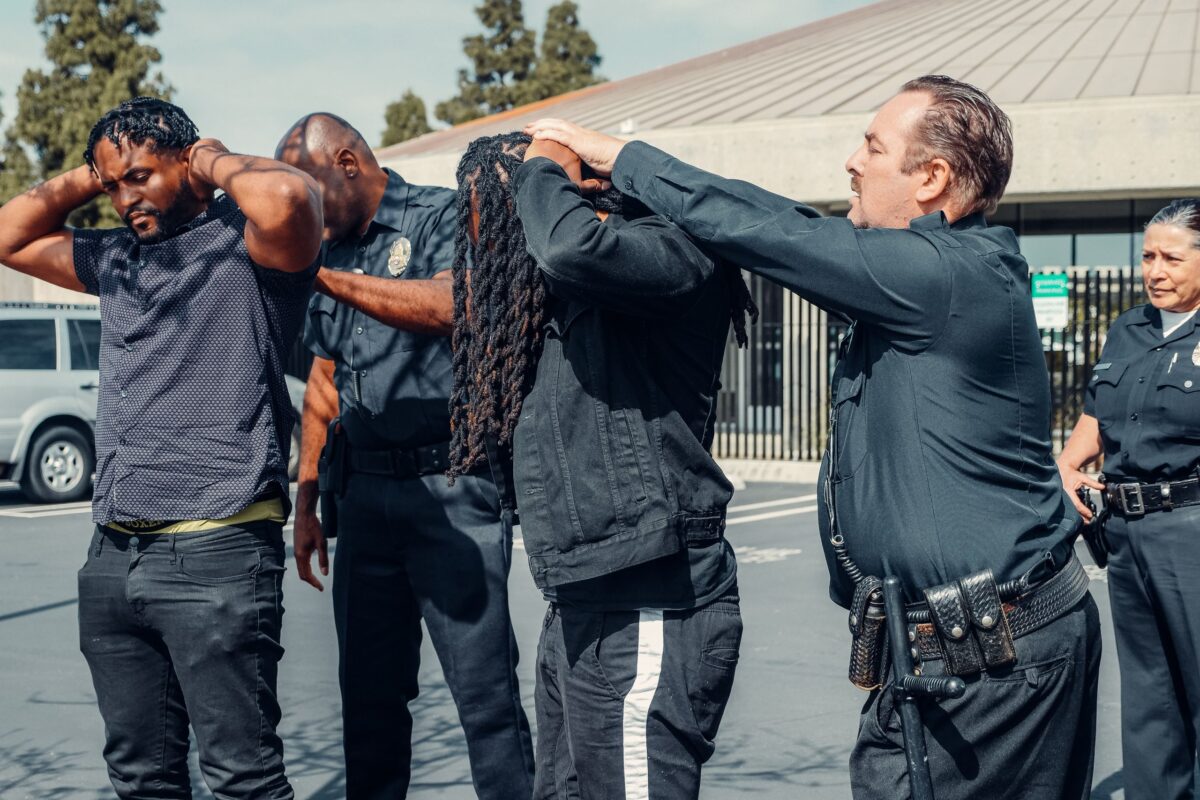
The lawsuit includes accounts of U.S. citizens allegedly being stopped, detained, shackled, or questioned despite insisting they were citizens.
One plaintiff, Mubashir Khalif Hussen, is described by the ACLU as a 20-year-old U.S. citizen. According to the ACLU, he was walking to lunch in the Cedar-Riverside neighborhood when masked ICE agents stopped him. He reportedly repeated that he was a citizen, but agents allegedly refused to look at his ID. He was taken to the Whipple federal building, shackled, fingerprinted, and released only after showing a photo of his passport card.
Another account in the complaint describes a Latino man identified as Javier Doe, a U.S. citizen by birth who worked at a Target store in Richfield. He allegedly encountered masked agents in a parking lot, was asked if he was “from here,” and was tackled and detained. The complaint says he believed the questioning was based on the fact that he and a coworker were Latino.
These stories matter because they puncture a common assumption: that aggressive immigration enforcement only affects people without legal status. The lawsuit argues that when agents rely on race, ethnicity, accent, or neighborhood, citizenship itself may not shield a person from being stopped first and verified later. That turns freedom upside down.
That turns freedom upside down.
In a constitutional system, the government is supposed to have a lawful basis before it restrains someone. The person should not have to prove innocence after being grabbed, cuffed, transported, or questioned under threat. That is the legal boundary the lawsuit says was crossed.
The Fear Became Public Life
The ACLU article describes a community forced to adapt quickly. Residents kept identification close. Neighborhood groups organized watch systems. Whistles became warning signals. People marched in freezing temperatures. Families reconsidered basic routines.
Human Rights Watch later reported that Operation Metro Surge affected access to healthcare, education, work, housing, and food, while residents and local groups organized mutual aid to help people afraid to leave home. The report said the operation involved thousands of arrests and caused deep fear across affected communities.
That is the hidden cost of enforcement by intimidation. Even people who have never been arrested begin living in the shadow of arrest. A parent may skip a doctor’s appointment. A worker may miss shifts. A child may miss school. A shop may lose customers because people are too afraid to walk in.
A city can continue to function on paper while its daily life quietly fractures, leading to the court’s mixed signals.
The Court’s Mixed Signal
The court did not grant the ACLU’s request for a preliminary injunction. That means it did not immediately stop the challenged practices as the case proceeded.
But the ACLU said the court made an important finding: the plaintiffs had shown that ICE and CBP adopted unlawful and unconstitutional policies authorizing stops based on race or ethnicity and without reasonable suspicion, as well as arrests without probable cause. The court denied early relief largely because it found the named plaintiffs were not at immediate risk, especially after a drawdown in federal agents.
That distinction is crucial. The denial of a preliminary injunction was not a clean victory for the government’s conduct. It was a procedural ruling about immediate risk, made in a case where the court still acknowledged serious constitutional concerns.
The lawsuit remains a warning flare because the larger constitutional question remains unresolved.
What This Case Is Really About
Immigration enforcement is legal. But legal enforcement must still obey the Constitution and the limits it sets on government power.
The government can investigate, arrest, and deport people when it follows lawful procedures. What it cannot do, according to the principles at stake in this case, is turn skin color, language, accent, or perceived nationality into a substitute for evidence and lawful suspicion.
That is why Hussen v. Noem deserves national attention. It asks whether constitutional rights are strong enough to protect people when the agents at the door are masked, armed, and backed by the full force of federal power.
The phrase “I have no rights” should unsettle everyone. It should unsettle immigrants, citizens, conservatives, liberals, lawyers, parents, workers, and anyone who believes government power must have limits.
Because once the state can stop one person based on appearance, it can find a reason to stop another. Once citizenship papers become something people carry to buy ice cream, the country has already crossed into dangerous territory.
Minnesota’s lawsuit is about Somali and Latino residents, but its message is bigger than Minnesota. Rights are not supposed to depend on an officer’s assumption. Freedom is not supposed to vanish in a parking lot, a driveway, a workplace, or a neighborhood where immigrants live.
A government powerful enough to enforce the law must also be disciplined enough to obey it.
That is the test now before the courts. And for the families who say they were stopped, cuffed, frightened, and treated as outsiders in their own communities, the question is painfully simple: when the Constitution is needed most, will it still show up?