Iran Denies Peace Negotiations as Trump’s Deal Claim Creates New Uncertainty Over War and Diplomacy
The world briefly appeared to be moving toward a diplomatic breakthrough when President Donald Trump announced that peace negotiations with Iran were set to begin. However, within hours, Iran rejected that claim, creating a new dispute over whether a serious diplomatic process had actually started or whether both sides were describing completely different conversations.
The disagreement has placed the future of the Iran conflict under a cloud of uncertainty. While Washington suggested that discussions could prevent further military escalation, Tehran insisted that no direct talks with the United States were taking place. Instead, Iranian officials said they were only communicating with Oman about temporarily reopening the Strait of Hormuz.
The conflicting statements reveal a deeper challenge facing any potential Iran peace negotiations. Before the two sides can resolve issues such as nuclear restrictions, military activity and regional security, they must first agree on whether negotiations even exist. That uncertainty has left governments, energy markets and millions of people watching the next move carefully.
Trump’s Peace Announcement Collides With Iran’s Public Rejection

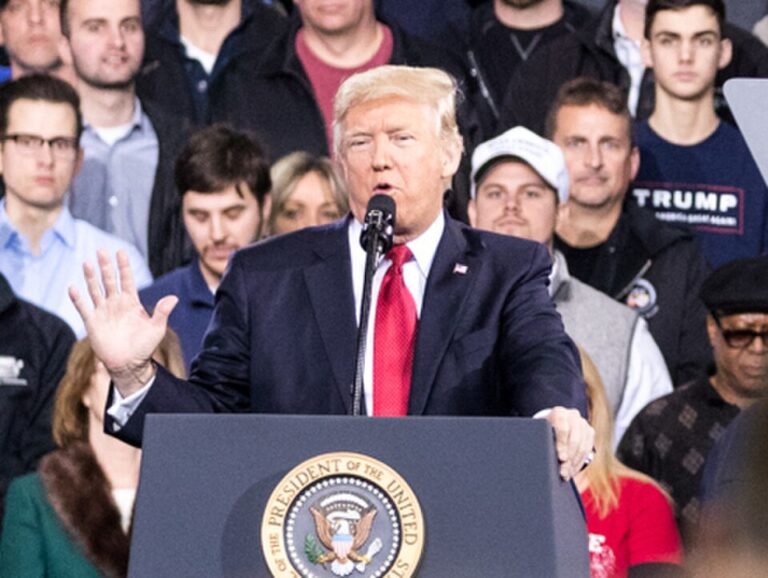
President Trump’s announcement created immediate expectations that a major shift in the conflict was underway. He said the United States had delayed a planned military strike because diplomatic progress appeared possible. According to Trump, discussions would focus on ending the conflict, reopening the Strait of Hormuz and addressing Iran’s nuclear capabilities.
The announcement was significant because it suggested that military pressure had given way to negotiation. After weeks of rising tensions, the possibility of peace negotiations with Iran offered a different path. Instead of another round of confrontation, Washington presented diplomacy as the next stage.
However, Iran quickly challenged that interpretation. Iranian Foreign Ministry spokesperson Esmaeil Baghaei stated that Tehran was not engaged in direct negotiations with Washington. Iranian officials said there was no Iranian delegation preparing for talks and no formal meeting had been arranged.
That response changed the entire meaning of Trump’s announcement. Rather than confirming a diplomatic breakthrough, Iran’s denial created questions about whether the United States and Iran were even discussing the same process.
The disagreement is not simply about terminology. In international diplomacy, the language used by governments can determine political consequences. Calling a discussion “peace negotiations” suggests commitment, while describing it as communication through a mediator allows countries to maintain flexibility.
Iran has historically been cautious about appearing to negotiate under military pressure. Accepting direct talks with Washington could create domestic criticism among Iranian political groups that oppose concessions. By emphasizing discussions with Oman rather than the United States, Tehran maintains more control over the public message.
The United States, meanwhile, has an interest in showing that pressure can produce diplomatic results. Presenting the situation as Iran peace negotiations may demonstrate that economic and military measures are creating movement toward an agreement.
The result is a diplomatic battle happening before formal negotiations have even begun. Both sides appear focused on controlling expectations, shaping public opinion, and protecting their strategic positions.
The Missing Agreement Behind the Headlines Raises Global Concerns
The phrase Iran peace negotiations immediately attracted international attention because the conflict affects far more than the two governments involved. Any escalation in the Persian Gulf has consequences for energy markets, shipping routes and economies around the world.
The Strait of Hormuz sits at the center of this concern. The narrow waterway connects the Persian Gulf with global markets and remains one of the most important energy transportation routes on the planet. Millions of barrels of oil pass through the region, making stability there essential for international trade.
According to energy analysts, disruptions around Hormuz can quickly influence global oil prices. Previous crises in the region have shown how uncertainty alone can affect transportation costs, inflation concerns and consumer confidence.
That is why Trump’s announcement immediately affected financial markets. Investors interpreted the possibility of Iran peace negotiations as a sign that military risks could decrease. However, Iran’s denial introduced fresh uncertainty about whether those expectations were realistic.
For ordinary people, the consequences of the conflict are not limited to diplomatic statements. A prolonged crisis could influence fuel prices, airline expenses and the cost of goods transported through global supply chains.
Families thousands of miles away from the Middle East may never follow every diplomatic detail, but they can feel the impact of instability through everyday expenses. Energy markets are deeply connected, and disruptions in one region can create pressure worldwide.
The uncertainty also affects businesses operating in the Gulf region. Shipping companies, manufacturers and energy producers must prepare for multiple possibilities, including a return to confrontation or a gradual reopening of commercial routes.
This economic pressure explains why countries across the region continue supporting diplomatic efforts. Stability is not only a political goal. It is an economic necessity for governments and communities that depend on predictable trade.
Why the Strait of Hormuz Became the Center of the Conflict

The debate over Iran peace negotiations cannot be separated from the strategic importance of the Strait of Hormuz. The waterway has become one of the most important pressure points in the broader conflict because it connects military concerns with economic survival.
Iran has long viewed the Persian Gulf as a vital part of its national security interests. The country has argued that regional security arrangements must recognize Iran’s role and concerns. The United States and its allies have emphasized freedom of navigation and uninterrupted global commerce.
These competing priorities have created repeated tensions. Every disagreement over shipping access carries wider implications because the consequences extend beyond regional borders.
The current discussions with Oman appear focused on temporarily reopening the strait. Such an arrangement could reduce immediate pressure and create space for further diplomacy. However, reopening shipping routes would not automatically solve the larger political dispute.
The challenge is that both sides view the issue through different perspectives. Washington sees unrestricted access as a global economic necessity. Tehran sees the waterway as part of a larger security environment where Iran wants influence.
Historical examples show that temporary agreements in the Middle East often require careful management. Limited arrangements can reduce tensions, but they frequently fail when deeper disagreements remain unresolved.
The Strait of Hormuz represents more than a shipping route. It represents the wider struggle between military power, economic interests and diplomatic influence.
A successful Iran peace negotiations process would need to address those competing priorities. Otherwise, temporary calm could simply delay another confrontation.
Iran’s Nuclear Program Remains the Hardest Barrier to Lasting Peace

Although the Strait of Hormuz dominates recent headlines, Iran’s nuclear program remains the most complicated issue in any potential agreement. Disagreements over nuclear activities have shaped relations between Washington and Tehran for decades.
The United States has consistently demanded limits that prevent Iran from developing nuclear weapons capabilities. Iran has maintained that its nuclear program serves peaceful purposes and that it has the right to pursue civilian technology.
These opposing positions have made previous diplomatic efforts extremely difficult. Any future Iran peace negotiations would likely need detailed discussions about uranium enrichment, international inspections, sanctions relief, and long-term security guarantees.
The nuclear issue also creates challenges because both sides face domestic political pressure. American leaders must demonstrate that any agreement protects national security interests. Iranian leaders must avoid appearing to surrender under foreign pressure.
Past diplomatic efforts show how fragile such agreements can become. The 2015 nuclear agreement demonstrated that Washington and Tehran could reach a complex arrangement, but later political changes damaged the framework.
That history influences current negotiations. Both sides understand that reaching an agreement is only the first challenge. Maintaining trust and ensuring compliance can be even more difficult.
This is why a discussion about reopening Hormuz does not automatically represent a complete peace agreement. Shipping access may address an immediate crisis, but nuclear concerns require a much broader settlement.
The future of Iran peace negotiations will likely depend on whether both governments can move beyond short-term political victories and focus on long-term stability.
Oman’s Quiet Role Shows Diplomacy Continues Despite Public Disagreement
While Iran denies direct talks with the United States, Oman’s involvement demonstrates that diplomatic channels remain active. Oman has repeatedly acted as a bridge between governments that struggle to communicate openly.
The country has maintained relationships with Iran, the United States and other Gulf nations. That position has allowed Oman to facilitate conversations during previous periods of tension.
In the current crisis, Oman’s role appears focused on discussions surrounding the Strait of Hormuz. Although these conversations may not qualify as formal Iran peace negotiations, they represent an attempt to prevent further escalation.
Indirect diplomacy is common when governments face political obstacles. Countries can exchange messages through trusted partners without immediately making public commitments.
However, indirect communication also creates risks. Messages can be misunderstood, and public expectations can grow faster than actual progress.
The current disagreement between Washington and Tehran demonstrates that problem clearly. Trump’s announcement suggested a major diplomatic development, while Iran described a much narrower discussion.
Both interpretations can exist at the same time, but they point toward different outcomes.
The success of future Iran peace negotiations may depend on whether mediators can transform limited communication into a recognized process accepted by both sides.
The World Waits to See Whether Diplomacy Can Survive the Pressure

The next stage of the Iran conflict will depend on actions rather than announcements. Statements from leaders can create optimism, but lasting agreements require verified commitments and difficult compromises.
The first major test will be whether the United States and Iran establish a clear negotiating framework. Without agreement on participants, goals, and expectations, diplomacy could remain trapped in public disagreements.
The second test will involve the Strait of Hormuz. If shipping access improves and tensions decrease, it could provide evidence that limited cooperation is possible.
The third challenge will be addressing the nuclear dispute. A lasting agreement cannot avoid the issues that created years of confrontation between Washington and Tehran.
For now, peace negotiations with Iran remain uncertain. The United States says diplomacy is moving forward, while Iran says direct talks have not begun.
That contradiction reflects the complicated nature of modern diplomacy. Peace is rarely created through one announcement or one meeting. It develops through patience, verification and the willingness of governments to accept difficult compromises.
The world is now watching whether this moment becomes the beginning of a genuine diplomatic opening or another missed opportunity in a long history of conflict. The answer may depend not only on what leaders say publicly, but on what they are willing to do when the cameras are gone.