Morocco Names a $1 Billion Highway After Trump, Turning a 655 Mile Road Into a Global Political Statement.
A highway stretching more than 650 miles across Morocco’s Atlantic frontier has suddenly become one of the most politically charged roads in the world. Morocco has officially confirmed that the massive Tiznit Dakhla Expressway will be renamed the Donald J. Trump Highway, honoring former U.S. President Donald Trump for his 2020 decision to recognize Morocco’s sovereignty claim over Western Sahara.
The move transforms a major infrastructure project into a symbol of diplomacy, economics, and a decades-long territorial dispute. The highway, which cost nearly $1 billion, connects Morocco’s northern regions with the far south, crosses into Western Sahara, and now carries a name tied directly to one of the biggest foreign policy decisions of Trump’s first administration.
A 1,055-Kilometre Highway Becomes a Symbol of U.S. Morocco Relations.

The announcement came after King Mohammed VI sent a letter confirming that Morocco had officially approved the highway’s new name. The monarch described the decision as a personal expression of appreciation toward Trump and highlighted the former president’s recognition of Morocco’s claim over Western Sahara in 2020. This diplomatic shift changed Washington’s long-standing position on the dispute.
The road itself is not a small symbolic project. The 1,055-kilometer route, roughly 655 miles long, represents one of Morocco’s largest transportation investments in recent history. It links major southern cities, including Laayoune and Dakhla, while creating a direct economic corridor designed to improve trade, tourism and commercial movement along the Atlantic coast.
For U.S. audiences, the significance goes beyond a highway name. The decision shows how infrastructure can become a tool of international diplomacy, with a single road now connecting a $1 billion investment, a five-decade territorial dispute, and a major U.S. foreign policy decision.
Trump’s 2020 Western Sahara Decision Still Shapes Global Politics
The highway naming is closely tied to Trump’s December 2020 proclamation recognizing Moroccan sovereignty over Western Sahara. The decision came as part of a broader diplomatic agreement in which Morocco agreed to normalize relations with Israel, creating one of the most significant Middle East and North Africa diplomatic developments of that year.
Before that announcement, the United States had maintained a more neutral position on the sovereignty question. Trump’s recognition gave Morocco a major diplomatic victory because it came from a permanent member of the United Nations Security Council and encouraged other governments to reconsider their positions.
Morocco has continued to point to the decision as a historic moment. The king’s message emphasized that the recognition would remain part of Moroccan national memory, describing it as an event that would be remembered across generations.
Why This Highway Matters More Than Its Name
The Tiznit Dakhla Expressway was built as a strategic economic route, not simply a ceremonial project. Morocco designed the corridor to improve transportation between northern cities and the southern provinces, reducing travel challenges across a region known for long desert distances and difficult terrain.
The project includes hundreds of kilometers of upgraded roadway, new infrastructure improvements and safety enhancements. Officials have said the highway is expected to benefit millions of residents by improving access to businesses, services and investment opportunities across southern Morocco.
The economic ambitions are significant. Morocco wants the corridor to support industries including fisheries, agriculture, renewable energy and logistics while strengthening connections with neighboring West African markets. The road’s southern endpoint at Dakhla places it near one of the country’s most important future commercial zones.
Western Sahara Remains One of Africa’s Longest-Running Disputes
The political controversy surrounding the highway comes from its location. Western Sahara has been disputed for more than 50 years after Spain withdrew from the former colony in the 1970s. Morocco controls most of the territory and considers it part of the country, while the Polisario Front seeks independence for the Sahrawi people.
The United Nations continues to classify Western Sahara as a Non-Self-Governing Territory and has spent decades attempting to find a political solution. A planned referendum on the territory’s future has never taken place, leaving the dispute unresolved despite repeated diplomatic efforts.
The African Union recognizes the Sahrawi Arab Democratic Republic, declared by the Polisario Front, as a member. At the same time, several countries have moved closer to Morocco’s position by supporting its autonomy proposal as a possible framework for ending the conflict.
Morocco’s Infrastructure Push Is Expanding Across Africa
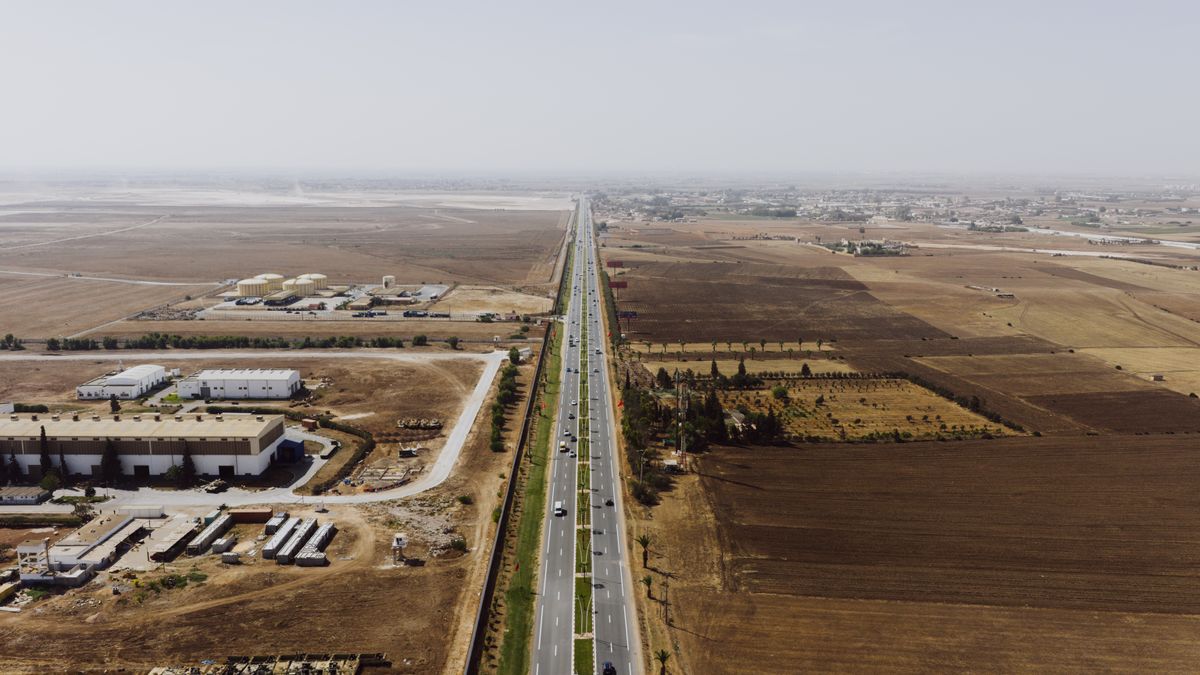
The Trump Highway is part of a much larger Moroccan strategy to transform its southern regions into a trade gateway between Europe and Africa. The country has invested heavily in roads, ports, renewable energy and logistics projects aimed at increasing its influence across the continent.
Dakhla has become a major focus of this development strategy. Morocco is also advancing plans for the Dakhla Atlantic Port, a project designed to create new industrial and commercial opportunities while improving maritime connections with West Africa.
The numbers behind Morocco’s southern expansion are significant. A 655-mile highway, a planned Atlantic port, and billions of dollars in infrastructure spending are all part of a broader effort to position the region as a logistics hub connecting multiple continents.
Global Reaction Shows Growing Divide Over Western Sahara
The highway naming highlights the changing diplomatic landscape around Western Sahara. Countries including Spain and the United Kingdom have expressed support for Morocco’s autonomy proposal as a realistic basis for negotiations. However, they have not universally recognized Moroccan sovereignty over the territory.
The United Nations position remains focused on achieving a political solution acceptable to all sides. Recent discussions have emphasized negotiations while maintaining the principle of self-determination for the people of Western Sahara.
That balance has created a complicated international environment. Morocco has gained increasing diplomatic support, but the underlying dispute remains unresolved and continues to influence relations between Morocco, Algeria, the United States and European nations.
A Road That Connects Transportation, Politics and History
The Donald J. Trump Highway represents far more than a name change. It combines a $1 billion infrastructure project, a 1,055-kilometer transportation corridor, and a foreign policy decision that reshaped Morocco’s relationship with Washington.
For Morocco, the highway is a tribute to a leader who supported its sovereignty claim and a showcase of national development. For critics of that position, it highlights an unresolved international dispute that remains active more than five decades after it began.
For the United States, the road serves as a reminder that foreign policy decisions can have long-lasting consequences far beyond government offices. A highway built to move people and goods has now become a permanent symbol of diplomacy, rivalry, and the continuing struggle to define the future of Western Sahara.