Lindsey Graham’s Death Triggers Senate Uncertainty and a Fierce November Election Battle
The death of Sen. Lindsey Graham has sent shockwaves through Washington and South Carolina, leaving behind a major political vacancy just months before the November election. Graham, a Republican who represented South Carolina in the U.S. Senate for more than two decades, died after a brief and sudden illness at the age of 71, according to statements from his office.
His passing comes at a politically sensitive moment. Republicans are working with a narrow Senate majority, and Graham’s absence creates immediate questions about leadership, legislative priorities, and the race to replace him.
The biggest question now is simple: who takes over one of the safest Republican Senate seats in America, and how will that change the political landscape heading into November?
A Senate Seat Suddenly Up for Grabs

Graham’s death created an unexpected opening in a state where he had been preparing for another Senate campaign. South Carolina law allows Republican Gov. Henry McMaster to appoint a temporary replacement to fill the vacancy, but a special election will ultimately determine who holds the seat. (KTVZ)
The timeline is expected to move quickly. A special Republican primary is set for August, with a possible runoff later that month before the November general election. The compressed schedule means potential candidates have little time to organize campaigns, build support, and compete for the nomination.
The Republican Party faces pressure to choose a candidate who can maintain its hold on the seat while also uniting different parts of the conservative base. Graham had built strong relationships inside the party, and replacing a politician with his level of influence will be a major challenge.
Republicans Begin the Search for Graham’s Successor
Several Republican figures are expected to receive attention as possible replacements. Among those being discussed are South Carolina political leaders and members of Congress who could quickly step into a statewide race.
The decision will carry significant political consequences. Whoever wins the Republican nomination will inherit Graham’s seat at a time when national issues such as government spending, foreign policy, immigration, and election laws remain deeply contested.

The race may also become a test of where the Republican Party is heading. Graham’s political career included a major transformation, moving from a traditional conservative voice to one of former President Donald Trump’s strongest allies in the Senate.
That history means candidates competing for his seat will likely face pressure to define their own relationship with Trump’s political movement while appealing to South Carolina voters.
Democrats See an Opening in a Republican Stronghold
Although South Carolina has long been considered a Republican stronghold, Democrats see the special election as an opportunity to compete. Their nominee, Dr. Annie Andrews, enters the race with a chance to introduce a different message to voters. (Vanity Fair)
Andrews, a pediatrician and former congressional candidate, has focused much of her political message on healthcare and public issues affecting families. Following Graham’s death, she acknowledged his public service and called for a respectful response despite political differences. (Vanity Fair)
Winning statewide office in South Carolina remains a difficult challenge for Democrats, but special elections can create unpredictable outcomes. A shortened campaign calendar, increased national attention, and strong voter emotions could make the race more competitive than a typical Senate contest.
Graham’s Absence Could Affect Senate Business
Beyond the election, Graham’s death also creates uncertainty inside the Senate. He played an influential role on major committees and was involved in several key Republican policy priorities.
Graham served as chairman of the Senate Budget Committee and was expected to be involved in major legislative negotiations. His absence could slow discussions on issues important to the Republican agenda.
The timing is especially significant because Senate Republicans were already facing challenges due to the temporary absence of another senior Republican, Mitch McConnell, who had been hospitalized.
Foreign Policy Loses a Major Republican Voice
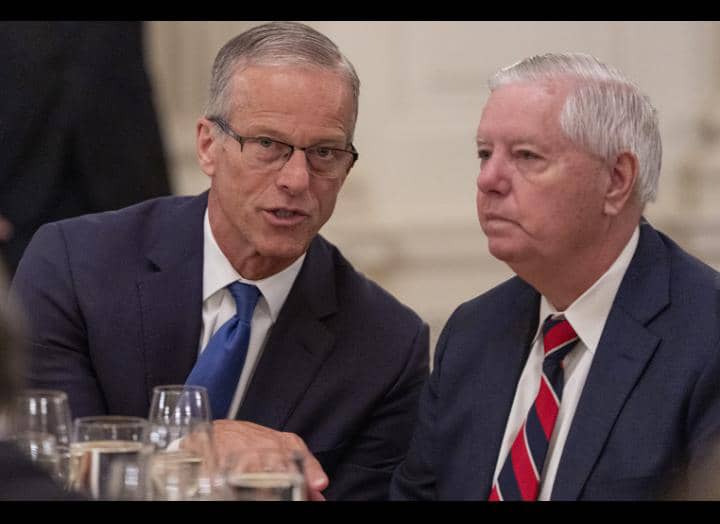
Graham was also one of the Senate’s most visible voices on foreign policy. He was known for his strong positions on national security issues and had recently returned from a visit with Ukrainian President Volodymyr Zelenskyy before his death.
For years, Graham played a prominent role in debates involving military support, international alliances, and America’s role overseas. His supporters viewed him as a consistent defender of U.S. interests abroad, while critics often challenged his positions.
His departure leaves Republicans searching for another senator who can combine national influence with strong connections inside the party.
A Legacy That Changed With American Politics
Lindsey Graham’s political career reflected the changes within the Republican Party over the past three decades. He first entered Congress in the 1990s and became a nationally recognized senator known for his legal background, committee work, and outspoken style.
One of the defining moments of his career was his shift in relationship with Donald Trump. Once a vocal critic of Trump during the 2016 campaign, Graham later became one of Trump’s closest allies in Congress.
That transformation made him both a powerful figure among Republicans and a controversial figure among opponents. His influence extended beyond South Carolina, shaping debates inside the Senate and within the broader conservative movement.
November Election Becomes a National Political Test
The race to replace Graham is expected to attract national attention because control of the Senate could be affected by even a single seat changing hands. While Republicans remain favored in South Carolina, the circumstances surrounding the special election make the contest unusual.
Candidates will face the challenge of honoring Graham’s legacy while presenting their own vision for the future. Voters will decide whether they want continuity or a new direction.
For Republicans, the goal will be protecting a seat that has been in their hands for years. For Democrats, the opportunity is to turn an unexpected vacancy into a serious challenge.
The loss of Lindsey Graham has created more than a Senate vacancy. It has opened a political contest that could shape South Carolina’s future influence in Washington and add another dramatic chapter to the battle for control of Congress.