Iran Publishes Disturbing ‘Where to Kill Trump?’ Video Targeting President’s Motorcade Security
Iranian state media has released a disturbing propaganda video titled “Where Do We Kill Trump?”, escalating fears that Tehran’s threats against President Donald Trump are moving beyond angry political rhetoric.
The English-language video was published by Fars News Agency, an Iranian outlet associated with the country’s powerful Islamic Revolutionary Guard Corps, or IRGC. It claimed to analyze Trump’s travel patterns, presidential motorcade and alleged security vulnerabilities in Florida and New York. A copy posted on X was subsequently removed, although the video reportedly remained available through other platforms, including Fars’ Telegram channel.
We have deliberately avoided reproducing the video’s operational claims or identifying the locations it presented as possible attack sites. However, its title and unmistakable message make its purpose clear: it was designed to intimidate the American president, challenge the credibility of the United States Secret Service, and suggest that Iranian operatives could reach Trump inside the United States.
Iranian Video Claims to Expose Trump’s Motorcade Security

The Iranian production reportedly opens by claiming that Trump’s routine movements between 2024 and 2026 had been collected and decoded using an examination of complex security protocols. It then analyzes publicly visible elements of a presidential motorcade before presenting graphics of routes associated with Trump’s movements in Florida and New York.
The video allegedly identifies transportation corridors it considers vulnerable and suggests that Trump could be targeted while traveling between airports and his residences. It concludes with a warning indicating that those behind the production intend to obtain even more detailed information.
Yet one critical fact weakens the video’s attempt to present itself as an intelligence breakthrough. The Florida route shown in the footage reportedly does not correspond directly with publicly available maps. That discrepancy suggests the production may rely more heavily on intimidation, manipulated graphics, and open-source footage than on privileged access to real presidential security information.
This distinction matters. The public should not confuse a slick state-media production with verified intelligence. Motorcade movements are frequently adjusted, alternative routes may be used, and protective procedures can change without public notice. A video compiled from news footage cannot establish that its creators know Trump’s current schedule or the precise decisions made by the Secret Service.
Still, the apparent inaccuracies do not make the threat harmless. Publishing suggested attack locations under a title asking where a sitting American president should be killed crosses a serious line. Even when propaganda contains false or outdated information, it can encourage extremists, inspire copycat behavior, or signal intentions to operatives already willing to commit violence.
Previous Iranian Assassination Allegations Make the Threat More Serious
The video cannot be viewed in isolation because American prosecutors have previously accused Iranian-linked individuals of participating in plots against Trump and other former U.S. officials.
In November 2024, the U.S. Department of Justice charged Iranian national Farhad Shakeri and two alleged associates in a murder-for-hire case. According to federal prosecutors, Shakeri told law enforcement that the IRGC had tasked him with developing a plan to surveil and assassinate Trump before the 2024 presidential election.
The allegations remain accusations, and defendants are presumed innocent unless proven guilty in court. Shakeri was believed to be living in Iran and remained at large when the charges were announced. Nevertheless, the case showed that U.S. authorities were treating Iranian threats against Trump as more than political theater.
The Justice Department has also alleged that an IRGC member attempted to arrange the assassination of former National Security Adviser John Bolton. Prosecutors said Shahram Poursafi offered to pay individuals in the United States to carry out the killing, reportedly as retaliation for the January 2020 U.S. strike that killed Iranian commander Qasem Soleimani.
These cases establish an important context. Iran has been accused not merely of issuing hostile statements but of using intermediaries, criminal contacts, and overseas networks to pursue alleged assassination operations. That history makes a state-affiliated video analyzing Trump’s movements particularly alarming, even when some of its supposed findings appear inaccurate.
Trump-Iran Conflict Fuels Calls for Revenge
The release comes during a period of intense confrontation between Washington and Tehran. The United States and Iran have exchanged military attacks, while diplomatic agreements intended to reduce hostilities have come under severe pressure.
Iranian leaders and state-aligned media have repeatedly called for revenge following the death of former Supreme Leader Ayatollah Ali Khamenei, who was killed during U.S.-Israeli military operations in February 2026. Trump has publicly said that Iran considers him its leading assassination target.
During remarks at a NATO summit, Trump said he was “No. 1 on Iran’s assassination list.” He later claimed that the United States had prepared a massive retaliatory response if Iran succeeded in killing him. However, constitutional authority would pass to the vice president upon a president’s death, and any military response would still require the successor’s decision rather than being triggered automatically.
The threatening video therefore arrives in an environment where assassination rhetoric, military retaliation, and state propaganda are feeding one another. Each new warning increases pressure on security agencies while making diplomatic de-escalation more difficult.
At the same time, we must separate confirmed facts from claims made by governments engaged in an active conflict. Iranian media may exaggerate its access to Trump’s security procedures. American and Israeli officials may also release threat information without publicly disclosing the underlying intelligence. Responsible reporting must acknowledge the danger without presenting every claim as established fact.
Why the Video Is More Than Ordinary Wartime Propaganda
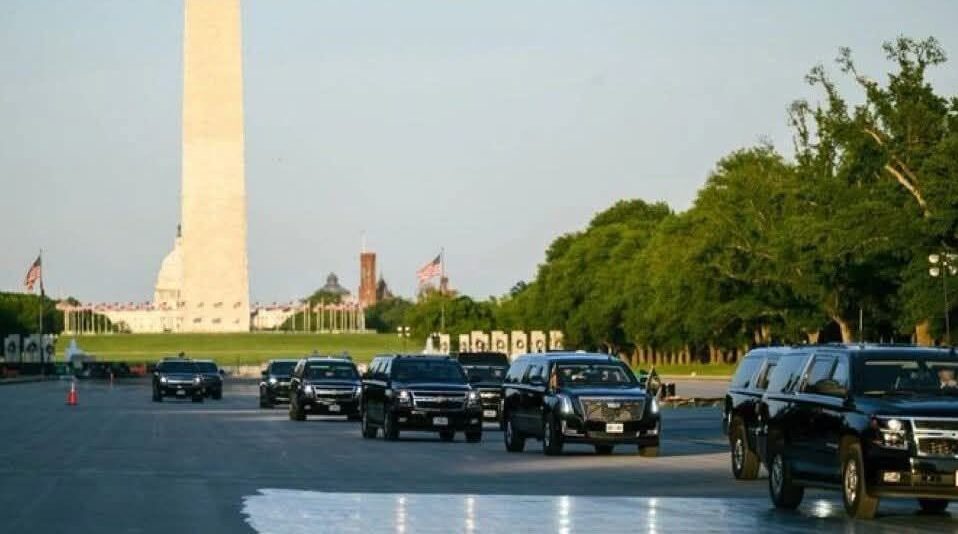
Governments frequently use propaganda to frighten enemies, reassure domestic audiences, and create the appearance of military strength. This video goes further by placing an identifiable individual at the center of an apparent assassination scenario.
Its message operates on several levels. It attempts to convince Iranian viewers that their government remains capable of retaliating despite sustained military pressure. It seeks to unsettle Trump and his family. It pressures the Secret Service by suggesting that routine protective practices have been studied. Finally, it invites global audiences to circulate the threat, giving Iran publicity far beyond the original broadcast.
The removal of the video from X limited one distribution channel but could not erase copies already shared elsewhere. Modern propaganda spreads through recordings, screenshots, private messaging applications, and republished clips. Once released, threatening content can continue circulating even after the original uploader deletes it or a platform intervenes.
That creates a difficult balance for journalists and social-media users. The public has a legitimate interest in knowing that a state-affiliated outlet threatened an American president. However, repeatedly sharing the complete footage could amplify the message, circulate alleged security information, and reward those who produced it.
The safest approach is to report the video’s existence, title, source and political significance without reproducing tactical diagrams or presenting purported vulnerabilities as reliable instructions.
The Threat May Be Propaganda, but It Cannot Be Dismissed.
Iran’s “Where Do We Kill Trump?” video does not prove that Tehran possesses accurate information about Trump’s movements. Reports that its maps fail to match publicly available routes raise serious doubts about the production’s intelligence value.
However, its lack of precision does not erase its threatening intent. Fars News Agency published a video that openly framed the movements of the sitting U.S. president as an assassination problem to be studied. That act becomes more consequential when placed beside previous Justice Department allegations involving Iranian-linked plots against Trump and other American officials.
We should therefore avoid two dangerous extremes. We should not treat Iranian propaganda as flawless intelligence, but we should not dismiss it as meaningless noise. The most responsible conclusion lies between those positions: the video appears designed primarily for psychological warfare, yet it emerges from a state system whose operatives have previously been accused of pursuing killings on foreign soil.
The footage may fail as a reliable map of presidential security. As a warning of how far the confrontation between Iran and the United States has deteriorated, however, its message is unmistakable.