Iran’s “Blood for Blood” Billboard Targets Trump Family, Raising New Fears Over Escalating U.S.-Iran Tensions
A controversial billboard displayed in Tehran has intensified concerns over the increasingly personal nature of the confrontation between Iran and the United States, after an image reportedly showing Donald Trump, Melania Trump, and members of the Trump family above flag-covered coffins appeared with the slogan “Blood for Blood.” The billboard has drawn international attention because it moves beyond traditional anti-American messaging and focuses directly on the family of a sitting U.S. president. While the display has been described as threatening, there is no public evidence that it represents an official Iranian plan to target Trump’s relatives or that it signals a confirmed attack operation.
Instead, the image appears to function as a powerful piece of political messaging during a period of intense military and diplomatic tension between Washington and Tehran. The controversy highlights a broader shift in modern conflict messaging, where propaganda is no longer limited to governments and military forces. Leaders, families, symbols, and personal identities are increasingly used to influence public opinion and send emotional messages to opponents.
A Billboard That Turned Political Conflict Into a Personal Message
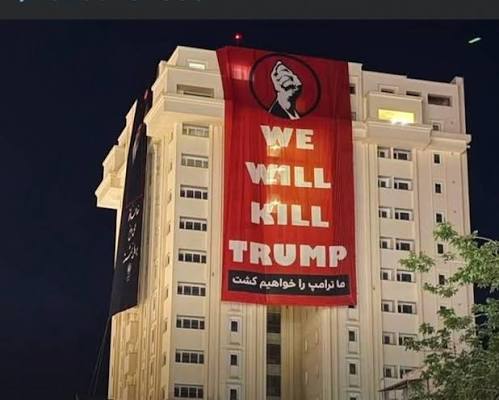
For decades, Iranian political displays directed criticism toward the United States government, American military forces, and Washington’s allies. Images of missiles, soldiers, national flags, and enemy leaders have frequently appeared in Iran’s public spaces. The reported Trump family billboard took a different approach. By including Melania Trump and Trump’s children, the message moved away from a direct political attack against U.S. leadership and toward a more personal form of symbolism. The image reportedly showed members of the Trump family above coffins covered with American flags, creating a visual association between the family and death.
The phrase “Blood for Blood” added another layer to the message. The wording suggests revenge and retaliation, framing the conflict through emotional language rather than diplomatic disagreement. However, experts and observers have emphasized that propaganda imagery should not automatically be interpreted as evidence of a planned attack. A political billboard can be designed to intimidate, influence public opinion, or create headlines without representing an actual military decision. The significance comes from the choice of imagery itself. By including family members who do not hold government positions or make military decisions, the billboard appears to expand the boundaries of political messaging.
Trump Has Become a Central Figure in Iran’s Retaliation Narrative
The billboard emerged as tensions between Iran and the United States remained extremely high. Donald Trump has been a major figure in Iran’s political messaging for years, particularly because of his administration’s decision in 2018 to withdraw the United States from the Iran nuclear agreement and restore economic sanctions against Tehran. Iranian officials have repeatedly criticized Trump’s policies, especially those related to sanctions, military pressure, and regional security.
Trump also became closely associated with the U.S. strike that killed Iranian military commander Qassem Soleimani in January 2020. That event created a lasting source of anger among Iranian leaders and supporters, with calls for retaliation continuing for years afterward. The latest billboard appears to be connected to that broader pattern of portraying Trump as a symbol of American pressure on Iran. Other public displays in Tehran have reportedly shown Trump in a coffin, with slogans calling for revenge. These images have reinforced the idea that Iran’s messaging campaign is increasingly focused on Trump personally rather than only on U.S. foreign policy.
Why Tehran’s Billboards Carry Powerful Political Influence
Large-scale political billboards have long played an important role in Iran’s public communication strategy. Major locations in Tehran, including Valiasr Square and Enghelab Square, have frequently been used to broadcast government-supported messages related to national identity, religious events, military issues, and foreign policy disputes. These displays serve several purposes. Inside Iran, they can strengthen public support for government positions by presenting conflicts through themes of resistance, sacrifice, and national pride.
Outside Iran, they create international attention. A single billboard photograph can quickly spread across social media platforms, international news organizations, and political discussions around the world. This makes public displays an effective form of psychological messaging. They do not require a formal government statement, yet they can still influence how audiences interpret a conflict. The uncertainty surrounding such messages can also be strategically useful. Authorities may benefit from the emotional impact of aggressive imagery while avoiding direct responsibility for specific threats.
The Timing Added More Pressure to an Already Dangerous Situation
The billboard appeared during a period of heightened military tension involving Iran, the United States, and regional allies. Relations between Washington and Tehran have deteriorated through years of disputes involving nuclear policy, sanctions, military operations, and regional influence. Recent tensions have included attacks involving Iranian-backed groups, U.S. military responses, and concerns about possible wider escalation throughout the Middle East.
During periods of conflict, political messages often become more extreme. Governments and political movements frequently use powerful symbols to encourage supporters and demonstrate strength. However, messages involving specific individuals and their families create additional security concerns because they can be interpreted differently by different audiences. A government-backed image may be intended as symbolic political communication, but outside groups or individuals could interpret such messages as encouragement for violence. That risk is one reason security officials closely monitor threatening rhetoric during international conflicts.
Social Media Has Made the Billboard a Global Story
Although the billboard appeared in Tehran, its audience quickly expanded beyond Iran. Images shared online allowed people around the world to view and debate the message within hours. Social media transformed a local display into an international political story. Some observers criticized the use of family members in political messaging, arguing that relatives should not become targets in disputes between governments.
Others viewed the billboard as another example of the aggressive rhetoric that has surrounded U.S.-Iran relations for years. The debate demonstrates how modern propaganda works. A message created for a specific local audience can now reach millions of people internationally, often without the original creators controlling how it is interpreted. A billboard can become a headline, a political argument, and a viral image all at the same time.
What Is Known and What Remains Unclear
Reports have confirmed the existence of Tehran billboards featuring hostile imagery toward Trump. However, several important details remain unclear. There has been no publicly confirmed evidence identifying the exact organization responsible for the Trump family billboard, who approved it, or whether it represents an official government policy. There is also no confirmed information showing that Iran has planned an operation against Trump’s family members.
The distinction matters. The billboard is clearly provocative and designed to send a strong political message. But interpreting it as proof of an immediate assassination threat would go beyond the available evidence. Understanding the difference between political symbolism and confirmed operational threats is essential when reporting on international conflicts.
A Sign of Increasingly Personal Conflict Between Washington and Tehran
The most significant aspect of the billboard may be the way it reflects a changing style of political confrontation. Traditional geopolitical conflicts usually focus on governments, armies, policies, and territory. Increasingly, however, political battles are becoming personalized. Leaders themselves are becoming symbols of entire nations or movements. Their families and personal identities can become part of political messaging.
That shift makes conflicts harder to manage because personal attacks often create stronger emotional reactions than policy disagreements. Diplomatic disputes can sometimes be resolved through negotiations over sanctions, security agreements, or military arrangements. But revenge-based messaging creates a different challenge because it relies on anger and emotional response. The Trump family billboard represents more than a controversial image on a Tehran street. It reflects how deeply divided relations between Iran and the United States have become and how political communication is evolving in the digital age. As tensions continue, the greatest concern may not be the billboard itself, but the environment that allows increasingly personal messages of conflict and retaliation to become part of international discourse.