Iran’s New Leader is More Open to Pursuing a Nuclear Weapon, U.S. Intelligence Says
Iran has not publicly ordered the construction of a nuclear bomb. It has not announced a return to uranium enrichment, and U.S. officials reportedly see no clear evidence that weapon production has begun.
Yet Washington’s concern is growing for a different reason. American intelligence agencies reportedly believe Iran’s new supreme leader, Ayatollah Mojtaba Khamenei, may be more willing than his father to cross the political line that kept Tehran from openly pursuing nuclear arms.
That distinction matters. The immediate threat may not be a machine spinning inside an underground hall. It may be a leader who has reached a different conclusion about what Iran needs to survive.
Intelligence points to changing intent, not a confirmed bomb program
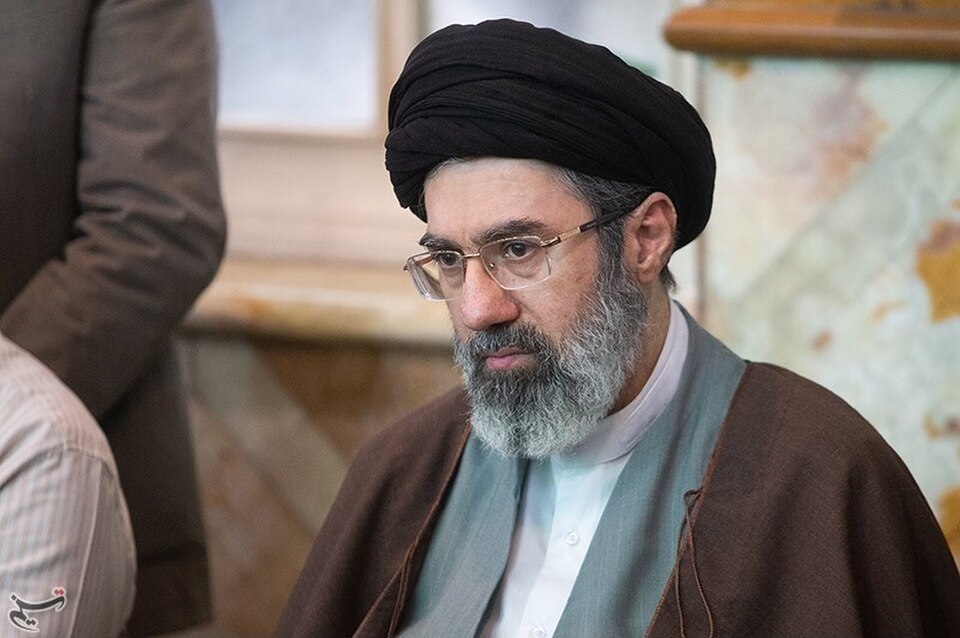
Mojtaba Khamenei has never publicly instructed Iranian scientists to build a nuclear weapon. Iran also continues to insist that its nuclear program serves peaceful purposes.
The new intelligence assessment instead focuses on his private views, earlier statements and intercepted communications, according to reports citing officials briefed on the findings. Those officials believe he showed greater interest than his father in obtaining an advanced nuclear deterrent that a long-range missile could eventually carry.
The assessment comes with a major warning label. Much of the intelligence reportedly predates the current war, and Khamenei has remained largely out of public view since suffering serious injuries during the opening attacks.
Iranian President Masoud Pezeshkian said this week that communication with the supreme leader was increasing. However, Khamenei has issued only written statements since taking office and has not appeared publicly, released a recent photograph or delivered a recorded address.
That uncertainty makes the intelligence politically powerful but not conclusive. It may reveal Khamenei’s earlier preferences, but it cannot prove that he has made a final decision under today’s battlefield conditions.
The war may have changed Iran’s nuclear calculation
For decades, Iran appeared to pursue what analysts often described as nuclear threshold status. Tehran developed the knowledge, infrastructure and enriched uranium that could shorten the path to a weapon without openly announcing that it had chosen to build one.
Ayatollah Ali Khamenei, who ruled Iran for more than 36 years, publicly maintained that nuclear weapons violated Islamic principles. His government nevertheless expanded enrichment, built hardened facilities and resisted international demands for greater transparency.
His son inherited a far more dangerous environment. Ali Khamenei was killed during the opening phase of the U.S.-Israeli campaign on February 28. Mojtaba Khamenei was selected as his successor on March 8 with strong support from Iran’s hard-line establishment and the Islamic Revolutionary Guard Corps.
For Iranian officials who long argued that only a nuclear weapon could prevent foreign attack, the war may now look like proof of their case. Conventional missiles, regional allies and underground facilities failed to protect Iran’s leadership from sustained strikes.
That creates a troubling deterrence paradox. Military action intended to prevent nuclear proliferation may also convince Tehran that remaining nonnuclear leaves the government vulnerable to assassination, regime collapse or repeated bombing.
Rosemary Kelanic, director of the Middle East program at Defense Priorities, has argued that continued attacks and Washington’s willingness to support Saudi nuclear enrichment could give Iran stronger incentives to weaponize. Her concern is that Tehran may begin viewing a bomb less as an offensive tool and more as insurance against another campaign aimed at destroying the state.
Mojtaba Khamenei may be weaker than his father, but that may not make Iran safer
The elder Khamenei spent decades building personal authority over Iran’s military, religious institutions, intelligence services and political factions. His son does not command the same unquestioned loyalty. He rose during wartime, suffered injuries and inherited a government whose senior ranks had been heavily damaged by successive attacks.
At first glance, a weaker supreme leader might appear easier to pressure. The opposite could also be true. A leader who lacks his father’s prestige may depend more heavily on the Revolutionary Guard and other hard-line institutions that supported his succession. Those groups could demand a tougher nuclear position as the price of their loyalty.
Khamenei may also feel pressure to prove that he is neither weak nor temporary. Rejecting compromise, protecting strategic equipment and threatening retaliation can become tools for consolidating authority inside a shaken political system.
The nuclear question may therefore depend on more than one man’s beliefs. It may reflect the survival strategy of a new ruling coalition shaped by war, loss and fear.
Pickaxe Mountain is becoming a symbol of Iran’s survival strategy
Attention has increasingly turned to a deeply buried complex near Natanz known in Western reporting as Pickaxe Mountain. Israeli intelligence reportedly believes Iran transferred thousands of centrifuges into tunnels beneath the mountain after the 2025 attacks on Fordow, Natanz and Isfahan. The movement could allow Iran to preserve equipment needed to restore enrichment later.
Moving centrifuges does not prove that enrichment has restarted. American officials reportedly believe Iran may currently be protecting valuable machinery rather than operating a secret production line. That difference is crucial. Centrifuges stored underground represent potential capability. Installed centrifuges enriching uranium represent active nuclear work.
Pickaxe Mountain is particularly difficult to assess because international inspectors have never been granted access. Satellite imagery can identify tunnel entrances, vehicles, construction and security deployments, but it cannot show with certainty what is happening deep inside the complex.
The site is also believed to extend far beneath the mountain, possibly beyond the effective reach of America’s most powerful conventional bunker-penetrating weapons. That leaves Washington with unattractive options, including repeated attacks on entrances, ventilation and power systems or a far riskier operation involving forces on the ground.
President Donald Trump has publicly threatened to strike the complex while also saying the United States has not detected renewed enrichment activity there. Those two claims reveal the central dilemma: the site may not be producing nuclear material now, but leaving it intact could preserve Iran’s ability to rebuild later.
The missing uranium may matter more than the hidden centrifuges
Much of the public debate has focused on tunnels and enrichment machines. The more urgent issue may be Iran’s existing uranium stockpile.
Before the June 2025 attacks, the International Atomic Energy Agency had verified more than 400 kilograms of uranium enriched to 60 percent. That level remains below weapons grade, but it is far above the enrichment normally required for civilian nuclear power.
The IAEA has since struggled to verify nuclear material inventories and inspect damaged or inaccessible sites. In June 2026, its Board of Governors said the agency could not confirm that safeguarded material had not been diverted because Iran had not provided the necessary information and access.
This inspection gap creates room for worst-case assumptions on every side. Washington and Israel may interpret unexplained activity as evidence of weapon planning. Tehran may assume that even routine preservation work will trigger new strikes.
Without inspectors establishing what material exists and where it is located, intelligence agencies must rely more heavily on satellite imagery, intercepted communications and human sources. That increases the risk of both underestimating and exaggerating the threat.
Saudi Arabia adds another layer to Tehran’s decision
Iran’s nuclear debate does not occur in isolation. The Trump administration’s support for a civilian nuclear agreement that could allow Saudi Arabia to enrich uranium has raised questions about whether Washington is applying different standards to allies and adversaries.
Civilian enrichment does not automatically lead to nuclear weapons. However, the same technology that produces reactor fuel can also create weapons-grade material when enrichment continues to much higher levels.
From Tehran’s perspective, a Saudi enrichment program backed by the United States could become evidence that nuclear capability brings influence and security benefits. Iranian hard-liners could use the agreement to argue that restraint produced vulnerability while regional rivals received technological and political advantages.
The danger is no longer limited to a single Iranian bomb. A visible Iranian move toward weaponization could push Saudi Arabia and other regional powers to reconsider their own options, creating a Middle East in which several governments seek nuclear threshold status.
Trump faces a decision shaped by incomplete intelligence
The reported assessment of Mojtaba Khamenei’s intentions arrives as President Trump considers whether to intensify military operations. For advocates of escalation, a supreme leader more receptive to nuclear weapons strengthens the case for destroying Iran’s remaining infrastructure before Tehran can rebuild.
For critics, the same assessment supports the opposite conclusion. More attacks could harden Iran’s nuclear ambitions, strengthen the Revolutionary Guard and eliminate the remaining political arguments for restraint.
The intelligence does not show that Iran currently possesses a nuclear weapon. Public evidence also does not establish that Tehran has resumed an active weapons program. An Associated Press review published in June found that sweeping claims about an imminent Iranian bomb went beyond the evidence made publicly available by the IAEA and U.S. intelligence.
What may have changed is Iran’s incentive structure. Under Ali Khamenei, Tehran sought nuclear leverage while stopping short of publicly authorizing a bomb. Under his wounded and less secure successor, Iran’s leaders may conclude that ambiguity no longer provides enough protection.
That is the unique danger facing Washington. The United States may have damaged Iran’s facilities while strengthening the argument inside Tehran that only a completed nuclear deterrent can prevent the next attack. The most important question is therefore not whether Iran is building a bomb today. It is whether the war has made Iran more determined to build one tomorrow.