JD Vance Tells Israeli Officials to Stop Attacking Trump as Iran Deal Fight Gets Ugly
Vice President JD Vance did not say it softly, and he definitely did not wrap it in diplomatic bubble wrap.
As President Donald Trump tries to sell a fragile Iran deal and keep a wider Middle East war from spinning out of control, Vance delivered a sharp public warning to Israeli officials, criticizing the agreement: do not pick a fight with the one powerful ally you still have.
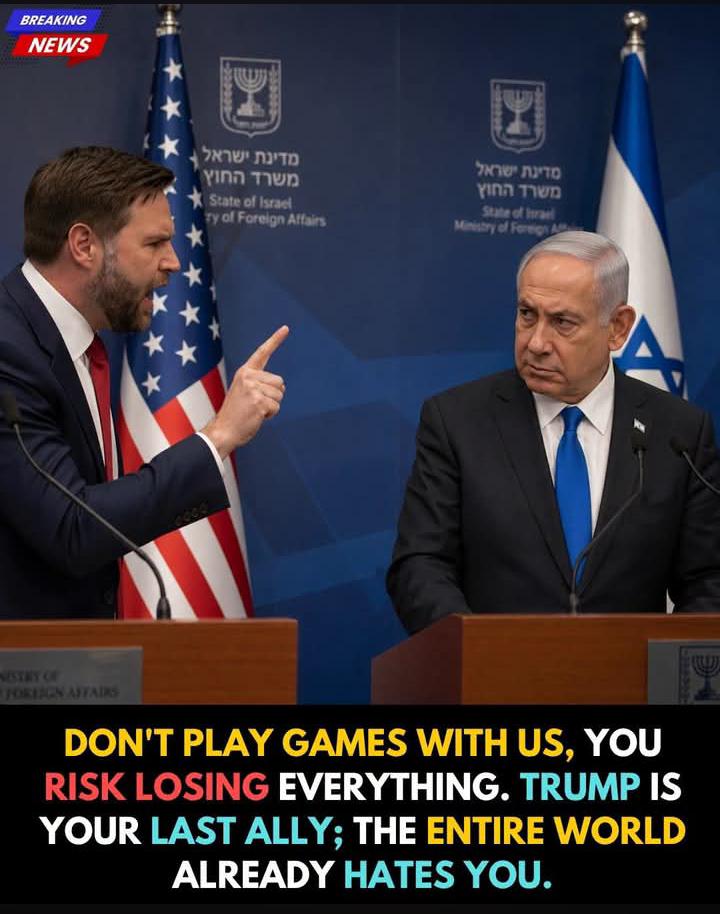
The viral version bouncing around social media made the moment sound even harsher than the verified transcript. But the real comments were still unusually blunt for an American vice president speaking about Israel, one of Washington’s closest allies.
“Donald J. Trump is the only head of state in the entire world who is sympathetic to the nation of Israel at this moment in time,” Vance said at the White House. Then came the line that lit the match: “If I was in the cabinet of the Israeli government, I might not be attacking the only powerful ally that I have anywhere left in the entire world.”
That was not a whisper. That was a political brick through the window.
Vance’s Message Was Simple: Don’t Bite the Hand Holding the Shield
The pressure point is the Trump administration’s new deal with Iran, a preliminary agreement meant to stop the war, reopen diplomacy, and create a 60-day window for deeper talks. Critics in Israel and the United States say the deal gives Tehran too much too soon while leaving major questions about Iran’s nuclear program, missiles, and regional proxies.
Some Israeli cabinet members were furious. Vance, apparently, was furious right back.
His argument was not sentimental. It was transactional. He reminded Israeli officials that American support is not just speeches, handshakes, and flags at press conferences. It is weapons, money, intelligence, protection, and diplomatic cover.
“To some of these cabinet members in Israel who are attacking the president of the United States,” Vance said, “over the last three months, two-thirds of the defensive weapons that have protected your homeland have been built by American hands and paid for by American tax dollars.”
That is the part that makes this story bigger than one spicy press briefing.
For years, U.S.-Israel disagreements usually played out behind closed doors. Public fights happened, but the language was often polished, careful, and lawyered to death. Vance skipped the velvet gloves. He told Israeli critics that their problem was not Trump.
“The problem for Israel is not Donald J. Trump,” Vance said. “Anybody in Israel who thinks their biggest problem is the president of the United States needs to wake up and smell the reality of the situation that country is in.”
That line landed because it sounded less like foreign policy and more like a warning from a friend who is tired of being taken for granted.
Netanyahu Tries to Stay Calm While His Cabinet Boils
Israeli Prime Minister Benjamin Netanyahu has been careful not to publicly torch Trump over the Iran agreement. That is not surprising. Netanyahu knows the relationship with Washington is not optional. It is central to Israel’s military strategy, its diplomacy, and its ability to withstand international pressure.
On Thursday, Netanyahu said Israel needed to “remain calm,” defend its security interests, and preserve the “important relationship” with American friends who fought “shoulder to shoulder” with Israel.
That sounded like a man trying to keep the roof from catching fire while several people in the house were still playing with matches.
The problem for Netanyahu is that his government includes hard-right ministers who are not exactly built for quiet restraint. National Security Minister Itamar Ben-Gvir and Finance Minister Bezalel Smotrich have been among the most aggressive voices pushing for escalation, especially as fighting with Hezbollah in Lebanon continues to threaten the ceasefire Trump wants.
After four Israeli soldiers were killed by Hezbollah fire, Smotrich called for Israel to “open the gates of hell.” Ben-Gvir went even further, saying, “All of Lebanon must burn,” while arguing that Israel’s duty to protect its citizens comes before every other consideration.
That is the kind of rhetoric that makes ceasefires wobble, diplomats sweat, and allies start asking whether anyone is actually in control.
Opposition leader Yair Lapid pounced on the moment, warning that Israel’s foreign relations could be “wiped out” if Netanyahu’s government is not replaced quickly. His message was clear: this is not just a security crisis; it is a diplomatic crisis.
And that is exactly why Vance’s warning mattered. He was not simply defending Trump’s ego. He was telling Israeli officials that their public attacks could carry real consequences.
Trump Wants a Deal, But the Region Keeps Testing Him
Trump has been trying to present the Iran agreement as a major win. He has defended the deal against critics, insisted that Iran came to the table from a position of weakness, and urged all sides to give the peace process room to work.
After Vance’s comments, Trump posted that he expected a “complete Ceasefire on all fronts, including Lebanon, Hezbollah, and Israel.”
But peace in the Middle East does not move because someone posts in capital letters.
The fighting in Lebanon quickly showed how fragile the situation remains. Israel and Hezbollah agreed to renew a ceasefire after a violent flare-up, but Israeli strikes still killed dozens in Lebanon, according to Lebanese officials, while Israel said its strikes followed Hezbollah attacks that killed four Israeli soldiers.
Trump also reportedly told Israel, “You just gotta calm down sometimes and use your head,” a line that sounds almost comically casual given the stakes. Still, it captures the White House mood: stop escalating, stop embarrassing the deal, and stop forcing Trump to choose between his peace pitch and his longtime support for Israel.
The American public is not exactly cheering for more war either. A new AP-NORC poll found that 65% of U.S. adults disapprove of Trump’s handling of Iran, while 53% said American military action against Iran had gone too far. Only about a third approved of his handling of Israel.
That matters because Trump is not operating in a vacuum. He is trying to sell a deal abroad while defending it at home, including to parts of his own political base that believe the agreement is weak.
So when Vance snapped at Israeli critics, the message had two audiences.
To Israel, he was saying: Do not sabotage the deal and then expect Washington to keep absorbing the cost.
To Americans, he was saying: this administration is not going to let an ally drag the U.S. deeper into a war the public already dislikes.
That is why the moment feels so explosive. Vance did not break with Israel entirely. He did not threaten to end the alliance. He did not say the viral phrase exactly as social media framed it.
But he did something rare: he said out loud that Israel is isolated, dependent on American power, and in no position to publicly slap Trump while relying on U.S. support.
In Washington terms, that is not a small nudge. That is a warning siren.
The real question now is whether Netanyahu can keep his cabinet from testing Trump’s patience, and whether Trump’s Iran deal can survive the same region that keeps setting fire to every neat plan placed on the table.