Kash Patel Faces Warning From Moscow Ahead of Planned Russia Visit
FBI Director Kash Patel’s reported trip to Russia was already unusual. Now a pointed message from Moscow has added another layer of intrigue to a visit that could test how far Washington is willing to cooperate with one of its most persistent intelligence adversaries.
Patel is tentatively expected to travel to Russia in mid-October 2026, with reported stops in Moscow and St. Petersburg. If the trip goes forward, Russia’s powerful Federal Security Service, better known as the FSB, is expected to play a central role in hosting him.
But before Patel has even boarded a plane, a prominent Russian analyst has delivered what sounds like a warning about the rules of engagement.
Vladimir Vasiliev, an analyst with the Russian Academy of Sciences’ Institute for U.S. and Canadian Studies, suggested in comments published by Moskovsky Komsomolets that any American request for Russian cooperation could come with expectations of reciprocity. The most striking question he raised was simple: “What do we get in return?”
That remark does not amount to an official demand from President Vladimir Putin or the Kremlin. Still, as we examine Patel’s reported Russia visit, it captures the sensitive diplomatic and intelligence calculation surrounding the FBI director’s attempt to develop new law enforcement relationships with governments Washington still considers major national security threats.
What Moscow’s warning to Kash Patel actually means
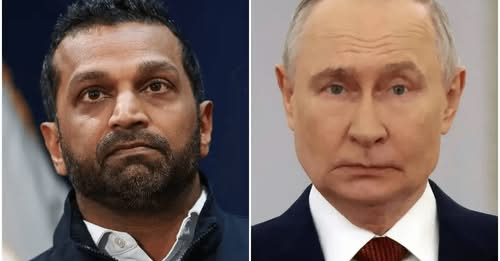
Vasiliev’s comments appeared as Russian media examined why an American FBI director might travel to Moscow at such a politically sensitive moment.
According to the report, the analyst speculated that Russia could possess information that might interest Americans and suggested that Russian officials could expect useful information or concessions in exchange for cooperation. That is where we need to make an important distinction.
There is currently no verified evidence that the Kremlin has officially demanded an exchange of political information from Patel, and Vasiliev does not speak for the FBI, the White House, or Putin.
His comments instead illustrate how at least one influential Russian analyst views the potential meeting: not simply as routine law enforcement diplomacy, but as a relationship in which Moscow may expect tangible benefits. The Kremlin itself has remained cautious about the reported trip.
When Kremlin spokesman Dmitry Peskov was previously questioned about Patel’s possible visit, he did not publicly lay out an agenda. Peskov said such visits generally take place behind closed doors, according to reporting on the proposed trip. That leaves considerable uncertainty over what Patel and Russian security officials would actually discuss.
Kash Patel’s Russia trip would break with recent FBI precedent
The reported journey stands out because sitting FBI directors simply do not routinely travel to Russia.
Patel is reportedly considering stops in Moscow and St. Petersburg on October 14 and October 15, although the plans remain preliminary and could still change. The anticipated Russian host is the FSB, Russia’s principal domestic security and counterintelligence organization.
If Patel makes the trip, he would become the first sitting FBI director known to visit Russia since Robert Mueller in 2013.
The historical comparison makes the visit even more striking because relations between Washington and Moscow have deteriorated dramatically since Mueller’s tenure.
Russia’s war in Ukraine remains at the center of tensions. Sanctions, espionage allegations, cyber operations and disputes over political influence have further complicated the relationship.
The U.S. State Department currently maintains its highest travel warning for Russia, Level 4: Do Not Travel, citing the continuing war, terrorism, unrest, the risk of wrongful detention and limited U.S. ability to assist Americans inside the country.
An FBI director traveling there would obviously operate under entirely different security arrangements than an ordinary American traveler. Even so, the advisory demonstrates just how strained the wider relationship remains.
Patel is already building an unusual FBI relationship with Russia
The Russia trip becomes easier to understand when we look at what Patel has already been doing inside the FBI.
In an August 5 Reuters report, Patel described new law enforcement partnerships with Russia and China, countries traditionally treated primarily as counterintelligence threats rather than close FBI partners.
Patel has argued that cooperation with adversarial governments can still benefit Americans when the mission is tightly focused.
The FBI has been targeting areas including cyber fraud, fentanyl trafficking, violent crimes against children and international criminal networks. Patel told Reuters that these relationships are limited and selective rather than broad intelligence alliances.
He acknowledged the obvious risks, saying the bureau remains highly conscious of Russia and China’s adversarial behavior.
But his broader argument is straightforward: when cooperation can produce a clear law enforcement victory for the United States, the FBI should consider engaging.
That approach represents a meaningful departure from the traditional posture surrounding countries whose intelligence services actively target American interests.
The FBI still identifies Russia as a major counterintelligence threat
Cooperation does not mean Washington suddenly considers Moscow a trusted partner. The FBI itself continues to identify Russia, China and Iran among the foreign governments posing serious counterintelligence challenges to the United States.
In its description of the global intelligence threat, the bureau says hostile intelligence services engage in activities including espionage, foreign influence operations, sanctions evasion and efforts to obtain sensitive technologies.
Recent FBI materials have also warned that Russian intelligence services continue targeting individuals through cyber operations.
In June 2026, for example, the FBI warned about Russian intelligence-linked actors targeting commercial messaging applications used by individuals considered valuable intelligence targets.
That creates the central tension surrounding Patel’s strategy.
The FBI is simultaneously responsible for stopping Russian intelligence operations and exploring limited cooperation with Russian authorities.
Those two goals are not automatically incompatible. Law enforcement agencies belonging to rival governments have occasionally cooperated on terrorism, organized crime, cybercrime and child exploitation.
But they require strict boundaries because information useful for solving one criminal investigation could become valuable intelligence in another context.
Why cooperation with the FSB creates difficult questions
The FBI’s own mission helps explain the sensitivity. As America’s lead counterintelligence agency, the bureau is responsible for identifying and countering foreign intelligence activity targeting U.S. national interests, sensitive government information and private American technology.
Russia is one of the countries at the center of that mission. Former FBI supervisory agent Jeff Crocker expressed strong skepticism about Patel’s emerging partnerships, telling Reuters that Russia and China remain U.S. adversaries and warning about the potential intelligence risks created by additional access.
Patel has responded by emphasizing that foreign officials are vetted and that counterintelligence safeguards remain in place. That debate could become much more intense if Patel meets senior FSB officials on Russian soil.
Questions will inevitably focus on what information is exchanged, what Russia wants in return and where Patel draws the line between useful law enforcement cooperation and intelligence exposure. Those questions became even more relevant after Vasiliev publicly raised the idea of reciprocity.
Patel’s history with the Russia controversy adds political sensitivity
There is also no separating Patel completely from the long political history surrounding Trump and Russia. Before becoming FBI director, Patel became widely known during President Donald Trump’s first administration while working on Capitol Hill and later in national security positions.
He was a prominent critic of the investigation into Russian interference in the 2016 presidential election and has repeatedly characterized the broader controversy surrounding Trump and Russia as the “Russiagate hoax.”
That history means his reported Moscow trip will receive scrutiny that another FBI director might not face to the same degree.
Vasiliev went further by speculating that Patel could potentially serve as some form of intermediary between Washington and Moscow. For now, that remains speculation, not an established purpose of Patel’s trip.
There has been no verified announcement showing that Patel is traveling as a diplomatic backchannel for Trump, and the publicly known reporting does not establish that he will meet Putin. That distinction matters.
What we know and what remains unclear about Patel’s Russia visit
At this stage, we can confidently say several things. Patel’s Russia visit has been tentatively planned for October, according to officials cited by multiple reports. Moscow and St. Petersburg have been identified as possible stops, and Russian security officials are expected to be involved if the visit goes forward.
We also know Patel has openly acknowledged building limited law enforcement cooperation with Russia.
What we do not know is equally important.
No detailed official agenda has been released. The Kremlin has not announced a meeting with Putin. The FBI has not publicly disclosed what Patel would request from the FSB, what information might be exchanged, or whether the itinerary will remain unchanged by October.
And Moscow’s headline-grabbing message about expecting something in return remains the view of a Russian analyst rather than a publicly declared Kremlin condition. Still, the comment exposes the challenge Patel will face if the trip happens. Cooperation between adversaries rarely comes without calculation.
Patel believes the FBI can work selectively with governments such as Russia when doing so protects Americans from transnational crime. Moscow, meanwhile, has its own interests and its own intelligence objectives.
The real significance of Patel’s Russia visit therefore may not be the fact that an FBI director sits down with Russian security officials.
It will be what each side wants from the other, what information changes hands, and whether Patel can gain cooperation from Moscow without giving Russia an advantage of its own.