Martha Ann Lillard, America’s Last Iron Lung Polio Survivor, Dies at 78 After a Lifetime of Defying the Odds
Martha Ann Lillard spent more than 7 decades connected to one of the most recognizable medical devices in history, an iron lung that helped her breathe after childhood polio left her partially paralyzed. The Oklahoma woman, widely recognized as the last known U.S. polio survivor still dependent on an iron lung, died at 78 years old after facing a final battle involving long COVID, post-polio complications and the challenges of maintaining a machine built from another era.
Her death closes a remarkable chapter in American medical history. Lillard’s story connected three different generations: the terrifying years when polio outbreaks filled hospitals, the scientific breakthrough that nearly eliminated the disease in America, and a modern world where a small number of survivors continued relying on aging medical technology that few people knew how to repair.
A Childhood Illness That Changed Everything
Martha Ann Lillard’s journey began in 1953, when she was only 5 years old. What started as a painful neck problem quickly turned into a life-threatening medical crisis. She woke up one morning unable to lift her head, and within 4 days, the illness progressed until she could no longer move her arms and legs or breathe on her own.
Doctors diagnosed her with paralytic polio, one of the most feared diseases of the 20th century. At the time, American families lived with the constant fear that a child who appeared healthy one day could suddenly become paralyzed after contracting the virus.
For Lillard, survival depended on a machine that became a symbol of the polio era: the iron lung.
The Iron Lung That Saved Her Life
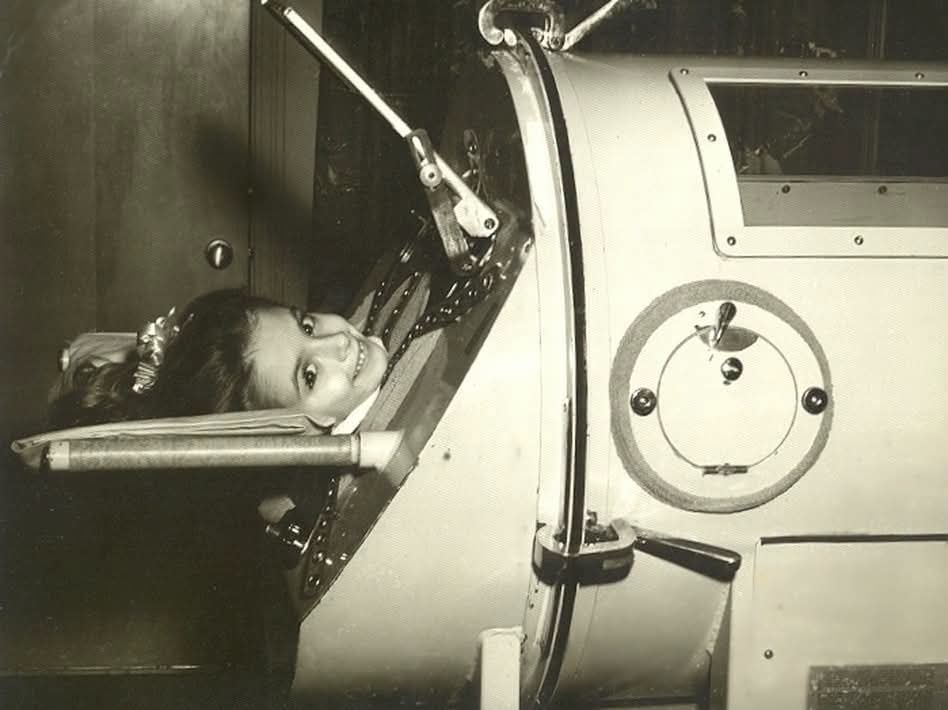
The iron lung was one of the most important medical inventions used during the height of the polio epidemic. Unlike modern ventilators that push air directly into the lungs, the iron lung used negative pressure to help patients breathe naturally.
The patient’s body was placed inside a sealed metal chamber while the head remained outside. The machine repeatedly changed pressure around the chest, allowing the lungs to expand and contract when damaged muscles could no longer perform that function.
During the worst years of polio outbreaks, these machines filled hospital wards across America. Thousands of patients depended on them, and the sight of rows of iron lungs became one of the most powerful images associated with the disease.
For Lillard, however, the machine was not a frightening symbol. It was the reason she survived.
Seven Decades of Survival Inside a Machine From Another Era
After contracting polio, Lillard spent about 6 months in the hospital while doctors worked to strengthen her breathing ability. During the most difficult period of her recovery, she spent nearly 23 hours a day inside the iron lung.
Over time, she regained some independence. She learned to walk again and reduced her reliance on the machine. However, the effects of polio never disappeared completely. She lived with a paralyzed right arm, scoliosis, and severely reduced lung capacity.
Despite those challenges, Lillard built a meaningful life. She became an artist, writer, and musician. She painted, wrote poetry, and composed music with her left hand because her right arm remained paralyzed.
Her story was not only about surviving disease. It was about continuing to create, contribute, and help others despite physical limitations.
She Became Ill Before Vaccines Changed America Forever
One of the most remarkable details about Lillard’s story is how close it came to the turning point in medical history.
She contracted polio in 1953, only about 2 years before the widespread introduction of the first successful polio vaccine developed by Dr. Jonas Salk.
Before vaccines transformed public health, polio outbreaks terrified American communities. Families avoided crowded events, swimming pools were sometimes closed, and parents feared that a normal childhood illness could lead to permanent paralysis.
At its peak, the United States recorded thousands of paralytic polio cases each year. After vaccination programs expanded, cases dropped by more than 99%, and generations of Americans grew up without experiencing the fear that shaped Lillard’s childhood.
Her life became a living reminder of the world that existed before vaccines.
Why Modern Machines Could Not Replace Her Iron Lung
As medicine advanced, many polio survivors transitioned from iron lungs to newer respiratory devices. However, Lillard found that modern ventilators did not provide the same type of breathing support her body had relied on for decades.
After spending more than 70 years adapting to negative-pressure breathing, the iron lung had become uniquely suited to her needs.
The challenge was that the technology was disappearing.
The machine keeping her alive was built during an era when iron lungs were common in hospitals. By her final years, many replacement parts were no longer manufactured, and technicians with experience repairing the devices had become increasingly rare.
Some components inside her machine dated back to the 1940s, making maintenance a race against time.
A Medical Lifeline That Became Harder to Maintain
For most people, an old appliance breaking down is frustrating.
For Lillard, a mechanical failure could become a medical emergency.
Her family faced the difficult task of finding replacement parts, maintaining aging equipment, and locating people who understood how to repair a machine that had largely disappeared from modern healthcare.
The situation highlighted a broader issue facing some Americans who rely on specialized medical equipment. As technology advances, older devices can become harder to service, leaving patients dependent on rare expertise and limited resources.
Lillard’s iron lung was more than a machine. It was her connection to every breath she took.
Storms Created Dangerous Moments
Electricity was essential to keeping Lillard alive.
Power outages that many households could tolerate for hours created immediate danger for someone dependent on an iron lung. During severe weather events in Oklahoma, maintaining her breathing support became an urgent challenge.
One emergency reportedly occurred after a storm disrupted power to her home. Her husband, Baha Seleh, provided emergency assistance while waiting for help to arrive.
Her experience showed the hidden challenges faced by people who rely on powered medical equipment. For some patients, a storm is not just an inconvenience; it can become a race against time.
Long COVID Added Another Battle After Decades of Resilience
After surviving polio for more than 70 years, Lillard faced another respiratory challenge later in life.
She contracted COVID-19 twice and later developed long COVID, according to reports from her family. The illness placed additional pressure on lungs that were already weakened from decades of damage caused by polio.
She also experienced post-polio syndrome, a condition that can appear decades after the original infection and may cause renewed weakness, fatigue, and breathing difficulties.
After years of using her iron lung mainly during sleep or rest, her condition eventually worsened to the point where she needed the machine continuously.
The same device that helped her survive childhood became essential again during her final years.
A Life Defined by Compassion, Not Disability
Although the iron lung made her story famous, those who knew Lillard remembered far more than her medical struggles.
She was known for her creativity, kindness, and determination.
She dedicated time to helping abandoned animals, especially dogs, and became involved in community efforts. She continued expressing herself through art, writing, and music despite physical challenges that would have overwhelmed many people.
Her life demonstrated that disability does not erase ambition, purpose, or the ability to make an impact.
The End of an Extraordinary Medical Era
Martha Ann Lillard’s death may mark the end of a unique period in American healthcare history.
For decades, she represented the connection between two different eras: the America where polio could suddenly change a child’s future and the modern America where vaccination has made the disease almost unimaginable.
Her life stretched across more than 75 years of medical history, from iron lungs filling hospital wards to a world where the machine became a rare artifact maintained in only a handful of places.
She was not simply a woman who lived inside an iron lung.
She was a survivor who showed what human determination could accomplish when medicine, technology, and courage came together.
The Numbers That Tell Martha Ann Lillard’s Story
Martha Ann Lillard lived to 78 years old, carrying the effects of polio for more than 7 decades after becoming infected as a 5-year-old child in 1953.
She spent approximately 6 months hospitalized after her diagnosis and at one point relied on an iron lung for nearly 23 hours every day.
Her survival continued through more than 70 years of technological change, even as some parts of her machine dated back to the 1940s.
Her life also represented the dramatic success of vaccination. Polio cases in the United States fell by more than 99% after vaccines became widely available, transforming a disease that once terrified millions into one most Americans have never experienced.
Martha Ann Lillard’s story was ultimately not about a machine.
It was about survival, medical progress, and a woman who refused to let a childhood illness define the rest of her life.