New Poll Shows American Pride Falling as U.S. Democracy, History and Identity Face a 250th Anniversary Test
America is heading toward its 250th birthday with fireworks on the calendar and doubt in the air. A new wave of polling shows that pride in the United States is no longer the easy national reflex it once was. Many Americans still love the country, still value its freedoms and still feel a deep pull toward the flag, the Constitution and the idea of belonging to something larger than themselves. But the mood has changed.
The country is not simply asking whether people are proud to be American. It is asking what kind of America they believe they are being asked to celebrate.
Here are some of the biggest ways the new poll reveals a changing America, from falling national pride and weaker trust in democracy to sharper divides over history, identity, patriotism and what the country’s 250th anniversary now represents.
American pride is falling, but the story is not as simple as national shame.

The most striking takeaway is that great American pride has fallen to a historic low in Gallup’s long-running trend. Only about one third of adults now describe themselves as extremely proud to be American, while just over half say they are extremely or very proud.
That number lands with force because patriotism once felt like one of the few emotional places where Americans could meet, even when politics grew ugly. Now, pride is more conditional. People may still love the country, but many are less willing to applaud its institutions without asking hard questions.
This is not the death of patriotism. It is the rise of a more complicated patriotism, one that comes with an asterisk, a raised eyebrow, and a demand for proof.
The 250th anniversary is becoming a mirror, not just a birthday party.
The United States is approaching a milestone that should naturally invite celebration. A 250th anniversary sounds like parades, speeches, flags, history lessons, and patriotic music. But this anniversary is arriving at a moment when many Americans are not just looking backward with gratitude. They are looking around with frustration.
The country is being asked to celebrate its founding promise while many people feel that democracy is strained, politics is bitter, and opportunity is uneven. That makes the anniversary less like a national party and more like a national mirror. The uncomfortable question is not whether America has achieved great things. It has. The question is whether the country still feels confident enough to look at its contradictions without turning away.
Pride in U.S. democracy has taken one of the sharpest hits.
One of the clearest warning signs is the drop in pride over how democracy works in the United States. That decline matters because democracy is not just another institution in American life. It is the country’s main promise to itself.
When Americans lose pride in democracy, they are not only complaining about politicians. They are questioning whether the system still listens, still represents, and still protects the rules everyone is supposed to share. For many voters, democracy now feels less like a sturdy machine and more like a cracked windshield. It still works, but every new political fight makes the damage harder to ignore.
The country still loves freedom, but disagrees over who gets to define it.
Freedom remains one of the strongest words in American identity. It is still the idea many people reach for when they explain what makes the country meaningful. But freedom no longer has one simple meaning. For some Americans, it means limited government, gun rights, religious liberty, and strong borders. For others, it means voting access, personal autonomy, equal treatment, civil rights, and protection from discrimination.
That disagreement creates a strange national paradox. Americans can agree that freedom matters while fiercely disagreeing over what freedom requires. The word still unites the country emotionally. The definition divides it politically.
American history is becoming a battlefield over pride and honesty.
History is one of the biggest pressure points in the new patriotism debate. Many Americans still see the national story as one of courage, invention, sacrifice, constitutional government, and progress. Others see a story that cannot be told honestly without slavery, segregation, Native dispossession, exclusion, and unequal citizenship. Both stories are real. The conflict comes from which story gets treated as the headline and which gets pushed into the footnotes.
The country’s changing mood suggests that more Americans now want a version of patriotism that can survive honesty. They do not want to erase the Fourth of July. They want the celebration to make room for what came before it and what still remains unfinished. That is why pride in history is falling for some groups. It is not always because people hate America’s past. Sometimes it is because they know too much about it to describe it in simple terms.
Republicans, Democrats, and independents are living in different emotional countries.
The pride gap between political groups is one of the most revealing parts of the polling. Republicans remain far more likely than Democrats to express great national pride, while independents sit in a more conflicted middle. That divide shows how closely national pride is now tied to political identity. When people feel the country is being led in a direction they support, pride rises. When they feel alienated from power, pride drops.
The danger is obvious. If patriotism becomes dependent on which party controls Washington, then national identity becomes unstable every election cycle. A country cannot build lasting unity if half its citizens only feel proud when their side is winning.
Younger Americans are not rejecting America, but they are less attached to the old script.

Younger adults are less likely than older Americans to say being American is central to their personal identity. That does not mean they are automatically anti-American. It means they have grown up with a very different emotional education.
Many younger adults came of age with political chaos, economic pressure, school shootings, online outrage, climate anxiety, pandemic disruption, and rising distrust in institutions. Their America is not the polished civic poster version. It is louder, harsher, and harder to romanticize.
For them, national pride often has to be earned. They are less interested in being told that America is exceptional and more interested in seeing whether it is fair, functional, and honest. That generational shift may define the next era of American politics.
Race and ethnicity shape patriotism in ways the old national story often ignored.
The polling also shows that race, ethnicity, ancestry, and family origin remain deeply important to many Americans, especially Black and Hispanic adults. This is not a rejection of national identity. It is a reminder that America has never been experienced by everyone in the same way.
A Black American can value the freedoms of the United States while also knowing that those freedoms were historically denied, delayed, or defended through struggle. A Hispanic American can feel American while also feeling deeply connected to language, culture, ancestry, and family roots beyond the border. The old version of patriotism often asked people to flatten these identities in the name of unity. The newer version asks whether unity can be strong enough to hold them.
The military still inspires pride, but even that symbol is more complicated now.
The armed forces remain a major source of national pride, especially among Republicans and military families. For many Americans, the military represents sacrifice, service, courage, and family tradition. Yet pride in the military has also declined. That does not necessarily mean Americans have lost respect for troops. It often means they separate service members from the decisions political leaders make.
People can support soldiers while questioning wars. They can honor veterans while doubting foreign policy. They can respect sacrifice while worrying about how military imagery is used in partisan politics. That distinction is important. Military pride remains powerful, but it is no longer sealed off from the country’s wider argument over power, values and trust.
The flag still flies, but it does not speak the same language to everyone.

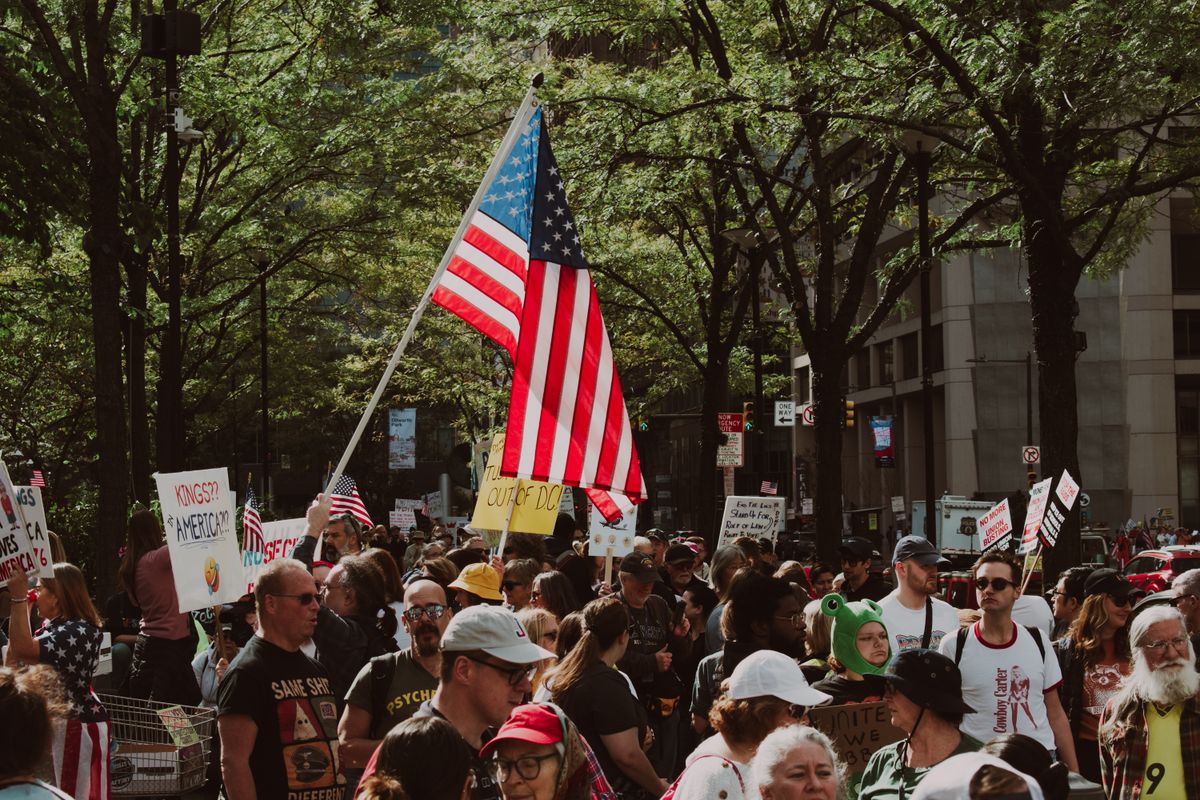
The American flag remains one of the country’s strongest symbols. But symbols depend on shared meaning, and shared meaning is harder to find in a polarized age. For some people, the flag means gratitude, military service, family sacrifice, and constitutional freedom. For others, it has become tangled with partisan identity, protests, culture war battles, and debates over who gets treated as fully American.
The flag has not lost its emotional force. If anything, it may carry too much meaning now. One person sees unity. Another sees exclusion. Another sees a country worth saving. Another sees a country refusing to face itself. That is the challenge of patriotic symbolism in 2026. The symbol is still there. The shared interpretation is weaker.