9 Breakfast Foods That May Be a Rough Way to Start Your Morning
Breakfast does not have to be perfect, and no single food automatically ruins your day. But some popular morning choices make it surprisingly easy to start the day with a heavy dose of added sugar, sodium, or highly refined ingredients while offering relatively little fiber or protein.
That matters because the FDA recommends keeping added sugars below 10% of daily calories. On a 2,000-calorie diet, that’s about 50 grams per day. The agency also considers a food high in a nutrient if it contains 20% or more of the Daily Value for added sugar, sodium, or saturated fat.
The point is not to ban pancakes forever or panic over an occasional donut. It is to recognize which seemingly convenient breakfast foods can quietly turn into dessert-sized portions of sugar or sodium before the morning has really started.
Here are nine worth looking at more closely.
Sugary Breakfast Cereals
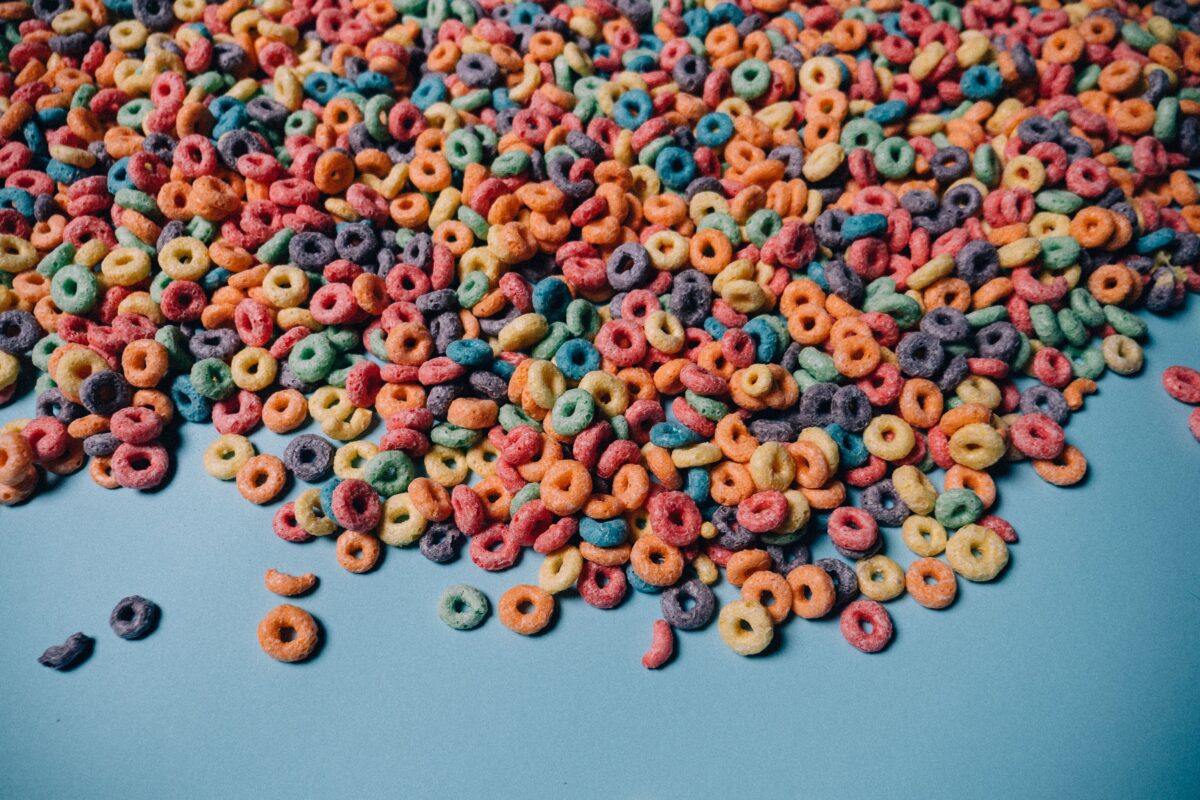
A colorful box may promise whole grains, vitamins, or a fun start to the morning, but the Nutrition Facts label tells the more useful story.
Some sweetened cereals contain substantial amounts of added sugar while providing relatively little protein or fiber. That can make a small serving less satisfying than it looks.
Rather than assuming all cereal is a bad choice, compare labels. The FDA recommends choosing foods that are higher in dietary fiber and lower in added sugars.
Unsweetened oatmeal or a lower-sugar whole-grain cereal topped with fruit can still deliver the convenience of pouring breakfast into a bowl without making sugar one of the main ingredients.
Donuts and Sweet Pastries
Donuts, danishes, oversized muffins, and iced pastries are easy to grab with coffee, which is part of their appeal.
The trouble is that baked sweets are a major source of added sugar in the American diet. That does not mean a croissant on Saturday morning is a nutritional catastrophe. It simply means pastries make more sense as an occasional treat than as an automatic workday breakfast.
If you want something portable, pair a smaller pastry with fruit, yogurt, eggs, or another protein source to make breakfast more substantial.
Fruit Juice
Orange juice is so strongly associated with breakfast that it practically comes with the table setting.
But juice and whole fruit are not nutritionally identical.
Juicing removes most of the intact fiber found in whole fruit, and drinking a glass can be much faster than eating the amount of fruit required to make it.
That doesn’t make 100% juice the same as soda, and claims that every glass of juice causes an extreme blood-sugar spike are too simplistic. Portion size matters.
If you enjoy juice, a smaller serving with breakfast can make more sense than treating a large glass as the meal’s fruit portion.
Sweetened Yogurt
Yogurt can be an easy breakfast, but varieties differ enormously.
Some flavored yogurts contain enough added sugar that the Nutrition Facts panel looks surprisingly similar to dessert. Others have little or no added sugar.
That is why reading the Added Sugars line matters more than simply seeing the word “yogurt” on the package.
FDA guidance uses 50 grams of added sugar as the Daily Value on a 2,000-calorie diet.
Plain Greek yogurt with berries, sliced fruit, nuts, or a small amount of your preferred sweetener lets you control how sweet your breakfast is.
Sweetened Instant Oatmeal
Oatmeal itself is not the problem.
In fact, plain oats can be a convenient whole-grain breakfast. The difference comes when an instant packet includes a large amount of added sugar and flavoring.
That is why treating every packet of instant oatmeal as unhealthy would be misleading. Some varieties have modest added sugar, while others are much sweeter.
Check the label rather than judging the packaging.
You can also start with plain quick oats and add cinnamon, fruit, nuts, peanut butter, or a little maple syrup yourself. It takes only slightly more effort while giving you control over the sweetness.
Related: The 10 Ultimate Comfort Foods
Bacon, Sausage, and Other Processed Breakfast Meats
Bacon alongside scrambled eggs is a classic American breakfast, but processed meats are worth considering as an everyday habit.
Products such as bacon and sausage can contribute significant sodium and saturated fat, depending on the brand and portion size.
The American Heart Association notes that commercially processed foods are a major source of sodium in the American diet and recommends reading labels for sodium, saturated fat, and added sugars.
You do not necessarily need to ban bacon from brunch. Instead, consider treating it as one component of breakfast rather than making several processed-meat servings the center of every morning meal.
Dessert-Like Coffee Drinks
Coffee itself is not automatically the issue.
Moderate caffeine consumption, up to around 400 milligrams per day for most adults, can fit into a healthy diet.
What changes the equation is everything poured into the cup.
Large flavored coffees with syrups, sweetened cream, sauces, and whipped toppings can become a significant source of added sugar. The CDC specifically recommends skipping flavored syrups and checking labels when choosing sweetened beverages.
A latte does not need to disappear from your life. Just remember that a drink can quietly contain as much sugar as something you would clearly recognize as dessert.
Energy Drinks

An energy drink may seem like an efficient breakfast substitute when you are late, but caffeine is not breakfast.
Energy drinks often contain large amounts of caffeine, and many also include added sugar and other stimulants.
These drinks can increase heart rate and blood pressure and may contribute to anxiety and sleep problems. American Academy of Pediatrics recommends that adolescents avoid energy drinks.
For adults, caffeine tolerance varies, but relying on highly caffeinated drinks instead of eating is a very different proposition from enjoying an ordinary cup of coffee with breakfast.
Some Store-Bought Granola Bars
Granola bars may have one of the healthiest-sounding names in the snack aisle.
Yet the category ranges from simple oat-and-nut bars to products closer to candy bars with oats attached.
Some contain plenty of nuts, whole grains, and relatively little added sugar. Others are loaded with syrups, chocolate coatings, or sweet fillings.
The American Heart Association makes an important point about processed foods: they are not all nutritionally equal. Reading the Nutrition Facts label is more useful than judging a product solely by whether it sounds “natural” or wholesome.
Look at added sugar, fiber, and protein before tossing a box into the cart.
The Real Problem Isn’t One Breakfast
Eating a donut once in a while isn’t the same as building every morning around donuts, sweetened coffee, and an energy drink.
Context matters.
Americans get more than half of their average daily calories from ultra-processed foods, though not every processed food is nutritionally poor. Some whole-grain breads, low-sugar yogurts, and nut spreads can still fit into a balanced eating pattern.
So rather than labeling individual foods as forbidden, focus on the overall pattern.
A breakfast with some fiber, protein, and relatively modest added sugar is likely to offer more than one dominated by sweet drinks and highly refined snacks.
And if you really want the donut?
Eat the donut. Just don’t let the drive-thru decide breakfast for you every single morning.