5 Grocery Store Chains With the Lowest Customer Satisfaction Scores, According to Shoppers
A 13-point gap separates the highest- and lowest-rated grocery companies in the latest customer satisfaction survey, showing just how differently shoppers can experience the weekly trip to the store.
The 2026 American Customer Satisfaction Index gave Trader Joe’s a score of 86 out of 100, while Giant Eagle scored 73. The supermarket industry as a whole scored 78, putting five major grocery companies below that benchmark.
The results measure more than whether customers liked the checkout experience. ACSI based its 2026 supermarket study on customer interviews collected from January through December 2025. Shoppers rated factors including employee courtesy, checkout speed, cleanliness, store layout, product availability, freshness, promotions, store hours, websites, apps, and pickup service.
Related: 15 Grocery Store Secrets That Could Save You Money
Here are the five companies that ranked lowest in the latest results.
Giant Eagle
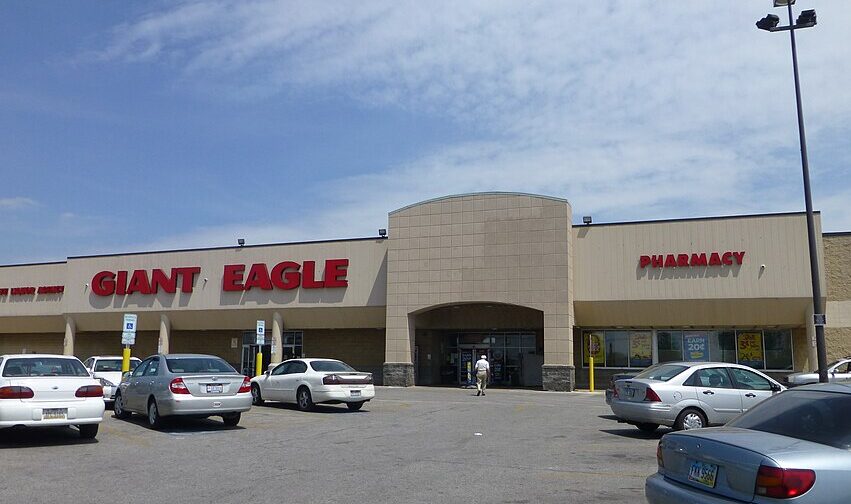
Giant Eagle recorded the lowest score among the 19 named companies in the ACSI supermarket results, with 73 out of 100. Its score dropped one point from the previous study, when it stood at 74, leaving the company five points below the 78-point industry average.
For shoppers in Pennsylvania, Ohio, West Virginia, Maryland, and Indiana, the result is particularly relevant. Giant Eagle is concentrated in those markets, so its national score applies to a company that is especially familiar to shoppers in those parts of the country.
The year-over-year movement is relatively small, but the overall position stands out. Giant Eagle was the only company in the group to fall as low as 73, making it the clearest bottom-ranked result in the survey.
Albertsons Companies
Albertsons Companies followed with a score of 74, down two points from its previous score of 76. That decline puts the company four points below the supermarket-sector average.
There is an important distinction here for shoppers: Albertsons Companies is a parent company, so the name on the survey does not necessarily match the name on the grocery-store sign. Its banners include Albertsons, Safeway, Vons, Jewel-Osco, Acme, Shaw’s, Tom Thumb and Randalls, among others.
That means shoppers in different markets may encounter the same corporate company through completely different supermarket brands. For readers checking their own local grocery options, the relevant question is which Albertsons Companies banner operates in their area.
Walmart
Walmart scored 75 out of 100, three points below the supermarket industry’s 78-point benchmark. Unlike several of the other companies near the bottom, however, Walmart’s score was unchanged from the previous year.
That makes Walmart’s result notable for a different reason. Rather than recording a sharp year-over-year decline, the company kept the same score while remaining below the overall supermarket average.
Walmart’s nationwide grocery footprint also makes this result different from the more regionally concentrated chains on the list. Shoppers across the country may encounter the company, but the ACSI score represents the broader grocery experience rather than a finding about any individual store.
Hy-Vee
Hy-Vee posted a score of 76, falling three points from 79 in the previous study. Among these five companies, that is the largest year-over-year decline.
The result has a distinctly Midwestern connection. Hy-Vee operates in Illinois, Iowa, Kansas, Minnesota, Missouri, Nebraska, South Dakota and Wisconsin, giving shoppers in those eight states a particular reason to pay attention to the result.
Its three-point drop also separates Hy-Vee from Walmart. While Walmart’s score held steady, Hy-Vee moved further below the industry benchmark during the latest study.
BJ’s Wholesale Club
BJ’s Wholesale Club scored 77, just one point below the 78-point supermarket average. Of the five companies at the bottom, it therefore sits closest to the overall industry score.
But BJ’s comes with a different shopping model. It is a membership warehouse club, meaning the ACSI result covers a bulk-buying, membership-based experience rather than the format shoppers encounter at a conventional neighborhood supermarket.
BJ’s operates more than 200 clubs across 20 states. For consumers in those markets, the 77-point result provides another way to view the survey, particularly because the shopping experience at a warehouse club is not identical to that of a traditional grocery chain.
What the Scores Mean
The five companies reached the bottom of the rankings for different reasons. Giant Eagle scored 73, followed by Albertsons Companies at 74, Walmart at 75, Hy-Vee at 76, and BJ’s at 77.
The ACSI survey measures more than customer service, covering factors such as checkout speed, cleanliness, product availability, freshness, and digital services.
The results also reflect different shopping environments, from Giant Eagle’s regional footprint and Hy-Vee’s Midwestern presence to Walmart’s nationwide reach and BJ’s membership warehouse format.
Ultimately, the scores are a snapshot of overall shopper satisfaction, not a verdict on individual stores. But the 13-point gap between the highest and lowest scores shows how differently customers can rate their grocery-shopping experience.