Newsom’s $6.2 Million Diaper Deal Is Not Exploding Over the Math. It Is the Missing Paper Trail
California’s free diaper program was designed to give new parents one less bill to fear. Instead, the paperwork behind the $6.2 million contract has become the story.
A government ethics group has asked California State Auditor Grant Parks to examine the state’s agreement with Baby2Baby, the Los Angeles nonprofit chosen to manufacture, warehouse and distribute diapers through Gov. Gavin Newsom’s Golden State Start initiative.
The Foundation for Accountability and Civic Trust, known as FACT, wants investigators to review how the nonprofit was selected, whether the price was reasonable, and whether personal relationships affected the award. No audit had been publicly announced when the request was reported, and no official body has found that Newsom, First Partner Jennifer Siebel Newsom, or Baby2Baby acted improperly.
That distinction matters. An audit demand is not proof of favoritism. Yet the controversy has grown because Californians still cannot inspect the documents that could settle the argument.
The program promised relief from day one
Office of the Governor of California, Public domain, via Wikimedia Commons
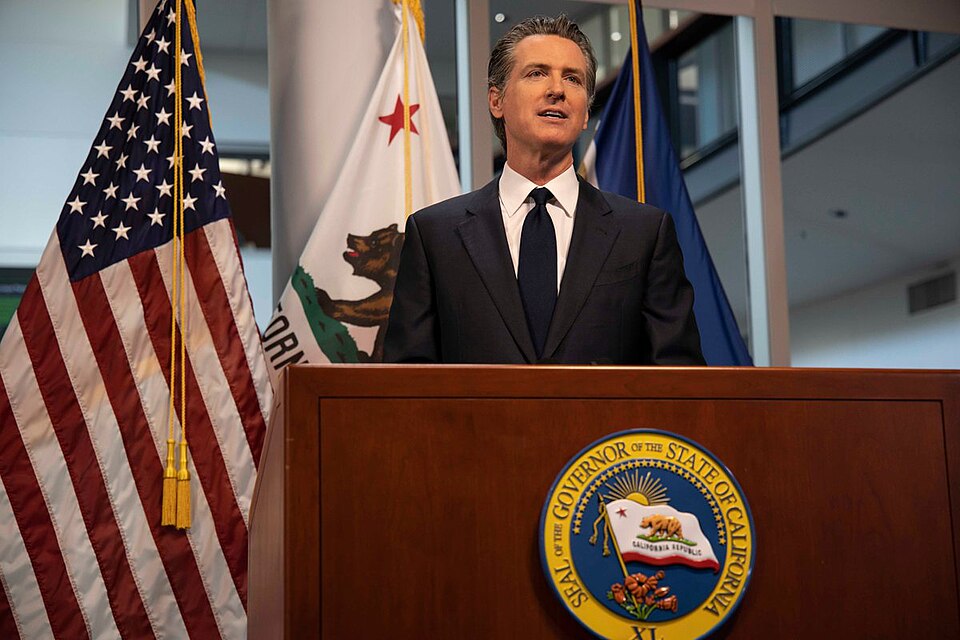
Newsom announced Golden State Start on May 8 as a first-in-the-nation effort to provide 400 free diapers to newborns leaving participating California hospitals. The first phase will prioritize hospitals serving large numbers of Medi-Cal patients before expanding.
Baby2Baby will handle procurement, storage, and hospital distribution. The nonprofit already operates a large diaper manufacturing and delivery network and says it has distributed hundreds of millions of essential items nationwide.
The idea addresses a real pressure point. Diapers are expensive, unavoidable, and not always covered by public assistance. A supply placed directly into a parent’s hands at hospital discharge offers practical help without another application.
That is why the political fight is not mainly about whether families need diapers. It is about whether California can prove that the vendor selection was fair, economical, and protected from political influence.
The viral diaper math missed important context
Critics initially claimed California was spending roughly 50 cents per diaper. That figure combined the proposed two-year program budget with only the first year’s projected diaper supply.
The current Baby2Baby contract is worth about $6.2 million and covers roughly 40 million diapers, according to the Newsom administration. That equals approximately 15.5 cents per diaper for manufacturing, warehousing, and direct implementation.
When state staffing, oversight, and planning expenses are included, the first-year cost rises to about 18.5 cents per diaper. The proposed two-year budget totals $19.9 million for an estimated 120 million diapers, or roughly 16.6 cents each.
Those figures do not prove the state obtained the best deal. They do show that the viral 50-cent claim overstated the cost.
Retail comparisons also have limits. A store price does not include statewide storage, inventory management, hospital coordination, and delivery. The useful comparison would be between Baby2Baby’s proposal and the bids submitted by competitors.
That comparison remains impossible because the scoring sheets and competing proposals have not been released.
The state says there was competition
California officials say the program was exempted from normal Public Contract Code requirements but was not simply handed to Baby2Baby. Officials told lawmakers they invited diaper banks, manufacturers and other organizations to apply, reviewed 15 submissions, conducted interviews and negotiated with the nonprofit.
That sounds competitive. The trouble is that the public cannot independently verify it.
The state Senate’s budget staff raised the issue in May, when the administration sought language to exempt the initiative from the Public Contract Code. Staff asked whether the exemption would cover the Baby2Baby agreement and what other contracts the agency expected to use.
The questions intensified because Baby2Baby co-CEO Norah Weinstein serves on the board of the California Partners Project, a nonprofit co-founded by Jennifer Siebel Newsom. Baby2Baby has said the role is unpaid and did not affect the contract.
A charitable connection does not establish favoritism. Still, it raises the standard for transparency. The cleanest response is a paper trail showing who applied, how each proposal scored, and why the winner prevailed.
The missing records became the real problem
CBS California Investigates requested the executed contract and bid records on May 12, four days after Newsom announced the partnership. The requested documents included the procurement packet, scope of work, scoring sheets, and vendor award records.
The state took 24 days to determine that the records were disclosable. It then said it needed several more weeks to produce them. By early July, the agency had delayed the release again, leaving the public waiting nearly two months.
Officials have acknowledged that the materials are public records but say additional time is needed to identify, review, and prepare them.
That explanation may be administratively valid, but it is politically damaging. A government can defend an unpopular decision. It struggles to defend a decision that people are not allowed to examine.
The longer the paperwork remains unavailable, the more room critics have to replace evidence with suspicion. Every delay makes the contract seem more mysterious than it is.
An audit could help both sides
FACT’s request does not automatically trigger an investigation. A formal audit may require action by the state auditor or approval through the Legislature’s Joint Legislative Audit Committee.
Still, an independent review could examine the selection criteria, conflict disclosures, competing prices, administrative expenses, and the justification for the contracting exemption.
That would not necessarily hurt Newsom or Baby2Baby. A clean audit could validate the state’s explanation, confirm the price was competitive and show that personal connections played no role.
For now, California has not been proven to have overpaid or steered the contract. Neither claim has been established.
The problem is simpler. The administration announced a high-profile taxpayer-funded partnership, praised the winning organization, and moved the program forward before giving the public access to the records needed to evaluate the deal.
Golden State Start may still become a valuable lifeline for families. But a program built around public generosity also requires public accountability. Until California releases the contract and scoring documents, the questions will keep growing faster than the diaper boxes can be delivered.