Pete Buttigieg Wants the Popular Vote to Decide the Presidency, Reigniting America’s Electoral College Fight
Pete Buttigieg is reviving America’s Electoral College debate by arguing that the presidential candidate who receives the most votes nationwide should win the White House.
The former transportation secretary has backed a national popular vote for years. His renewed push comes as speculation grows about a possible 2028 presidential campaign.
The idea sounds simple: count every presidential ballot together and award the office to the candidate with the largest national total.
But changing the system would reshape campaign strategy and state influence. Supporters call that overdue democracy. Opponents see a threat to federalism and less-populated states.
Buttigieg Says Every Vote Should Carry Equal Weight
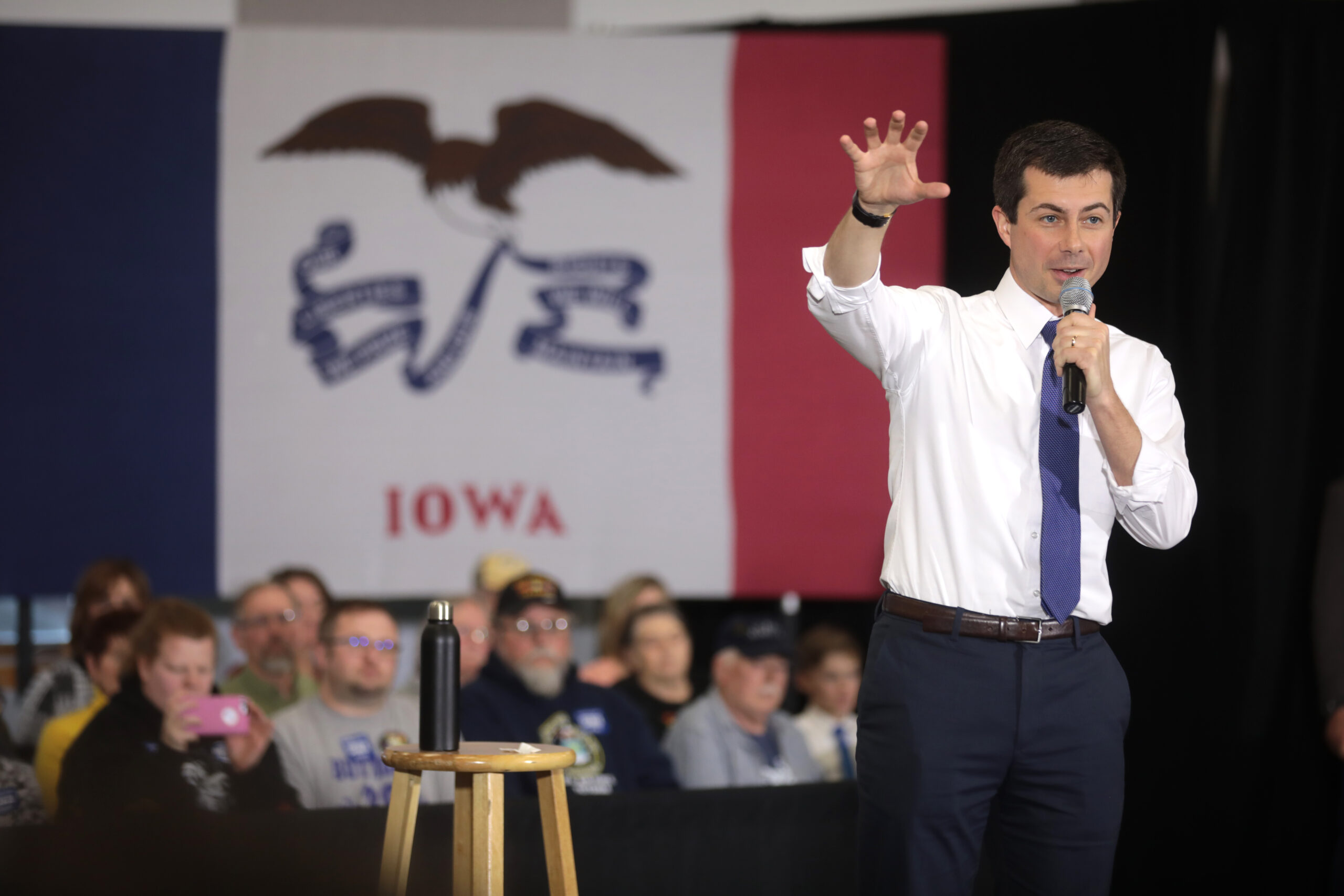
Gage Skidmore from Surprise, AZ, United States of America via Wikimedia Commons Licensed under CC BY-SA 2.0
Americans do not directly elect the president through one national count. They choose electors, and each state receives electoral votes based on its representation in Congress.
Most states award all their electoral votes to the candidate who wins statewide, even when the margin is narrow.
Buttigieg argues that this pushes campaigns to concentrate money and attention on a small number of battleground states. Voters in reliably Democratic or Republican states often receive little attention because the outcome appears settled.
A Republican in California and a Democrat in Oklahoma may vote knowing their candidate is unlikely to win the state. Meanwhile, battleground voters are flooded with campaign visits and promises.
Supporters say a national popular vote would make every ballot matter equally. Voters in politically lopsided states would have a stronger reason to participate because their ballots would add directly to a nationwide total.
Five Elections Produced a Split Result
The Electoral College winner has usually also won the popular vote, but the results were divided in 1824, 1876, 1888, 2000, and 2016.
The modern examples reshaped the debate.
George W. Bush became president in 2000 after the Florida recount dispute, even though Al Gore received more votes nationwide. In 2016, Donald Trump defeated Hillary Clinton in the Electoral College, while Clinton finished nearly 3 million votes ahead nationally.
For critics, those outcomes expose a contradiction: the candidate supported by fewer voters can still win the presidency.
Defenders respond that candidates campaign according to the rules in place. They pursue electoral votes rather than a national margin and would organize differently under another system.
A candidate who lost the popular vote might have campaigned differently if every ballot had counted toward a single total.
That does not settle whether the Electoral College is fair. It shows why comparing old results with a system that did not exist at the time can be misleading.
Critics Fear Big Cities Would Dominate
Opponents warn that a national vote could encourage candidates to focus on major metropolitan areas, where they can reach large numbers of voters quickly.
They argue that the Electoral College requires geographically broad coalitions and prevents major population centers from controlling presidential elections.
That concern resonates in rural communities that already feel ignored by Washington, national media, and large corporations.
Supporters counter that cities alone could not decide a national election. Candidates would still need votes from suburbs, small towns, and rural counties. The difference is that campaigns would compete for individuals instead of treating entire states as safely red or blue.
A razor-thin national result could also trigger recount demands across states with different election laws, creating a nationwide legal battle.
Changing the System Would Be Difficult
The Electoral College cannot be eliminated through an ordinary act of Congress.
A constitutional amendment would require approval from two-thirds of both the House and the Senate, followed by ratification by three-fourths of the states. In today’s polarized climate, that path appears extremely difficult.
Reform supporters are also pursuing the National Popular Vote Interstate Compact.
States joining the compact agree to award their electoral votes to the winner of the nationwide popular vote. It would take effect only when participating states control at least 270 electoral votes, the number needed to elect a president.
The compact would not abolish the Electoral College. It would use state authority over electors to ensure the popular-vote winner takes office.
If it reaches 270, the compact would almost certainly face legal challenges over state authority, interstate agreements, and whether Congress must approve it.
Public Support Has Grown, but Divisions Remain
Surveys have repeatedly found that a majority of Americans support electing the president by national popular vote.
The partisan divide, however, remains sharp.
Democrats have become the strongest supporters of change, especially after 2000 and 2016. Republicans are generally more likely to defend the current system.
That divide gives both sides an easy argument. Supporters can present reform as equal voting power. Critics can describe it as an attempt to rewrite the rules after losing under the existing system.
The movement will struggle unless voters prioritize democratic principles over temporary party advantage.
The Real Fight Is Over Political Attention
The strongest argument for reform is not that a popular vote would guarantee victory for one party. Both parties would adapt their messages, travel schedules, and turnout strategies.
The deeper question is whether candidates should be rewarded for appealing to voters everywhere or for assembling the correct combination of states.
Under the current system, millions of Americans live in places campaigns rarely contest. Their ballots are counted, but their communities receive little attention because the statewide result appears predetermined.
Buttigieg’s push challenges that reality.
The Electoral College has survived repeated reform efforts and will not disappear simply because a potential presidential candidate calls for change. Yet the debate is no longer purely academic.
The next major fight over how America chooses its president may begin in state legislatures, as they decide whether geography should continue to determine how much political attention an American voter receives.