Peter Thiel Warns Democratic Socialists Are Poised to Take Over as the Democratic Party Faces a Generational Power Struggle
We are watching a new power struggle inside the Democratic Party, and Peter Thiel has put a sharper name on it than most party leaders are willing to say aloud. His warning that democratic socialists could take over the Democratic Party did not sound like a casual provocation. It sounded like a billionaire investor reading the political weather and seeing a storm moving directly toward the old establishment.
At the Aspen Ideas Festival, Thiel argued that cultural, economic, and technological stagnation is pushing voters toward movements that reject the old political order. In his view, Donald Trump’s rise broke the Republican establishment first. Now, he suggested, the Democratic Party may face its own internal revolt from the left, powered by voters who no longer believe cautious centrism can fix housing costs, wage pressure, generational debt, or corporate power. CNN reported that Thiel made the remarks during a non-recorded panel in Aspen alongside political scientist Francis Fukuyama.
Why Peter Thiel’s Democratic Socialist Warning Hit So Hard
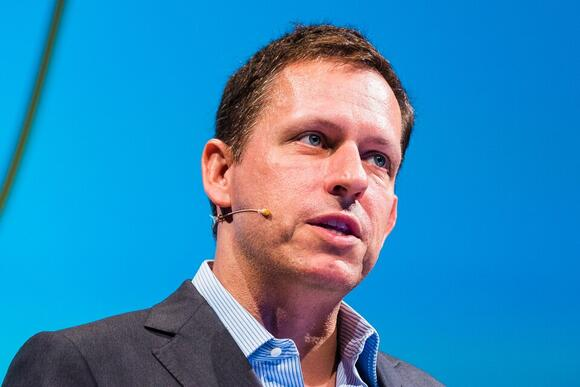
Thiel’s comments landed because they came at the exact moment when democratic socialist candidates were proving they could do more than make noise online. They were winning elections. They were beating incumbents. They were building organizations. Most importantly, they showed that safe Democratic districts may no longer automatically belong to establishment-backed politicians.
The warning also carried symbolic weight because of Thiel’s own profile. He is not a Democratic insider complaining about activists. He is a PayPal co-founder, a Palantir co-founder, a tech investor, and a longtime supporter of right-wing political figures. That makes his warning politically theatrical: a billionaire telling Democrats that anti-billionaire politics is gaining enough force to threaten the party’s leadership structure. The deeper point is not whether Thiel is rooting for Democrats to fail. The point is that he identified a real tension: when voters feel trapped by rent, debt, unaffordable homes, stagnant opportunity, and an economy that rewards the already powerful, they begin to look for candidates who promise confrontation rather than compromise.
New York’s Progressive Primary Sweep Changed the Conversation
The clearest sign came from New York, where Mayor Zohran Mamdani helped lift a slate of progressive candidates in Democratic congressional primaries. The Associated Press reported that Mamdani-backed candidates swept establishment-backed Democrats, unseating two sitting members of Congress and strengthening Mamdani’s position as a democratic socialist force inside the party.
That result matters because New York is not just another Democratic stronghold. It is a media capital, a donor hub, a congressional battlefield, and a place where national Democratic messaging is often tested. When a mayor aligned with democratic socialism can influence House primaries and help defeat incumbents, the conversation changes from “Can the left organize?” to “How much power does the left already have?” For years, establishment Democrats treated democratic socialism as a pressure movement: loud, energetic, but limited. New York showed something more serious. It showed electoral discipline. It showed candidate recruitment. It showed field strength. It showed that in low-turnout primaries, a motivated ideological faction can move faster than a party machine that assumes loyalty will hold.
Colorado Proved the Left-Wing Surge Is Not Just a New York Story
Then came Colorado. Melat Kiros, a 29-year-old democratic socialist, defeated 15-term Rep. Diana DeGette in the Democratic primary for Colorado’s 1st Congressional District, according to Reuters. The defeat of a long-serving incumbent in a Denver-area district gave the left another high-profile win and made it harder for party insiders to dismiss the movement as a New York-specific rebellion.
The Colorado result is important because incumbency used to be one of the strongest shields in Democratic politics. Seniority brought name recognition, donor networks, endorsements, and institutional protection. But Kiros’ victory showed that those advantages can collapse when voters are hungry for generational change and when challengers frame incumbents as too comfortable, too cautious, or too tied to the old order. We should not exaggerate the lesson. One primary does not mean the entire party has shifted. But we should not minimize it either. Safe blue districts are now becoming ideological battlegrounds. In those places, the general election is often not the real fight. The real fight is the Democratic primary, and democratic socialists are learning how to win it.
The Democratic Socialists of America Are Building Real Infrastructure
The rise of democratic socialism is not only about charismatic candidates. It is also about organization. Reuters reported that the Democratic Socialists of America now says it has more than 100,000 members, has endorsed 150 candidates this year, and claims dozens of electoral wins so far in 2026. That infrastructure matters. Political parties are not reshaped only by speeches. They are reshaped by canvassers, volunteers, small-dollar donors, tenant groups, union networks, local chapters, and primary voters who show up when everyone else stays home. The DSA’s advantage is that it often operates like a movement rather than just a campaign brand.
Its platform also gives candidates a clear lane. Reuters reported that DSA positions include Medicare for All, free higher education and early childhood education, universal rent control, expanded public housing, higher taxes on wealthy individuals and corporations, a 32-hour workweek with no reduction in pay, stronger union protections, and public ownership of major infrastructure sectors. Those ideas are controversial, but they are not vague. That clarity gives democratic socialist candidates a message that can cut through political fog. They can tell voters exactly who they blame and exactly what they want the government to do.
Housing Affordability Is Fueling the Political Revolt
The strongest fuel behind the democratic socialist surge is not ideology alone. It is an affordability pain. Millions of younger voters are not debating political theory in the abstract. They are looking at rent, mortgage rates, student debt, grocery costs, childcare, healthcare, and wages that do not stretch far enough. The National Association of Realtors reported that the share of first-time homebuyers fell to a record low of 21% in 2025, while the typical first-time buyer age rose to an all-time high of 40. NAR’s deputy chief economist, Jessica Lautz, said the historically low first-time buyer share shows the real-world consequences of a market starved of affordable inventory.
The rental market tells the same story. The National Low Income Housing Coalition reported that in 2025, a full-time worker needed to earn $33.63 per hour to afford a modest two-bedroom rental home in the United States, while the average renter wage was $23.60 per hour. In 49 states, the average renter wage was not enough to afford a modest two-bedroom rental at fair market rent. That is why democratic socialist messaging has become so potent. When homeownership feels delayed until middle age and rent consumes the paycheck, phrases like tax the rich, build public housing, cap rents, and break corporate power stop sounding radical to some voters. They start sounding like survival politics.
Younger Voters Are Politically Available in a Way Establishment Democrats Should Fear
The generational mood is grim. Pew Research Center found in 2025 that across high-income nations, including the United States and Canada, about three-quarters of adults believe children will grow up financially worse off than their parents. Pew also found that dissatisfaction with the economy and democracy is linked to pessimism about the next generation’s financial future. That pessimism creates an opening for insurgent politics. Establishment Democrats often speak in the language of process, coalition management, and incremental reform. Democratic socialists speak in the language of urgency, anger, and structural change. For a voter who feels locked out of the American promise, the second language can sound more honest.
Even positive wage data does not erase that frustration. The Bureau of Labor Statistics reported that real average weekly earnings rose 1.5% from May 2024 to May 2025, but affordability pressures remain intense when housing, rent, insurance, childcare, and debt absorb so much household income.
The Democratic Establishment Faces a Choice It Can No Longer Avoid
Democratic leaders now face a difficult decision. They can fight the democratic socialist wing openly, risking a civil war with energized young voters and organized activists. They can absorb parts of its agenda, risking attacks from Republicans and moderate Democrats. Or they can continue trying to manage the conflict quietly, hoping the movement stays contained in deep-blue districts. That last option looks weaker by the week. New York showed that Mamdani’s influence is not symbolic. Colorado showed that long-serving incumbents can fall. The DSA’s growing membership shows that the movement has infrastructure. Housing and wage pressure show that the message has emotional force.
Republicans will try to turn every democratic socialist win into a national attack ad. They will argue that Democrats are moving too far left on taxes, policing, immigration, Israel, public spending, and government control. In swing districts, that argument may have real power. But Republicans also face their own challenge. If they only attack socialism without addressing the affordability crisis that makes socialism attractive to some voters, they may misunderstand the moment. Thiel’s warning was not only about ideology. It was about stagnation. His argument was that when the future feels blocked, voters search for exits.
Peter Thiel’s Warning Is Really About Who Owns the Future of the Democratic Party
The Democratic Party is not being taken over overnight. But it is being tested. The old leadership model, built on seniority, donor confidence, institutional endorsements, and cautious messaging, is running into a younger, angrier, more organized left that believes the party has been too slow for too long. Peter Thiel’s warning struck a nerve because it captured that shift in one dramatic phrase: democratic socialist takeover. Whether that prediction becomes reality depends on what happens next in primaries, city halls, statehouses, and Congress.
For now, one thing is clear. The fight is no longer only about policy. It is about power. It is about whether the Democratic Party remains controlled by its old establishment or becomes increasingly shaped by candidates who believe the system itself needs to be rebuilt. When voters believe the future is shrinking, they stop rewarding politicians who defend the present. That is the warning Democrats cannot afford to ignore.