Republican Sen. Bill Cassidy Slams Special IRS Protections for Donald Trump and Family as “Totally Wrong”: “No American Should Be Above the Law”
Republican Sen. Bill Cassidy of Louisiana has drawn a sharp line over special tax protections granted to President Donald Trump and members of his family, arguing that the federal government cannot maintain credibility if powerful political figures receive legal treatment unavailable to ordinary Americans.
Cassidy’s criticism came after a turbulent battle over the confirmation of Todd Blanche as U.S. attorney general, a fight that forced Republican senators to confront questions about the independence of the Justice Department, the authority of the Internal Revenue Service, and an extraordinary settlement involving Trump, his family and his businesses. Blanche ultimately secured confirmation in a razor-thin 50-49 Senate vote on August 8, 2026, with Cassidy providing the decisive support.
Yet Cassidy made clear that his vote for Blanche should not be interpreted as approval of everything the Justice Department had done.
During an August 9 appearance on CBS News’ Face the Nation, Cassidy was asked specifically about protections shielding Trump and members of his family from IRS scrutiny. His response left little ambiguity.
“That’s totally wrong,” Cassidy said, adding that “no American should be above the law.” He acknowledged that the issue had nearly pushed him toward voting against Blanche’s confirmation.
Bill Cassidy Nearly Opposed Todd Blanche Over Trump IRS Protections
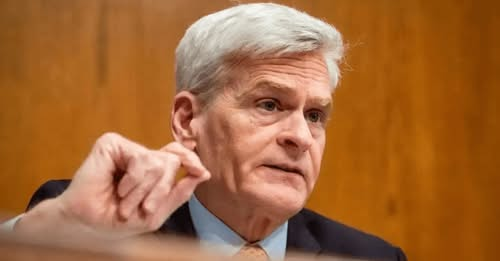
The controversy began with a settlement connected to a $10 billion lawsuit Trump filed against the IRS after a former government contractor disclosed his tax information. The agreement eventually became much bigger than the original dispute.
According to a June 24 bipartisan letter from Cassidy and Democratic Sen. Cory Booker of New Jersey, the Justice Department announced a $1.776 billion “Anti-Weaponization Fund” as part of the resolution of Trump’s lawsuit. Additional settlement language appeared to extend sweeping protections to Trump, members of his family, his businesses and certain affiliated individuals.
The senators said the language appeared capable of blocking federal claims involving conduct occurring before May 18, 2026, including matters that might not yet have been known to investigators.
That immediately raised a constitutional question larger than any individual tax dispute: Can an administration effectively negotiate protections for the president who controls that administration?
Cassidy and Booker said the situation raised serious legal and institutional concerns because the normal adversarial structure of government litigation appeared compromised when the president was negotiating with an executive branch operating under his authority.
For Cassidy, that concern did not disappear simply because Trump is the leader of his own political party.
The Original Trump Settlement Went Far Beyond a Routine Tax Case
The scope of the original language helped transform what might otherwise have remained a technical tax dispute into a major political controversy.
Cassidy and Booker said the settlement appeared to protect Trump, his family and businesses from audits, investigations and potential civil or criminal liability connected with conduct occurring before the settlement’s cutoff date. They demanded an explanation of the legal authority used to approve such sweeping terms.
Reuters later reported that the tax-related agreement barred the IRS from auditing previous tax returns belonging to Trump, his sons and their family business. The protections emerged alongside the proposed anti-weaponization fund through the settlement of Trump’s lawsuit against the IRS. That combination became politically explosive.
The concern was no longer simply whether Trump had a legitimate complaint about the unauthorized release of his tax information. The debate shifted toward whether resolving that complaint should also provide the president and people close to him protections extending beyond what other taxpayers could reasonably expect. For lawmakers including Cassidy, the distinction mattered.
A person who believes the government violated the law has the right to seek relief through the courts. That principle is fundamentally different from creating a settlement that potentially places the successful litigant beyond ordinary federal scrutiny.
Todd Blanche Narrowed the Agreement Before His Confirmation
The pressure from Republican senators eventually produced changes. Before the Senate voted on Blanche, he agreed in writing to narrow the tax-immunity arrangement and end the anti-weaponization payments, Reuters reported.
CBS reported that Blanche rescinded the May directive establishing the anti-weaponization fund and issued clarification limiting the scope of the Trump tax protections. By Cassidy’s August 9 interview, CBS anchor Margaret Brennan described the narrowed arrangement as applying to Trump, Donald Trump Jr., Eric Trump and the Trump Organization.
Those changes helped Blanche win over Republican senators who had been threatening to sink his nomination. But the compromise did not erase Cassidy’s objection to the underlying principle.
When Brennan specifically asked about protections from IRS investigations for Trump’s family, Cassidy called the arrangement wrong and said the matter had nearly persuaded him to oppose the nomination. That distinction is central to understanding Cassidy’s position.
He supported Blanche while rejecting one of the most controversial policies associated with Blanche’s leadership.
Why Cassidy Still Voted to Confirm Todd Blanche
Cassidy described his final decision as much more complicated than a simple endorsement. He argued that senators were not choosing between Blanche and an ideal attorney general. They were choosing between confirming Blanche and potentially leaving the Justice Department under another acting leader who might not operate the department as effectively.
During his Senate remarks, Cassidy pointed to federal efforts targeting violent crime, human trafficking, drug trafficking and fraud as reasons he believed stable leadership at the Justice Department remained valuable. CBS reported that he had spoken with federal prosecutors in Louisiana who gave him positive assessments of the department’s operational focus under Blanche. Cassidy therefore found himself balancing two competing conclusions.
On one side, he believed Blanche had exercised poor judgment in approving controversial elements of the IRS settlement and anti-weaponization fund. On the other, he concluded that Blanche could still provide more effective and stable leadership than the realistic alternatives available under the Trump administration. Cassidy ultimately chose the second argument.
The result was a 50-49 confirmation, with Republican Sens. Susan Collins of Maine and Lisa Murkowski of Alaska joining Democrats in opposing Blanche. Cassidy became the crucial Republican vote allowing the nomination to succeed.
The $1.8 Billion Anti-Weaponization Fund Added Another Layer of Controversy
The IRS protections were not the only part of the settlement troubling senators. The proposed $1.776 billion anti-weaponization fund, frequently rounded to $1.8 billion, was designed to provide compensation to people who claimed they had been improperly targeted by the federal government.
Critics worried that the program could become a taxpayer-funded compensation mechanism for Trump allies. Republican concerns intensified over the possibility that people convicted of crimes connected to the January 6, 2021 Capitol attack could potentially benefit.
Blanche eventually formally rescinded the directive creating the fund as Republican resistance threatened his confirmation.
Reuters reported that questions nevertheless remained about how legally durable Blanche’s commitments would be and whether similar policies might someday return in another form.
That uncertainty helps explain why Cassidy continued to voice concerns even after casting his vote.
Cassidy’s Warning Goes Beyond Donald Trump’s Tax Returns
The senator’s strongest argument was ultimately not about accounting documents, tax filings or even one president. It was about equal treatment under federal law.
Cassidy has supported Trump on legislation and other administration priorities. In December 2025, for example, Trump signed Cassidy-backed legislation designed to make IRS math and clerical-error notices clearer for ordinary taxpayers.
His opposition to special protections for Trump therefore represents a more specific institutional argument rather than automatic opposition to the president.
The federal tax system depends heavily on public confidence that enforcement does not change according to political status. Americans routinely face audits, document requests, collection actions and investigations without the ability to negotiate broad immunity agreements with officials who ultimately report to them.
When special protections reach the president, his children and his businesses, the political consequences become unavoidable.
A tax system perceived as aggressive toward ordinary citizens but restrained around powerful officials risks losing the legitimacy that makes voluntary compliance possible.
The Trump IRS Dispute Is Now a Test of Justice Department Independence
Blanche’s confirmation officially settled the immediate Senate fight, but it did not settle the larger argument surrounding the Justice Department.
Reuters reported that senators had raised broader questions about Blanche’s independence from Trump, particularly because Blanche previously served as the president’s personal defense attorney.
Cassidy himself also expressed concern about federal prosecutions involving perceived political enemies of the president. In his Senate remarks, he warned that cycles of administrations pursuing political opponents could weaken public trust in American institutions and deepen political division. That makes the IRS controversy part of a much larger test.
The issue is no longer simply what protections Trump received. The deeper question is whether federal law-enforcement institutions can demonstrate that their decisions remain grounded in law when cases directly involve the president who oversees the executive branch.
Blanche now carries responsibility for proving that independence while serving as Trump’s attorney general.
Cassidy, meanwhile, has placed himself in an unusual position. He cast the vote that helped install Blanche, but he has also publicly rejected special legal treatment for Trump and his family.
That combination ensures his vote will remain part of the debate surrounding the Justice Department long after the confirmation roll call has faded.
For Cassidy, the standard he articulated is simple even if the politics are not: government power should not be weaponized against Americans, but political power should never become a shield from the law either.