Rising Boxing Star Hannah Rapp Killed by Alleged Road Rage Driver While Cycling in Texas
Hannah Rapp had spent years teaching herself how to absorb pressure, maintain her balance, and keep moving forward. In the boxing ring, that discipline carried the unbeaten contender from a late start in the sport to a world championship opportunity. On a rural Texas road on Saturday morning, however, the 26-year-old athlete encountered a danger no amount of training could have prepared her for.
Rapp, known throughout boxing by the nickname “Hanarchy,” died after a vehicle struck her while she was riding a bicycle in Brazos County on July 18, 2026. Authorities arrested 31-year-old Charles Medina and charged him with manslaughter. The accusation remains an allegation, and Medina has not been convicted.
Deputies Say the Driver Passed, Stopped, and Reversed

The Brazos County Sheriff’s Office said deputies responded shortly before 10 a.m. to the 23000 block of FM 159 following reports of a serious collision involving a vehicle and a cyclist. Emergency crews treated Rapp at the scene and transported her to a local hospital, but she later died from her injuries. Investigators said Rapp was cycling with another rider when Medina’s vehicle passed them. According to the sheriff’s account, the driver then stopped, put the vehicle in reverse and struck Rapp. Medina was taken into custody without incident and booked into the Brazos County Detention Center on a manslaughter charge.
The exact events leading up to the collision have not been fully explained publicly. Although several reports have characterized the case as a suspected road-rage incident, authorities have said only that the crash appeared isolated and that detectives were still gathering evidence. That distinction matters because the investigation remains active, and prosecutors must establish what happened before criminal responsibility can be determined. For Rapp’s family, teammates, and supporters, the legal process can offer only limited accountability. The larger reality is brutally simple. A young woman who had built her life around ambition, work, and athletic discipline went out for a bicycle ride and never came home.
From Indiana Track Athlete to World Title Challenger
Rapp’s rise in boxing was unusually fast. She grew up in Indiana and competed in track and field at Purdue University before finding her way into a boxing gym. She had been involved in the sport for fewer than five years when she earned a chance to fight for one of boxing’s biggest prizes. After moving to the Bryan and College Station area in 2024, Rapp joined Bryan Boxing and trained under coach Carl Perry. Perry recalled that she immediately surprised the gym. Rather than quietly watching the male fighters spar during her first visit, she climbed into the ring and demonstrated that she belonged there.
Her professional record reached eight victories and one draw before her championship challenge, with five of those wins coming by knockout. She captured the North American Boxing Federation featherweight title and climbed high enough in the rankings to face undefeated WBC champion Tiara Brown.
On June 13, 2026, Rapp entered the ring at the Caribe Royale Orlando in Florida for a 10-round WBC featherweight championship fight. Brown retained her title by unanimous decision, handing Rapp her first professional defeat. Yet the result did little to diminish the impression Rapp made. Brown later called her the “best dance partner” she had faced professionally and said sharing the ring with her had been an honor.
The title opportunity had arrived almost as suddenly as Rapp’s career had accelerated. When her team received the offer, she accepted without hesitation. In a local television interview before the bout, she explained that few fighters ever receive such an opportunity and declared, “I’m prepared for this and I’m really excited to shock the world.”
She Balanced Boxing With a Full-Time Safety Career
Rapp’s public story was not only about punches, rankings and championship belts. Away from the gym, she worked full time at Texas A&M University in the Environmental Health and Safety Department as a fire and life safety building inspector. The job reflected another side of her character. Rapp held a degree in environmental engineering and was responsible for helping inspect campus buildings for safety concerns. At the same time, she used vacation days and sometimes took unpaid leave to travel, spar, and prepare for professional fights.
That schedule demanded a level of sacrifice rarely visible when athletes step beneath bright arena lights. Training camps require repeated workouts, disciplined nutrition, long-distance travel, and physical recovery. Rapp handled those demands while maintaining a career focused on protecting others. Perry described her as one of the most professional athletes he had encountered. That reputation helps explain why the reaction to her death has extended far beyond boxing. She was not simply a promising contender. She was an engineer, a public-safety worker, a colleague, a partner, a friend, and a woman steadily building a future.
Boxing Community Mourns a Career Cut Short
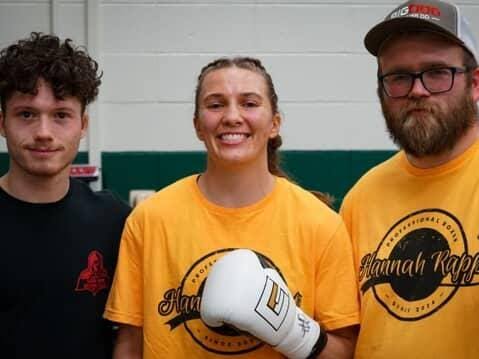
Tributes quickly spread after news of Rapp’s death became public. The World Boxing Council said it was mourning a champion and described her as both an “exceptional boxer” and an “invaluable member” of its international boxing family. WBC President Mauricio Sulaimán offered condolences to Rapp’s loved ones, team and supporters. Most Valuable Promotions, which staged her championship fight against Brown, also honored the fighter, praising the spirit and determination she brought into the ring.
The sadness has been sharpened by the fact that Rapp recently stood on the sport’s largest stage. Only about five weeks before her death, she had fought through 10 championship rounds against one of the division’s best athletes. That night was supposed to represent another beginning, not the final chapter of her career.
Her record will now remain frozen at eight victories, one defeat, and one draw. Numbers, however, cannot capture the speed of her rise or the respect she earned. They do not show the early mornings, the unpaid days away from work, the drives to sparring sessions, or her willingness to accept a championship fight without asking for an easier opponent. Hannah Rapp’s story should have continued through more fights, greater opportunities and more chances to shock the world. Instead, the boxing community is remembering a fearless contender whose greatest years appeared to be waiting just ahead.