Trump says Exxon, Chevron among firms probed as part of surge in gas prices.
President Donald Trump has opened a new front in America’s gas price fight, saying Exxon Mobil and Chevron are among the oil companies being examined as part of a government probe into why gasoline prices remain painfully high even after crude oil prices have fallen. The move puts two of the country’s biggest energy names directly inside a politically explosive debate over whether drivers are getting a fair deal at the pump.
For millions of Americans, the timing is hard to ignore. Crude oil prices have dropped sharply from recent highs, yet the national average for regular gasoline remains close to $3.93 per gallon. That is lower than the peak seen earlier this year, but still high enough to sting families planning summer trips, commuters filling up twice a week, and small businesses trying to control delivery and transportation costs.
Trump’s message was blunt. He argued that oil companies are paying less for crude but are not lowering retail gasoline prices fast enough. His administration has framed the issue as a question of consumer protection, with the Department of Justice being asked to examine whether any oil companies engaged in improper pricing behavior. So far, the probe is an investigation, not a finding of wrongdoing.
Exxon and Chevron Become the Faces of a Bigger Gas Price Battle
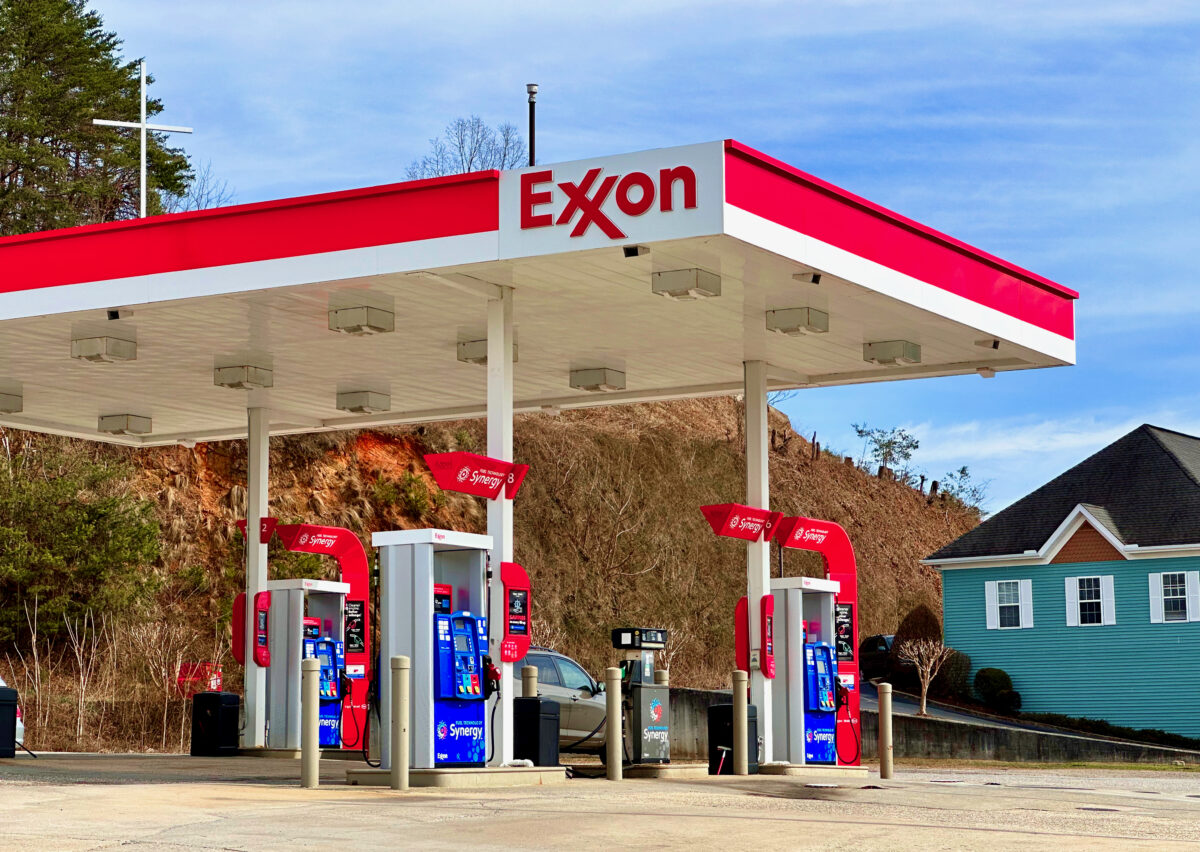
Exxon Mobil and Chevron are not small players caught in a side dispute. They are two of the most recognizable names in American energy, with massive operations across production, refining, transportation, and fuel marketing. When Trump named them, he turned a broad complaint about gasoline prices into a direct political and corporate confrontation.
That matters because gasoline prices sit at the emotional center of the economy. People may not check crude oil charts, refinery margins, or wholesale fuel spreads, but they see the price sign every time they drive past a station. A few extra dollars per tank can quickly become a grocery tradeoff, a skipped trip, or another reason households feel the economy is working against them.
The companies have not been found guilty of price gouging, and investigations of gasoline pricing often face a difficult legal road. Energy markets are complicated, and price changes move through several layers before reaching consumers. Still, Trump’s decision to call out major oil firms gives the probe political weight and puts public pressure on the industry to explain why pump prices have not dropped faster.
Why Gas Prices Fall Slower Than Oil Prices
One reason this fight is so heated is that the gasoline market often frustrates drivers. Prices can jump quickly when oil surges, yet fall slowly when crude drops. Economists often describe this pattern as “rockets and feathers,” meaning prices shoot up like rockets but drift down like feathers.
That delay does not automatically prove wrongdoing. Gas stations may be selling fuel bought when wholesale prices were higher. Refiners may be dealing with lower inventories, regional supply constraints, summer fuel requirements, maintenance issues, or higher transportation costs. Taxes, distribution, refining capacity, and local competition all shape the final price drivers that customers see.
Still, the frustration is understandable. When crude oil drops sharply, people expect immediate relief. If that relief arrives slowly, suspicion grows. Trump is tapping into that anger by arguing that oil companies should pass on savings to consumers more quickly, especially after weeks of elevated prices tied to geopolitical instability and supply fears.
The Iran Conflict Made the Price Spike More Painful
The current gas price fight did not happen in a vacuum. Oil prices climbed earlier this year after conflict involving Iran raised fears about supply disruptions and the Strait of Hormuz, one of the world’s most important oil transit routes. That uncertainty helped push fuel costs higher and made gasoline a daily reminder of global instability.
Now that crude prices have cooled and some geopolitical fears have eased, the political pressure has shifted. The administration wants lower crude costs to show up more clearly at the pump. That is why the gasoline probe is about more than Exxon and Chevron. It is about whether American consumers feel any benefit when global energy markets move in their favor.
For Trump, the issue also carries political risk. High gasoline prices can damage any administration because they are visible, frequent, and deeply personal. Even when presidents do not directly control pump prices, voters often blame the person in the White House when prices rise.
Oil Industry Pushback Centers on Supply, Refining, and Inventories
The oil industry’s defense is expected to focus on market mechanics rather than politics. Industry representatives argue that gasoline prices do not move in perfect lockstep with crude oil because refining, distribution, and inventory conditions matter. A barrel of oil must be processed, transported, taxed, and sold through a retail network before it becomes the gallon of gasoline a driver buys.
That explanation may be accurate, but it is not always satisfying to the public. Drivers see oil prices falling and pump prices remaining stubborn. They want the math to feel simple. If the raw material is cheaper, the finished product should be cheaper too.
The harder truth is that gasoline pricing lies at the intersection of economics and perception. A delay of several weeks may be normal in market terms, but it can still feel unfair to consumers who need immediate relief. That tension is exactly why the DOJ probe has become politically powerful.
What the DOJ Probe Could Actually Examine
A Justice Department inquiry could look at whether companies coordinated pricing, restricted supply, manipulated markets, or engaged in other anti-competitive behavior. It could also examine whether public claims of price gouging are supported by evidence or whether the price gap can be explained by ordinary market forces.
That distinction matters. High prices alone are not always illegal. A company can make large profits during tight markets without necessarily breaking the law. The legal question is whether there was conduct that harmed competition or unfairly exploited consumers under applicable laws.
Past gasoline price investigations have often produced limited findings, especially at the national level. Local or regional problems can emerge, but proving broad collusion among major oil companies is difficult. Still, even the launch of a probe can pressure companies, attract congressional attention, and shape public debate.
Drivers Are Still Paying More Than They Did Before the Spike
The national average for regular gasoline has fallen from its recent peak, but it remains far above where many drivers want it to be. A price near $3.93 per gallon may feel like relief compared with May’s highs, yet it is still expensive for households already squeezed by food, rent, insurance, and borrowing costs.
The year-over-year comparison adds to the frustration. Gasoline is still significantly more expensive than it was a year ago, and that gap affects more than road trips. Higher fuel costs can push up prices for delivery services, rideshare trips, landscaping, construction, groceries, and nearly every business that depends on transportation.
That is why this issue has so much political force. Gas prices are not just an energy story. They are a cost-of-living story. They are a family budget story. They are a small business story. And in an election year, they can become a voting issue very quickly.
Exxon, Chevron, and the Public Trust Problem
Big oil companies already face public skepticism because many Americans remember past periods when energy giants posted strong profits during price spikes. Even when those profits come from global market conditions, they can look harsh when drivers are struggling at the pump.
That perception problem is now colliding with Trump’s public pressure campaign. Exxon and Chevron may argue that pricing is driven by supply chains, refining economics, regional fuel blends, taxes, and wholesale markets. But consumers may still ask a simpler question: if oil is cheaper, why is my tank still so expensive?
The answer may involve several layers of market reality. But politically, the burden is now on the industry to explain itself in plain language. If the explanation sounds too technical or too defensive, public anger could deepen.
What This Means for Summer Travel and Household Budgets
Summer is the worst time for gas prices to become a national fight. Families are planning vacations. Workers are driving longer distances. Demand often rises as more Americans hit the road. Even a modest price difference can change travel plans for households already watching every dollar.
If prices continue falling, the political heat may cool. If they stall near current levels or rise again, the DOJ probe could become a larger campaign issue. Trump will likely keep arguing that energy companies must move faster, and oil companies will likely keep pointing to market conditions beyond their control.
For consumers, the immediate question is practical. Will prices drop enough before July road travel peaks, or will families keep paying war-era prices after crude markets have already eased? That gap between what markets show and what drivers feel is where the political danger lives.
A High-Stakes Test for Trump, Big Oil, and American Consumers
Trump’s decision to name Exxon and Chevron marks a sharp turn in the gas price debate. Instead of blaming only foreign conflict, market instability, or refinery issues, the administration is now asking whether major oil companies are keeping pump prices higher than they should be.
The investigation may uncover misconduct or show that gasoline prices are lagging for ordinary market reasons. Either way, the probe puts Big Oil under a spotlight at a moment when Americans are demanding visible relief. For Exxon, Chevron, and the broader energy industry, the challenge is no longer just producing fuel. It is proving to angry drivers that the price on the sign is not being held higher than it needs to be.
For the White House, the gamble is just as clear. If pump prices fall quickly, Trump can claim pressure worked. If they do not, the gas station may become one of the most damaging symbols of an economy that still feels too expensive for too many Americans.