Russian Missile Strike Kills at Least 10 at Ukraine Defense Event, Nearly 100 Injured
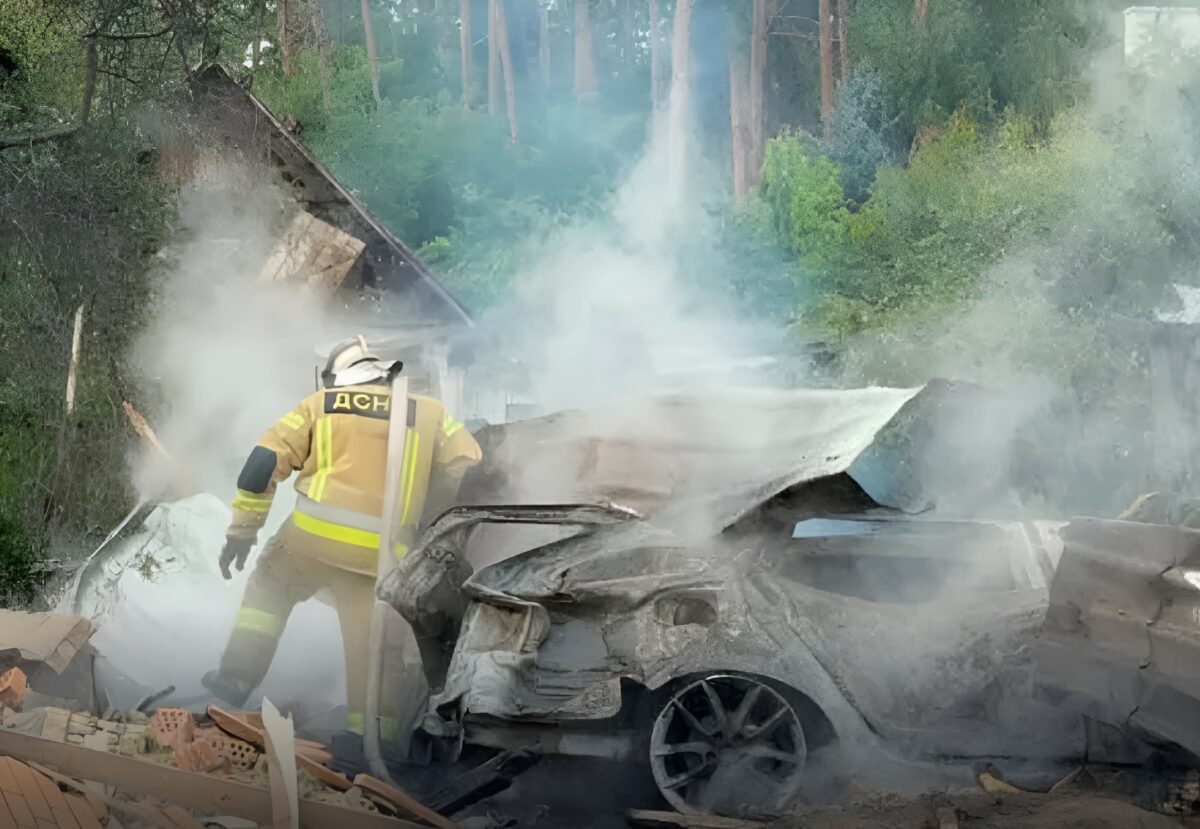
A Russian ballistic missile struck a private training ground in Ukraine’s Kyiv region during a defense industry gathering on Friday, killing 10 people and injuring nearly 100 others, Ukrainian officials and industry representatives said.
The deadly attack has prompted a rescue operation, a criminal investigation and difficult questions about how an event involving members of Ukraine’s strategically important defense sector was organized during an intensifying Russian missile campaign.
Ukrainian President Volodymyr Zelensky confirmed that emergency teams were working at the site but did not disclose its precise location or identify the facility that was hit.
“A rescue operation is currently under way in the Kyiv region following a Russian missile strike,” Zelensky said in a statement on Telegram, adding that authorities were working to establish the circumstances surrounding the attack.
Ruslan Oliynyk, the acting governor of the Kyiv region, said preliminary information indicated that a ballistic missile had struck a privately operated training ground where events were being conducted.
The Ukrainian Council of Defense Industry, an association representing private weapons manufacturers, said defense industry representatives had been present at the location. The council stressed that it had not organized the gathering and said the movements and exact location of participants had not been publicly disclosed.
Valerii Borovyk, the founder of Ukrainian drone company First Contact, told Ukrainian media that the missile hit a training ground where a defense industry exhibition was taking place.
Security arrangements at defence event face scrutiny
The presence of defense manufacturers gives the attack significance beyond its immediate casualty toll. Ukraine’s private arms sector has become central to the country’s ability to resist Russia, particularly through the rapid development of drones, electronic warfare systems and locally produced military equipment.
The strike also exposes the risks involved when defense engineers, entrepreneurs and military-linked specialists gather in one location. Such events can help companies demonstrate new technology and build relationships with potential users, but they may also create concentrated targets in a country facing persistent surveillance, espionage and long-range attacks.
Ukraine’s prosecutor general, Ruslan Kravchenko, said authorities had opened a criminal case examining whether officials improperly performed their duties while organizing and conducting the event.
The investigation could focus attention on whether adequate precautions were taken, including the selection of the venue, protection of participant information, access to shelters and procedures for responding to missile warnings.
No public evidence had emerged indicating how Russian forces may have identified the gathering or whether the site had been deliberately selected because of the defense exhibition. Ukrainian officials also had not released details about the identities of those killed or injured.
Attack renews focus on Patriot shortage
The missile strike came one day after Zelensky met senior representatives of Raytheon, the American manufacturer involved in producing the Patriot air-defense system.
Ukraine has repeatedly asked its Western partners for additional Patriot systems and interceptor missiles, arguing that they are essential for defending cities, military facilities and critical infrastructure from Russian ballistic missiles.
Ballistic weapons are especially difficult to stop because of their speed and flight path. While Ukraine operates several types of air-defense equipment, Patriot batteries remain among the most important systems available to intercept such threats.
The timing of the Kyiv-region attack is likely to reinforce Zelensky’s argument that delays in supplying interceptors carry immediate human and strategic consequences. Each successful strike can kill civilians or military personnel while also damaging the industries Ukraine depends on to maintain its defense.
Ukraine has developed its own air-defense technology during the war, but moving from prototypes to large-scale production requires factories, trained workers, funding and secure supply chains. Those same production networks have increasingly become targets for Russian missiles and drones.
Protecting the emerging defense sector has therefore become a parallel battle. Ukraine must produce weapons quickly while limiting public information about where companies operate, where demonstrations are held and how specialists travel.
Ukraine expands attacks deeper inside Russia
The strike occurred as Ukraine intensified its own long-range operations against facilities inside Russia and Russian-occupied territory.
A Ukrainian attack on an oil facility in Russia killed six people and injured 26 others, a regional governor said. The incident formed part of a broader Ukrainian campaign targeting fuel infrastructure, military logistics and other sites that support Russia’s war effort.
Ukraine has also targeted logistical facilities associated with Wildberries, Russia’s largest online retailer, according to company founder Tatyana Kim.
Kim said facilities in St. Petersburg, the surrounding Leningrad region and Simferopol in Russian-occupied Crimea had come under attack. Images circulated by Russian media showed large columns of smoke rising over St. Petersburg.
Other Wildberries warehouses were reportedly struck in recent days, causing major fires. The attacks demonstrate how Ukraine is increasingly using domestically developed drones to reach targets far beyond the front line.
Retail warehouses are not traditional military bases, but large logistics centers can form part of the transport and distribution systems that keep an economy functioning during wartime. Repeated strikes can interrupt deliveries, increase insurance and security costs, and force authorities to spread air-defense systems across a much wider area.
Ukrainian officials have made clear that their long-range campaign is also intended to bring the consequences of the invasion closer to the Russian public. Fuel disruptions, airport closures, warehouse fires and air-raid warnings challenge the Kremlin’s effort to present the war as distant from daily life inside Russia.
Russia’s Defense Ministry said its forces shot down 571 Ukrainian drones overnight. The unusually high figure, which could not be independently verified from the information released, illustrates the growing scale of the aerial contest between the two countries.
A war increasingly fought far from the front
Russian President Vladimir Putin has sought to depict Moscow as negotiating from a position of strength. Russia controls roughly one-fifth of Ukraine, including territory seized after its initial intervention in 2014 and its full-scale invasion launched years later.
However, Ukraine’s expanding drone operations have complicated Russia’s military calculations. Even as Russian forces pressure Ukrainian positions on the battlefield, Kyiv has demonstrated an ability to strike oil sites, warehouses and other high-profile targets hundreds of miles away.
The result is a war increasingly shaped by events far from the trenches. Russian ballistic missiles threaten gatherings and industrial sites around Kyiv, while Ukrainian drones force Russian cities and businesses to confront security risks that were once concentrated near the border.
Friday’s attack in the Kyiv region brings those two dimensions together. It inflicted a severe human toll while striking at the community responsible for developing some of Ukraine’s most effective battlefield technology.
The rescue effort will determine the final scale of the casualties. The criminal investigation, meanwhile, will examine whether the tragedy involved preventable security failures.
Beyond those immediate questions lies a larger challenge for Ukraine: how to protect the engineers, manufacturers and innovators whose work is helping the country fight a technologically driven war, even as Russia intensifies its efforts to find and destroy them.