Alaska’s 3,048 Citizenship Letters Expose A Bigger Voter Database Problem Before The 2026 Primary
More than 3,000 Alaska voters have received an unsettling message weeks before the state’s 2026 primary election: confirm that you are a United States citizen.
The Alaska Division of Elections sent 3,048 citizenship verification letters, placing the affected voters on the state’s inactive voter list while officials await their responses. The number is extraordinary because similar voter-roll reviews normally identify about 200 people for further examination. This year’s total is more than 15 times higher.
State election officials have not presented evidence that thousands of noncitizens illegally registered to vote. Instead, they believe outdated or incomplete information held by the Alaska Division of Motor Vehicles may have caused eligible citizens, particularly naturalized citizens, to be flagged.
What we are seeing is not simply another argument over election fraud. It is a warning about what can happen when government databases built for different purposes are treated as if they contain complete, current and interchangeable information.
Alaska citizenship verification letters reach thousands of voters.
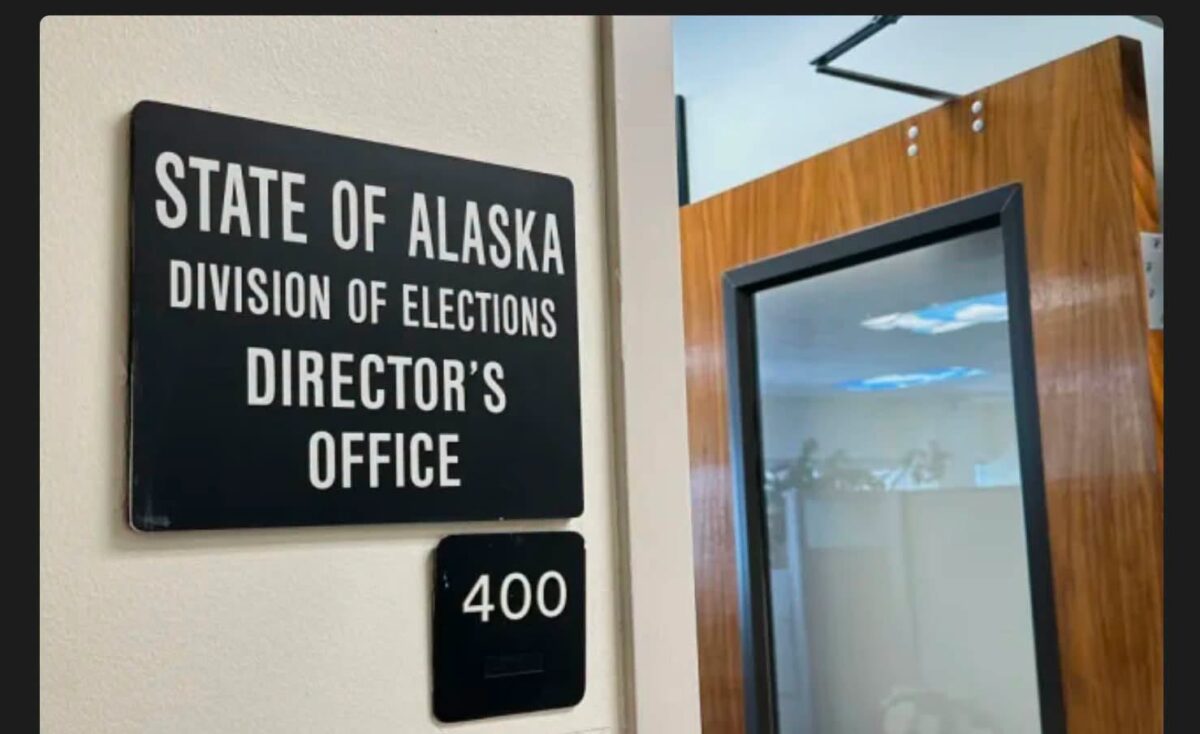
The letters ask recipients to affirm their citizenship by mail, telephone or email. Election officials are not demanding passports, birth certificates, naturalization documents or other citizenship papers from the affected voters.
Anyone who responds and confirms citizenship will be returned to active voter status. Those who do not respond will remain classified as inactive, but they will not automatically lose their ability to participate in the August 18 primary.
Division of Elections Director Carol Beecher told lawmakers that affected voters can still cast a questioned ballot. The voter must attest that they meet Alaska’s voting qualifications, after which election officials review the ballot before determining whether it should be counted.
That distinction matters. The state has not formally canceled 3,048 voter registrations. However, the process creates an additional administrative step for people who may have done nothing wrong.
An active voter generally expects to arrive at a polling location, confirm their identity, and receive a regular ballot. An inactive voter may face questions, additional paperwork, or uncertainty about whether the ballot will survive the review process.
Even when the ballot is ultimately counted, the experience can make an eligible citizen feel as though the government considers their right to vote questionable.
Why did Alaska flag so many potential noncitizens?
Alaska regularly compares its voter registration information with DMV records as part of voter-list maintenance. Election administrators use such comparisons to identify deaths, address changes, duplicate registrations and possible eligibility issues.
This year’s comparison produced a result that state officials themselves considered unusual.
Beecher told lawmakers that “a lot of old data” appeared to have been included in the review. The DMV’s records may reflect a person’s immigration or citizenship status at the time they applied for a driver’s license or identification card, even if that person later became a naturalized citizens.
Consider a legal permanent resident who obtained an Alaska driver’s license several years ago. At the time, the DMV correctly recorded that the applicant was not a citizen.
The resident later completed the naturalization process and became a U.S. citizen. The individual then lawfully registered to vote through another government program, but never returned to the DMV to update the citizenship field attached to the original licensing record.
When the voter roll is compared against the older DMV entry, the person may appear to be a noncitizen even though that information is no longer accurate.
Election officials have presented this as a possible explanation rather than a confirmed account of every case. The state has not publicly established how many letter recipients are citizens, naturalized citizens, noncitizens or people whose records contain other discrepancies.
A nonroutine request involving about 15,200 records
The data trail began months before the letters arrived.
In March, the Division of Elections gave the DMV a list containing approximately 15,200 driver’s license and identification applicants and requested citizenship information associated with those records. The DMV later described the request as “nonroutine.”
The elections division followed up in June seeking clarification. The DMV said the information it returned included records where the agency’s latest confirmed status was something other than “Citizen.”
That wording is critical. A record that does not say “Citizen” is not necessarily proof that the person remains a noncitizen.
It can mean the DMV has older information. It can mean citizenship was never updated in that specific database. It can also mean the data field was incomplete, ambiguous, or created before the person became eligible to vote.
The review eventually produced 3,048 letters, far fewer than the approximately 15,200 records initially examined but dramatically more than the state normally sends.
Officials have not fully explained why this particular comparison generated such a large number of potential matches. That unanswered question now sits at the center of the controversy.
Citizens say they received Alaska’s voter verification letter.
The scale of the review attracted lawmakers’ attention after constituents began reporting that they had received citizenship verification notices despite being U.S. citizens.
Democratic state Rep. Andrew Gray said the people who contacted his office about the letters were citizens. That does not establish the status of all recipients, but it supports concerns that the review swept eligible voters into the verification process.
The letters therefore present two competing realities.
Alaska has a legitimate responsibility to ensure that only qualified citizens vote in state and federal elections. Noncitizen voting in federal elections is illegal, and election administrators are expected to investigate credible eligibility discrepancies.
At the same time, the government must avoid treating an outdated database entry as conclusive evidence against a registered voter. When records conflict, the state must distinguish between an actual ineligible registration and an eligible citizen whose information was never synchronized across agencies.
That distinction cannot be treated as a technical detail. It determines whether voter-list maintenance protects election integrity or places unnecessary barriers in front of lawful voters.
What inactive voter status means in Alaska
Being placed on Alaska’s inactive list does not mean a person has been convicted of wrongdoing, identified as a noncitizen or permanently removed from the voting system.
It is an administrative classification. In this case, voters can return to active status by responding to the citizenship letter and affirming that they are citizens.
A voter who remains inactive may still be allowed to cast a questioned or absentee ballot. Alaska law provides a process for inactive voters to have those ballots counted when their prior registration and eligibility can be verified.
Election officials say the letters are therefore not disenfranchising recipients. From a strictly procedural standpoint, voters still have a pathway to participate.
Yet we should not confuse the existence of a pathway with the absence of a burden.
A voter who overlooks the letter, has an unreliable mailing address, lives in a remote community, or does not understand the notice may arrive at the polls without realizing their status has changed. Alaska’s geography, transportation challenges and uneven communications infrastructure can make correcting an administrative problem more difficult than it would be in a densely populated state.
The possibility of casting a questioned ballot protects the voter from immediate rejection. It does not eliminate the confusion or anxiety created by an inaccurate flag.
Alaska’s August 18 primary is approaching quickly.
The timing has intensified the concern.
Alaska’s primary election is scheduled for Tuesday, August 18, 2026. Polling locations will operate from 7 a.m. until 8 p.m., and voters are expected to present an acceptable form of identification.
The state uses a top-four primary system. Candidates appear on the same primary ballot, and the four receiving the most votes advance to the general election.
With Election Day approaching, recipients have a limited window to read the letter, understand why it was sent, and contact the Division of Elections.
The state’s challenge is no longer limited to reviewing voter records. Officials must now reassure thousands of people that they can still vote, explain the questioned-ballot process and correct inaccurate citizenship information before it creates problems at polling places.
The letters are separate from Alaska’s agreement with the Justice Department.
The citizenship review arrived amid a separate dispute over Alaska’s decision to share detailed voter information with the U.S. Department of Justice.
Alaska was among a group of states that provided or agreed to provide federal officials with voter data that included dates of birth, driver’s license information and partial Social Security numbers. The information was intended to support federal citizenship checks and voter-list reviews.
Voting-rights and civil-liberties organizations sued Alaska officials in April 2026. The plaintiffs argue that sharing an unredacted voter list violated privacy protections and could expose eligible voters to improper removal procedures.
The case, filed by organizations including the League of Women Voters of Alaska and the Alaska Black Caucus, remains pending. The plaintiffs are seeking to invalidate the state’s agreement and require the federal government to destroy the information it received.
Lawmakers questioned whether the 3,048 citizenship letters resulted from the federal data-sharing arrangement. Beecher said they did not and stated that the information used for the letters came specifically from the DMV.
The two matters are therefore operationally separate. Politically, however, they are difficult to isolate.
Both involve large-scale comparisons of sensitive voter data. Both raise questions about whether government databases contain enough accurate information to make reliable eligibility decisions. Both also place Alaska inside a national struggle over citizenship verification and voting access.
Noncitizen voting remains illegal and uncommon.
The debate surrounding the letters is unfolding during an aggressive national campaign to impose stronger proof-of-citizenship requirements.
President Donald Trump and his allies have repeatedly argued that noncitizen registration and voting are widespread threats. The administration has supported federal citizenship databases, voter-roll comparisons and legislation requiring documentary proof of citizenship.
Available prosecutions and election reviews have not demonstrated voting by noncitizens on the scale described in political speeches.
A recent examination of federal court records found that 129 people had been charged under the principal federal noncitizen-voting statute since it took effect in 1996. Seventy-three were convicted or pleaded guilty, and many of the cases involved individual confusion or administrative mistakes rather than a coordinated election operation.
Earlier election studies have similarly concluded that noncitizen voting occurs but remains exceedingly rare.
Rarity does not mean election officials should ignore legitimate cases. It means citizenship reviews must be designed around the actual size and nature of the problem.
A system that falsely flags large numbers of citizens can create more disruption than the misconduct it is intended to uncover.
What Alaska must resolve before Election Day
The immediate priority is ensuring that every eligible recipient understands their status and knows how to correct it.
The Division of Elections must provide clear instructions through multiple channels, particularly for voters in rural communities. Notices should explain that receiving a letter is not an accusation, that documentary proof is not currently required and that affected citizens can restore active status by responding.
Poll workers must also be prepared for voters whose registrations appear inactive because of the citizenship review. A questioned ballot should be offered consistently and without confrontation.
Beyond August 18, Alaska needs an audit of the matching process.
That review should determine which data fields were compared, how the DMV defined a status other than “Citizen,” how old the underlying records were and what safeguards were used to identify people who naturalized after receiving a driver’s license.
The state should also disclose how many recipients affirmed citizenship, how many records were corrected and whether any confirmed noncitizens had actually voted.
Those numbers would help the public judge whether the operation uncovered a serious eligibility problem or primarily exposed weaknesses in government data management.