San Francisco’s Best Croissants Share a Common Ingredient: French Butter
A great croissant is instantly recognizable. The first bite should produce a crisp, delicate crackle as thin flakes fall away from the crust. Inside, the pastry should be light and airy, with a tender honeycomb structure rather than a dense, bread-like texture. The flavor should be rich and buttery but still balanced, allowing the quality of the ingredients to shine.
Creating that balance, however, is far more complicated than it appears. Croissants require precision at every stage, from mixing and resting the dough to rolling, folding, proofing, and baking. A small mistake in temperature, timing, or technique can affect the final result, leaving the pastry flat, greasy, or tough instead of light and layered.
Among the top croissants in a recent blind tasting of 14 San Francisco bakeries, one ingredient appeared repeatedly: cultured French butter, particularly butter from Normandy. Four of the five highest-ranked bakeries used butter from this French dairy region, highlighting how important butter selection is to a croissant’s texture, flavor, and structure.
Juniper Cafe, which placed first, uses Isigny Sainte-Mère cultured butter. ONE65 Patisserie, ranked second, uses Elle & Vire extra-dry butter from Normandy. Sol Bakery and Butter & Crumble, which ranked fourth and fifth, also rely on Isigny Sainte-Mère for their laminated pastries.
The results do not mean French butter is the only way to create an exceptional croissant. B. Patisserie, which ranked third, uses a Vermont-made American European-style butter and still produced a highly rated pastry. Its success shows that technique, ingredient quality, and careful handling matter as much as the butter’s origin.
Why Butter Matters So Much in Croissants
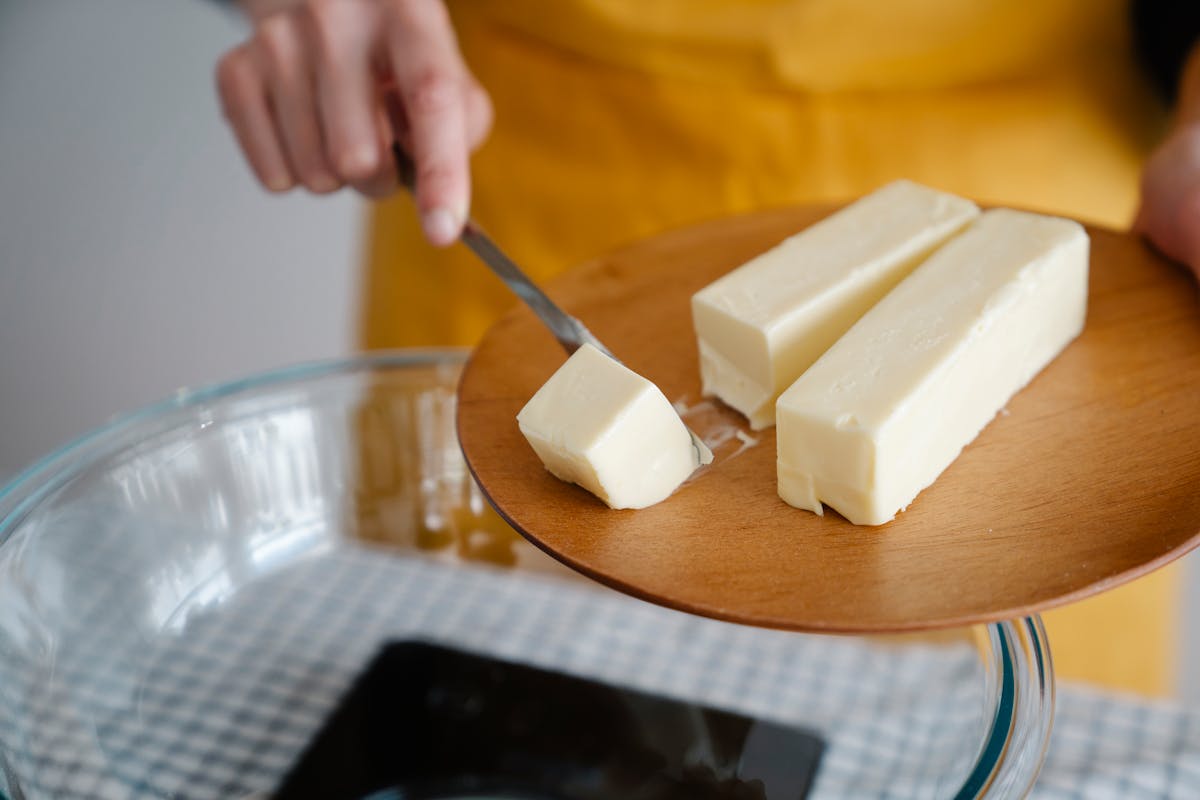
Butter plays a unique role in croissant production because it does more than add flavor. Unlike in many baked goods where butter mainly adds richness and tenderness, croissant butter helps build the pastry’s signature layers.
Croissants are made through a process called lamination. Bakers create a sheet of butter, place it inside the dough, and repeatedly roll and fold the mixture. Each fold creates additional layers of dough and butter, resulting in the thin, alternating structure that defines a classic croissant.
During baking, moisture in the dough and butter turns into steam. This steam separates the layers, creating a flaky exterior and an airy interior. The melting butter also contributes to the pastry’s delicate texture and rich flavor.
Because of this process, bakers cannot simply choose butter based only on taste. The butter must also perform well during production. If it is too cold, it may crack during rolling and damage the dough. If it becomes too warm, it can melt into the dough and prevent clear layers from forming. Ideal butter must stay flexible while maintaining its structure throughout lamination.
Why Cultured Butter Stands Out
Cultured butter is made by fermenting cream with live cultures before churning it. This process gives the butter a more complex flavor, often adding subtle tangy, nutty, or lightly fermented notes compared with standard sweet-cream butter.
In a croissant, those differences become especially noticeable because butter runs through the entire pastry. A high-quality cultured butter can add depth and richness without making the croissant feel overly heavy. It helps create the satisfying flavor of a plain croissant that does not need fillings or toppings to stand out.
Normandy has a long reputation for producing high-quality dairy products, including butter and cream. Isigny Sainte-Mère, one of the most frequently used butters among the top-ranked bakeries, comes from the Isigny area of Normandy and has held European Protected Designation of Origin status since 1986.
At Juniper Cafe, head baker and co-owner Amy Chen said the bakery tested different butter options before choosing Isigny Sainte-Mère for its croissants. The process reflects the experimentation involved in producing a pastry that looks simple but requires careful behind-the-scenes decisions.
The Role of Fat Content
Professional bakers also consider butter’s technical properties, including fat content. Elle & Vire’s extra-dry butter, used by ONE65 Patisserie, contains 84% fat and is designed specifically for laminated pastries such as croissants and puff pastry. Higher fat content improves stability and makes butter easier to handle during repeated rolling and folding.
Fat and moisture levels influence how butter behaves in dough. Standard U.S. butter must contain at least 80% milkfat, while higher-fat European-style butters often contain less water and can provide the consistency needed for delicate laminated doughs.
Different bakeries also make different choices depending on the pastry they are creating. Sol Bakery uses Isigny for croissants and other butter-focused laminated pastries but chooses Plugrá for products where butter is less central. This shows that many professional bakers choose ingredients based on each recipe’s needs rather than relying on one universal option.
Premium Butter Comes at a Cost
Using imported French butter can significantly increase production costs. Several highly ranked bakeries reported that French butter costs roughly 1.5 to two times more than high-quality American butter.
That expense can influence retail prices. In the tasting, croissant prices ranged from $3.95 at B. Patisserie to $6.50 among the pastries discussed. B. Patisserie’s use of Vermont-made European-style butter demonstrates that bakeries can pursue premium results through different ingredient strategies.
Still, ingredient cost is only one factor behind a croissant’s price. Labor, fermentation time, production methods, location, and business structure all contribute to the final cost of a handmade pastry.
Butter Is Only Part of the Formula
Although French butter appears to be a common feature among many of San Francisco’s top croissants, it is not a replacement for skilled baking. A croissant can fail if the dough is mishandled, the butter and dough are not at compatible temperatures, or proofing and baking are poorly controlled.
ONE65 adjusted its proofing process by extending the time and lowering the temperature, producing a denser and more structured croissant. Sol Bakery uses additional techniques, including a blend of flours, sourdough levain and biga, to develop complexity in its pastry.
Ultimately, premium Normandy butter may provide the foundation for exceptional croissants, offering richer flavor and reliable performance. But the baker’s control over fermentation, lamination, and heat turns quality ingredients into a truly memorable pastry.