Senate Confirms Todd Blanche as Attorney General After Heated Debate Over Trump Ties
The U.S. Senate has confirmed Todd Blanche as the nation’s next attorney general, ending weeks of uncertainty surrounding President Donald Trump’s pick to lead the Justice Department.
Blanche was confirmed early Saturday in a 50-49 vote that largely followed party lines. Two Republican senators, Susan Collins of Maine and Lisa Murkowski of Alaska, joined Democrats in opposing his confirmation.
The vote came after an unusually late Senate session that stretched past 4 a.m. as lawmakers worked to complete the confirmation process before a scheduled recess.
Blanche, a former personal attorney for Trump, thanked the president and the Senate following the vote, saying he was honored by the opportunity to lead the Justice Department.
“I am deeply honored by the trust and confidence President Trump has placed in me to lead the Department of Justice as our great nation’s 88th Attorney General,” Blanche wrote on X.
His confirmation places him at the center of a major debate over the Justice Department’s independence and the relationship between presidential power and federal law enforcement.
Blanche’s Confirmation Faced Bipartisan Concerns
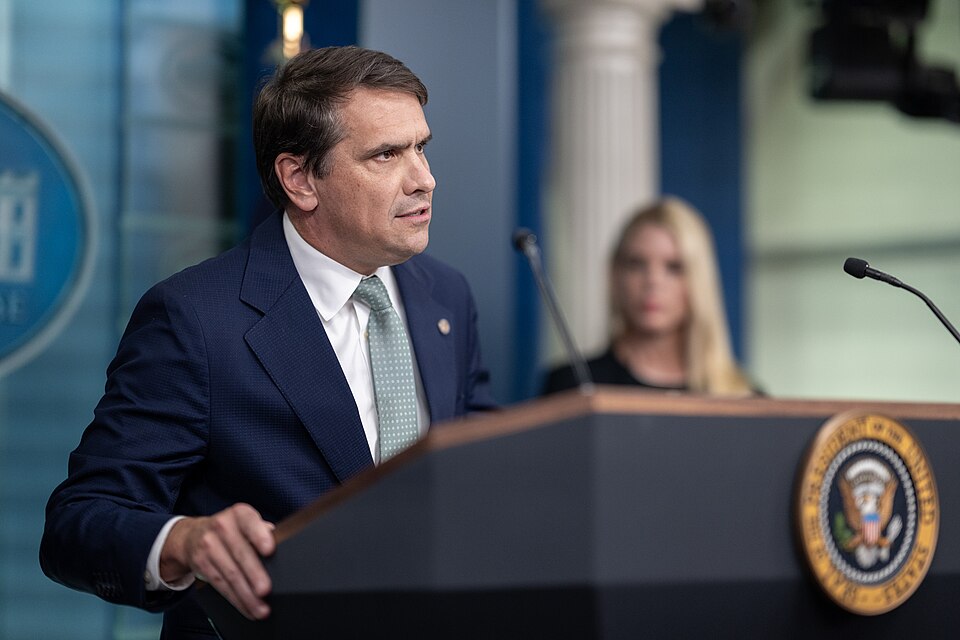
The White House, Public domain, via Wikimedia Commons
Although Blanche ultimately secured enough votes, his nomination faced resistance from lawmakers in both parties.
Some senators questioned whether his close relationship with Trump could affect his ability to operate independently as the country’s top law enforcement official.
Before the confirmation vote, concerns focused heavily on Blanche’s previous role as Trump’s personal criminal defense attorney and his involvement in controversial Justice Department-related decisions.
Democrats argued that Blanche’s history representing Trump created doubts about whether he could separate his responsibilities as attorney general from his loyalty to the president.
“The problem with confirming Todd Blanche is that he has never been able to shed his role as criminal defense lawyer for Donald Trump,” Sen. Adam Schiff, D-Calif., said before the Senate Judiciary Committee vote.
“He will never do what’s best for the American people. He will only do what’s best for Donald Trump, and you cannot leave someone like that as the nation’s No. 1 law enforcement official,” Schiff added.
Republican supporters, however, argued that Blanche’s legal experience and familiarity with the Justice Department made him qualified for the position.
Controversial Settlement Deal Put Confirmation at Risk
One of the biggest obstacles to Blanche’s confirmation involved his role in a controversial IRS settlement agreement connected to Trump.
The agreement included an anti-weaponization fund that could have provided financial support to Trump allies who claimed they were targeted by government overreach. Some individuals who could have benefited included people charged in connection with the Jan. 6, 2021, Capitol attack.
Blanche also faced questions over his involvement in another part of the deal that provided Trump, his family members, and his businesses protection from certain tax audits.
Several Republican senators initially expressed concerns about the arrangement. However, some holdouts eventually supported Blanche after receiving assurances from the nominee.
Sens. Bill Cassidy of Louisiana, John Cornyn of Texas, and Thom Tillis of North Carolina backed Blanche after the nominee agreed to rescind the $1.8 billion anti-weaponization fund.
However, questions remain because a potential legal loophole could allow the fund to return.
The controversy highlighted broader concerns about how the Justice Department would operate under Blanche’s leadership.
Trump’s Influence Over the Justice Department Remains a Central Issue

Blanche took over as acting attorney general in April after Trump removed his predecessor, Pam Bondi.
Trump had reportedly become frustrated with Bondi over what he viewed as insufficient action by the Justice Department against his political opponents.
After taking over the department in an acting capacity, Blanche told NBC News that Americans should be “happy” with Trump’s involvement in Justice Department operations.
That statement intensified concerns among critics who feared the department could become more politically influenced.
Former federal prosecutor Laurie Levenson warned that the biggest question surrounding Blanche’s leadership was whether he would resist pressure to use the Justice Department for political purposes.
“The biggest concern is whether he is now going to be emboldened to go even more gung-ho on Trump’s campaign of using the Justice Department for retribution,” Levenson said.
“There are no guardrails,” she added.
The issue has become a recurring point of debate during Trump’s presidency, with critics arguing that the Justice Department must maintain independence from the White House.
A New Chapter for the Justice Department Under Blanche

Blanche’s confirmation begins a new chapter for the Justice Department at a time when the agency faces intense political scrutiny.
Supporters say the new attorney general will restore focus on Trump administration priorities and address issues they believe were ignored under previous leadership.
Critics fear his close relationship with Trump could influence decisions involving investigations, prosecutions, and enforcement priorities.
The concerns are not new. During Trump’s first term, Attorney General Jeff Sessions faced pressure from the president after recusing himself from the investigation into Russian interference in the 2016 election.
Former Attorney General William Barr also left the administration after disagreements with Trump over efforts related to the 2020 election and the aftermath of Jan. 6.
Blanche now faces the challenge of leading the Justice Department while navigating questions about independence, loyalty, and public trust.
His supporters argue his confirmation represents a new direction for the department. His critics argue the coming months will determine whether the Justice Department can maintain distance from political influence.
For Blanche, the confirmation marks the beginning of a high-profile role where every major decision will likely face intense scrutiny from both lawmakers and the public.