SpaceX’s IPO Rally Cools as Market Reality Sets In; Wall Street is Debating What Comes Next.
SpaceX entered the public market like a force of nature, fast, loud, and surrounded by expectations that had been building for years in private-market silence. When the stock finally began trading following its long-awaited IPO in mid-June, it did not behave like a typical listing. It behaved like an event.
Within hours, demand overwhelmed early supply. The stock surged sharply from its reference price, at one point climbing as much as 60% to 70% above early trading levels, according to market data tracked across multiple trading desks and IPO feeds. The move instantly made SpaceX one of the decade’s most explosive high-profile debuts. But just as quickly as the rally arrived, it began to lose momentum.
The initial euphoria has now given way to a more familiar Wall Street rhythm: profit-taking, valuation stress, and a re-pricing of expectations. The question investors are now grappling with is not whether SpaceX is transformative; it clearly is, but whether the price already reflects too much of that future.
A Market Debut Years in the Making

SpaceX’s public-market transition was never going to resemble a conventional IPO. The company had already been one of the most valuable private firms in the world for years, with late-stage secondary transactions frequently valuing it in the tens of billions.
By the time shares began trading, much of the “discovery phase” had already happened behind closed doors in private equity rounds and employee share sales. That is part of what made the IPO so volatile.
Instead of a slow institutional build-up, SpaceX arrived in public markets with compressed expectations and intense retail attention. Trading desks reported unusually high early interest from retail investors, alongside strong participation from momentum funds and thematic ETFs focused on space, AI, and next-generation infrastructure.
At the center of it all is Elon Musk, whose companies consistently trade at a premium narrative valuation where storytelling power, technological ambition, and ecosystem reach often matter as much as near-term earnings.
The First Wave: Euphoria Meets Liquidity
The opening move was driven by a classic IPO imbalance: limited supply versus overwhelming demand. Only a fraction of SpaceX shares are freely tradable, a structural constraint that immediately amplified volatility. Large portions remain locked with early investors, employees, and long-term holders, leaving the float thin relative to demand.
In such environments, price discovery becomes less about fundamentals and more about positioning pressure. That is exactly what unfolded.
Early buyers pushed aggressively into the stock, chasing momentum from one of the most anticipated listings in recent memory. Some institutional desks described the first trading sessions as “air-pocket pricing,” rapid moves driven more by order flow than valuation consensus. But once the initial demand wave stabilized, the stock began to retrace.
Profit-taking emerged from early participants who had waited years for liquidity. At the same time, cautious investors who missed the initial spike began waiting for a pullback rather than chasing extended levels.
That combination created a natural cooling effect.
The Core Debate: Narrative vs. Numbers
SpaceX is a rare company in that it sits at the intersection of multiple trillion-dollar narratives:
- Reusable orbital launch systems
- global satellite broadband via Starlink
- national defense and secure communications infrastructure
- deep-space exploration and Starship development
- emerging AI-linked satellite networks
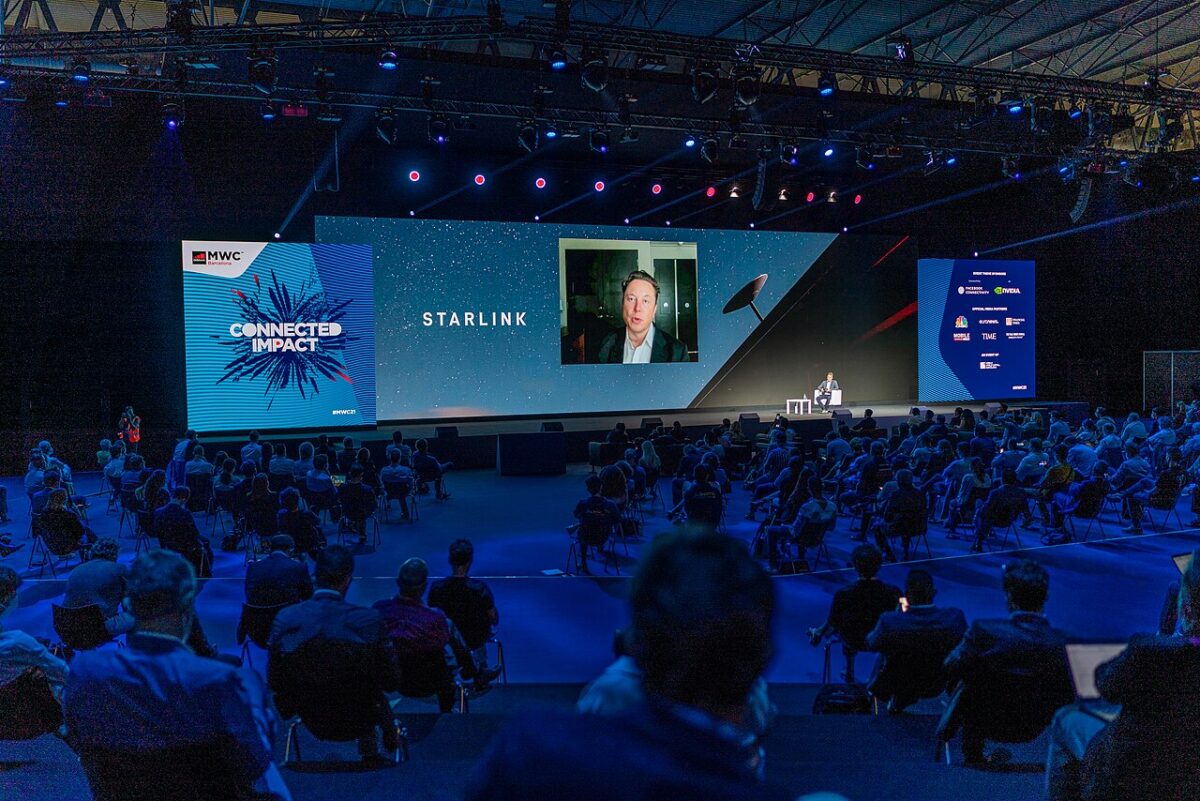
Starlink in particular has become central to investor expectations. Analysts across the industry estimate that Starlink already contributes a meaningful portion of SpaceX’s revenue, with rapid subscriber growth in rural broadband, aviation connectivity, maritime systems, and government contracts.
But even strong growth does not erase the broader business’s capital intensity.
Starship development, satellite constellation expansion, and launch infrastructure require continuous funding. SpaceX’s advantage in vertical integration and rapid reuse of rockets lowers costs compared to traditional aerospace players, but it does not eliminate the scale of investment required. This is where the market tension emerges.
Investors are not questioning whether SpaceX is technologically ahead. They are questioning how long it will take for that technological advantage to translate into stable, predictable profitability at scale.
Volatility Becomes the Trade
As the stock cooled from its early highs, volatility increased rather than decreased.
Options markets began pricing in wider expected swings, reflecting uncertainty around both valuation and sentiment. Short interest also began to build modestly, a sign that some traders are now positioning for continued pullbacks or consolidation after the IPO surge.
However, the same structure that attracts short sellers also creates risk for them. With a limited float and heavy retail participation, sharp upward moves can trigger forced covering, creating rapid rebounds. This dynamic makes SpaceX less of a directional trade and more of a volatility engine in its early public phase.
In simple terms, the stock can overshoot in both directions.
Institutional Behavior: Dip Buyers Step In
Despite the pullback, long-term-oriented investors have not stepped away. High-profile growth investors, including ARK Invest’s Cathie Wood, have been associated with early buying interest during weakness, consistent with a strategy focused on disruptive technology platforms.
This split behavior, short-term selling versus long-term accumulation, is typical in landmark IPOs, but it is amplified in SpaceX’s case because of the company’s scale and narrative reach. To bullish investors, the pullback is not a warning sign. It is a reset.
They point to SpaceX’s dominant position in orbital launches, its reusable rocket cost structure, and its growing Starlink ecosystem as reasons the company could eventually become one of the most strategically important infrastructure firms in the global economy.
The Musk Premium and Market Psychology

Another factor influencing trading is the so-called “Musk premium,” the tendency for companies associated with Elon Musk to trade at valuations that reflect not only current performance but expected breakthroughs in adjacent industries.
Tesla demonstrated this dynamic over the past decade, with valuation cycles repeatedly expanding and contracting around expectations for autonomy, energy storage, and AI-driven robotics. SpaceX now appears to be entering a similar psychological pricing phase.
The market is no longer simply evaluating rockets and satellites. It is evaluating whether Musk’s broader ecosystem of companies could eventually interconnect into a larger technological platform spanning transport, energy, AI, and communications.
That narrative attracts capital, but it also raises the bar for execution.
Structural Constraints Keep Pressure High
Unlike many large-cap tech companies, SpaceX does not benefit from a fully liquid float. The IPO structure means supply is constrained, and secondary markets for early investors remain partially restricted.
This creates a pricing environment where relatively small shifts in demand can have outsized effects on valuation. It also means that any future unlock events, such as additional share offerings, employee liquidity windows, or expanded secondary sales, could materially impact price behavior.
Investors are watching these structural milestones closely, as they often define the next phase of price stabilization after a major IPO.
The Bigger Market Signal
Beyond SpaceX itself, the IPO is being interpreted as a broader test of investor appetite for high-growth, capital-intensive companies in a higher-rate environment.
After years of easy liquidity and growth-at-any-cost valuations, markets have become more selective. Profitability timelines matter more. Cash burn is scrutinized more closely. And even the most compelling narratives are being discounted more aggressively if near-term financial visibility is limited.
SpaceX sits directly at the center of that shift. If the stock stabilizes and builds a durable base, it could signal renewed risk appetite for frontier technology companies. If it continues to drift lower, it may reinforce caution across upcoming IPO candidates in AI, biotech, and deep tech sectors.
A Rocket Still Finding Its Altitude
Despite the volatility, nothing about SpaceX’s core trajectory has changed. The company remains a dominant force in global launch services, a rapidly expanding satellite communications provider, and a key player in government and commercial aerospace contracts.
But the market does not price companies based on ambition alone. It prices them based on the balance between belief and patience. Right now, that balance is being tested.
The IPO delivered the excitement. The rally delivered the headlines. The selloff delivered the reality check. And now, SpaceX enters its most important phase yet, not the launch, not the listing, but the long adjustment into life as a public company, where every expectation must eventually meet execution.
The rocket is still climbing its long trajectory. But in public markets, even rockets need time to find a stable orbit.