Stop Measuring Everything: What Grandma Knew About Cooking by Feel
Ask Grandma how much flour goes into her biscuits, and you’d probably get a shrug and a smile. “Enough,” she’d say, or “until it looks right.” Her recipe cards, if she even had them, called for things like “a lump of butter,” “a handful of oats” and “salt to taste.” Somehow, the biscuits came out perfect every single time.
To a lot of modern cooks, that sounds a little scary. We’ve grown used to precise recipes, measuring spoons in every drawer and apps that tell us exactly how many grams of everything to use. But for generations, home cooks relied on their eyes, hands and noses, and many of them were outstanding cooks.
So what did Grandma know that the rest of us forgot? It turns out the answer is a mix of practice, patience and a few clues she picked up over thousands of meals. And the good news is that anyone can learn to cook a little more that way.
When Recipes Didn’t Measure Anything
Old family recipes can read like riddles. You’ll find instructions like “butter the size of an egg,” “a teacup of sugar” or “bake in a moderate oven.” Many didn’t list oven temperatures at all, because early ovens were heated by wood or coal and didn’t come with a dial. Cooks learned to judge heat by holding a hand inside the oven or watching how fast a sprinkle of flour browned.
These recipes assumed you already knew how to cook. They weren’t written for beginners. They were reminders for someone who had stood beside her mother at the stove and already understood what a dough should feel like. The card simply jogged her memory about the dish.
The Woman Who Made Us Measure
Much of today’s love of exact measurements traces back to one cookbook. In 1896, Fannie Farmer published The Boston Cooking-School Cook Book, and as a University of Washington feature explains, it included painstaking instructions on how to measure ingredients using standardized spoons and cups and level measurements. It earned her the nickname “the mother of level measurements.”
Her book became a huge seller and helped turn cooking into something that could be taught clearly to anyone. That was a real gift, especially for young wives who hadn’t learned at home. But many grandmothers kept right on cooking the old way, trusting their own judgment over a level teaspoon for the dishes they had made all their lives.
Baking and Cooking Aren’t the Same
Here’s where Grandma was especially wise. She may have eyeballed her soup and stew, but she often had a favorite cup she used every time she baked. Baking depends on chemistry, and small changes in flour or leavening can make a cake sink or a cookie spread flat.
Even today, test kitchens say a “cup” of flour isn’t always the same. King Arthur Baking notes that a fluffed, scooped and leveled cup of all-purpose flour holds about 120 grams, but packed-down flour can reach up to 160 grams. America’s Test Kitchen also recommends weighing ingredients for more consistent results. Grandma’s trick of always using the same chipped teacup gave her a kind of consistency of her own.
How She Knew the Dough Was Ready
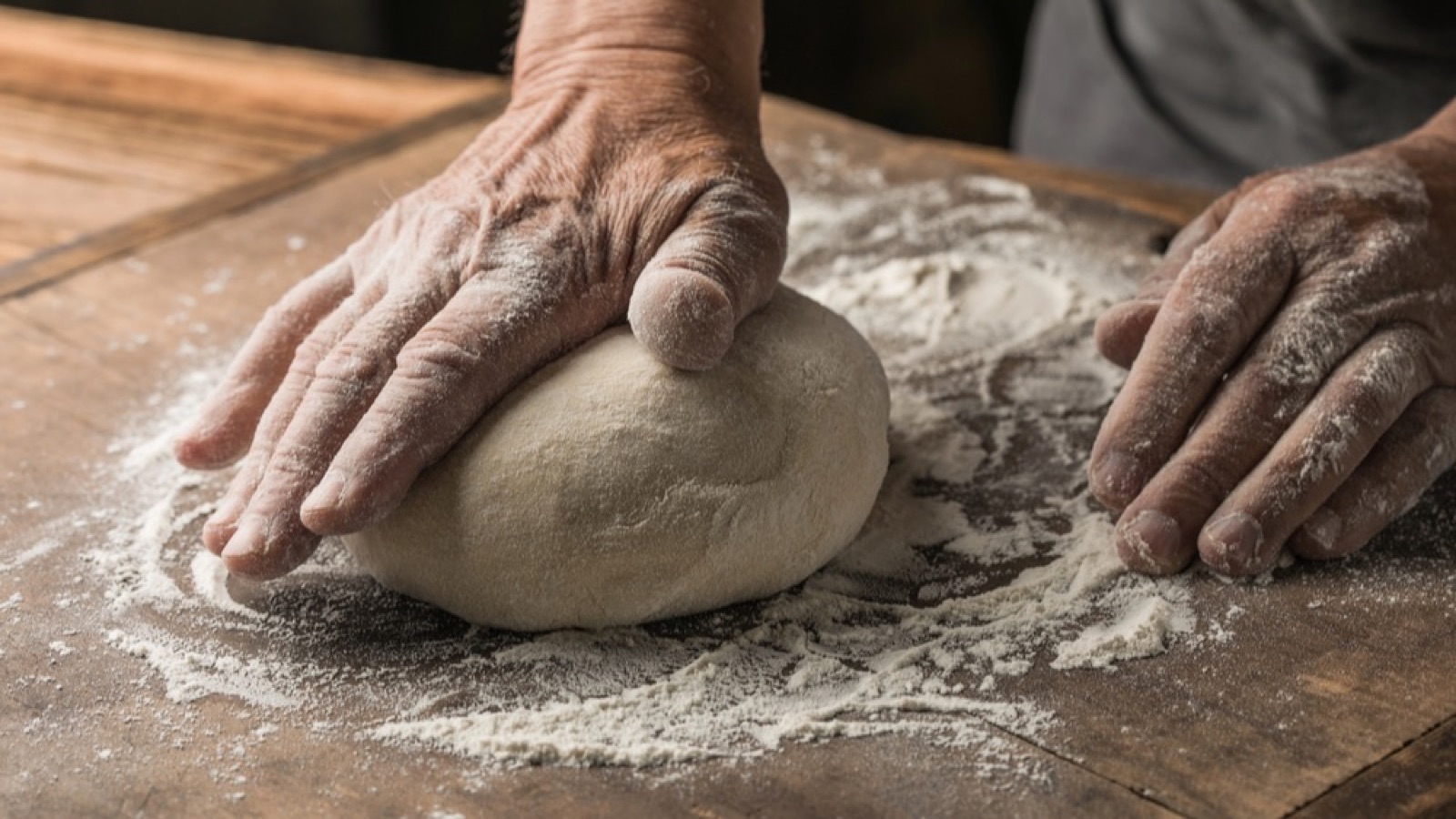
Grandma didn’t set a timer for kneading bread. She pushed, folded and turned the dough until it felt right under her hands. To her, “smooth and springy” was the signal, and she could tell the difference with her eyes closed.
Bakers still use that kind of feel. King Arthur Baking describes the classic “windowpane test,” where you stretch a small piece of dough until you can start to see light through it in spots. The same article notes that recipes often describe well-kneaded dough as “bouncy and elastic,” or even as feeling like your earlobe. That’s the kind of description Grandma would have understood right away.
Seasoning With Her Tongue, Not a Spoon
When it came to salt, pepper and spices, Grandma tasted as she went. A pinch here, a shake there, then another taste. She knew that tomatoes from the garden might need a little sugar one week and none the next, and that a pot of beans could go from bland to perfect with one more sprinkle of salt.
That habit is one of the biggest secrets of cooking by feel. Ingredients change from season to season and brand to brand, so the same measurement won’t always taste the same. Cooks who taste often can adjust as they go, which is why “season to taste” shows up in so many recipes. It’s one of those kitchen tips that sounds obvious but makes a big difference.
Using All Five Senses
Grandma cooked with more than her taste buds. She listened for the sizzle that told her a pan was hot enough and the change in sound when onions softened. She smelled when the cookies were almost done, often a minute or two before the timer would have gone off, if she even used one.
She also watched for little signs. Pancakes were ready to flip when bubbles popped and stayed open on top. Gravy was thick enough when it coated the back of a spoon. A cake was done when it pulled away from the sides of the pan and sprang back when pressed lightly. These small clues added up to the kind of instinct that no recipe card could fully explain.
How to Start Cooking a Little More Like Grandma
You don’t have to throw away your measuring cups to cook by feel. Start with dishes that are forgiving, like soups, stir-fries, scrambled eggs or a pan of roasted vegetables. Measure the first time, then pay close attention to what the right amount looks like in your hand or in the pot.
Next time, try eyeballing it and tasting along the way. Keep notes if that helps, just like Grandma’s stained index cards. Over time, you’ll find you reach for the spoons less and trust yourself more. Avoiding a few common kitchen mistakes along the way can help your confidence grow even faster.
Trust Your Hands
Grandma’s cooking wasn’t magic, even if it sometimes seemed that way. It came from years of practice, a lot of tasting and the confidence to trust her own judgment. Precise recipes are wonderful tools, especially for baking, but they were never meant to replace the cook standing at the stove.
Did your grandmother cook without measuring? What dish did she make by feel that nobody has ever been able to copy exactly? Share your stories in the comments, and tell us about the “pinch of this, handful of that” recipe you wish someone had written down.