Supreme Court Hands Trump Major Win on FTC Firing, Expanding Presidential Power Over Independent Agencies
For nearly a century, independent agencies in Washington operated behind a legal shield designed to keep them from becoming political weapons of the White House.
The Federal Trade Commission, the Federal Communications Commission, the National Labor Relations Board, and similar bodies were built on a simple idea: some decisions affecting consumers, workers, markets, competition, speech, banking, and public safety should not swing wildly every time power changes hands. That wall has now cracked.
In a major ruling on presidential authority, the Supreme Court said President Donald Trump had the constitutional power to remove Democratic Federal Trade Commission Commissioner Rebecca Slaughter, rejecting her argument that federal law protected her from being fired without cause.
The decision is more than a personnel dispute. It is a sweeping statement about who controls the machinery of federal regulation.
We are no longer looking at a narrow fight over one FTC seat. We are looking at a ruling that strengthens the presidency, weakens Congress’s ability to insulate agency leaders, and places a new question over the future of independent regulators across the federal government.
The Court’s conservative majority framed the decision as a return to constitutional accountability. Its liberal dissenters described it as a dangerous expansion of executive control. Either way, the result is unmistakable: presidents now have a far stronger hand over agencies once considered meaningfully independent from direct White House command.
What the Supreme Court Decided in Trump v. Slaughter
The case centered on Rebecca Slaughter, a Democratic FTC commissioner who was removed by Trump after he returned to office. Slaughter argued that her firing violated the Federal Trade Commission Act, which allowed commissioners to be removed only for “inefficiency, neglect of duty, or malfeasance in office.”
That protection was not decorative. It was a key part of the FTC’s design. Commissioners serve staggered seven-year terms, and no more than three of the five commissioners may belong to the same political party. The structure was meant to keep the agency from functioning as a simple extension of the president’s political agenda.
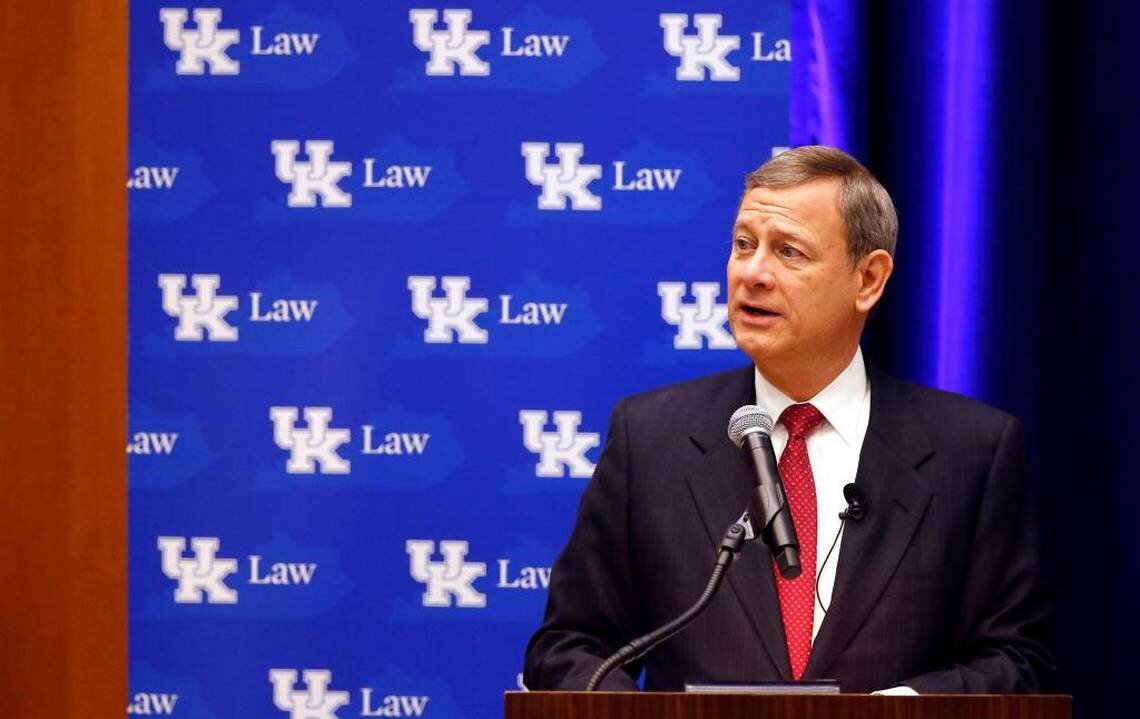
The Supreme Court rejected Slaughter’s claim and ruled that the FTC’s removal protection violated the separation of powers. Chief Justice John Roberts, writing for the majority, argued that officials who exercise executive power must ultimately answer to the president.
In the majority’s view, the FTC today does not merely advise, study, or recommend. It enforces laws, writes rules, adjudicates disputes, and acts directly against private parties. That makes it part of the executive machinery.
Roberts’ opinion turned the case into a constitutional chain-of-command question. If the president is responsible for executing federal law, the Court reasoned, then the president must have authority over officials who carry out that law. Congress may create agencies.
The Senate may confirm nominees. But neither Congress nor the courts, in the majority’s view, can force a president to keep executive officers he cannot direct.
That is the heart of the ruling. The president’s removal power is not just an administrative convenience. The Court treated it as a constitutional necessity.
The Fall of Humphrey’s Executor, the 1935 Precedent That Protected Independent Agencies
The decision is especially explosive because it overturns the central force of Humphrey’s Executor v. United States, the 1935 Supreme Court case that upheld protections for FTC commissioners.
For generations, Humphrey’s Executor stood for the idea that Congress could create independent, expert commissions with leaders who did not serve purely at the president’s pleasure.
The ruling gave legal life to a model of government that became familiar across Washington: bipartisan boards, fixed terms, for-cause removal protections, and a measure of distance from the White House. That model shaped much of the modern administrative state.
The Supreme Court’s new ruling says that a model cannot survive when agency leaders exercise executive power.
The majority argued that the FTC has changed dramatically since 1914, when Congress created it. What may once have looked like a modest expert body now functions as a powerful regulator with authority across major parts of the American economy.
That distinction matters. The Court did not simply say the FTC is important. It said the FTC’s modern power is too executive to be insulated from the elected president.
From antitrust enforcement to consumer protection, from privacy investigations to business practices, the agency acts with real force. For the majority, that force must be accountable through the president.
The dissent saw something very different. Justice Sonia Sotomayor argued that the Court was discarding a democratic arrangement Congress built and presidents had lived with for decades. In her view, the majority did not restore constitutional order; it disrupted a system carefully designed to prevent regulatory agencies from becoming partisan instruments.
Why the FTC Matters Far Beyond Washington
The FTC may sound like an inside-Washington agency, but its work lands directly in American homes, phones, wallets, contracts, subscriptions, and inboxes.
The agency polices unfair or deceptive business practices. It enforces competition laws. It investigates scams, fraud, data privacy violations, misleading advertising, junk fees, subscription traps, and anticompetitive conduct.
When the FTC takes action, the target may be a tech giant, a drug company, a lender, a retailer, a telemarketer, a data broker, or a business accused of misleading consumers.
That is why this ruling matters far beyond a single commissioner’s job. If presidents can remove FTC commissioners over policy disagreements, the agency’s direction may become more tightly tied to the White House.
A president hostile to aggressive antitrust enforcement could pressure commissioners to ease up. A president focused on consumer protection could demand a harder line. A president angered by a dissenting commissioner could attempt to remove that voice altogether.
Supporters of the ruling argue that this is democracy at work. Voters elect a president, the president sets policy, and agency officials should not be able to block that agenda while enjoying protection from removal. If the public dislikes the result, supporters say, the public can hold the president accountable.
Trump Celebrates a Historic Expansion of Presidential Authority
Trump praised the ruling as a major victory for presidential power, portraying it as the kind of decision presidents had sought for decades.
Politically, that reaction is easy to understand. The ruling gives the White House more leverage over agency leaders who resist administration priorities. The broader stakes are institutional, not personal.
This decision will outlast Trump. It will apply to future Democratic and Republican presidents. A Democratic president could use the same principle to remove Republican commissioners who obstruct a progressive regulatory agenda.
A Republican president could use it to remove Democratic commissioners who push aggressive consumer or labor enforcement. The power does not belong to one administration; it now attaches more firmly to the presidency itself.
That is why the ruling should not be viewed only through the lens of today’s partisan fight. The Court has altered the operating system of federal power. Once that operating system changes, every future president inherits the update.
Justice Sotomayor’s Dissent Warns of a President With “Far Greater Power”
Justice Sotomayor’s dissent, joined by the Court’s liberal justices, treated the ruling as a constitutional earthquake. She argued that the majority distorted the structure of government by embracing a theory of near-total presidential control over executive agencies.
Her warning was direct: the decision gives the president far greater power than Congress or the Constitution granted.
In the dissent’s view, the Court did not merely resolve an ambiguity. It overrode Congress’s deliberate choice to create expert commissions with insulation from political retaliation. That disagreement reveals the central battle in the case.
The majority sees removal power as the foundation of democratic accountability. The dissent sees removal protection as one of the tools democracy uses to prevent raw political control over technical and quasi-judicial decisions. Both sides claim to defend accountability. They simply define it differently.
For the majority, accountability runs vertically: agency officials answer to the president, and the president answers to voters.
For the dissent, accountability is more distributed: Congress designs agencies, presidents appoint leaders, the Senate confirms them, courts review their actions, and statutory protections prevent sudden political purges. The ruling chooses the vertical model.
The Federal Reserve Exception: Why Lisa Cook’s Case Came Out Differently
The Court’s decision did not hand Trump every victory he wanted. In a separate move, the justices rejected his attempt to immediately remove Federal Reserve Governor Lisa Cook, leaving the Fed in a different category for now. That distinction is crucial.
The Federal Reserve occupies a unique place in American government. It sets monetary policy, influences interest rates, helps guard financial stability, and is built around independence from short-term political pressure.
If presidents could freely fire Fed governors over policy disagreements, markets would immediately question whether interest-rate decisions were being made for economic reasons or electoral convenience.
By treating the Fed differently, the Court signaled that not every independent agency will automatically fall under the same rule. But the boundary remains unsettled.
The FTC lost its protection because the Court viewed its powers as deeply executive in nature. The Fed may survive because of its historical and institutional uniqueness.
That leaves a major legal question hanging over Washington: which agencies are more like the FTC, and which are more like the Federal Reserve? The answer will shape the next wave of litigation.
Why This Ruling Could Define the Second Trump Term
Every presidency tests the boundaries of power. This ruling gives Trump a major judicial endorsement at a moment when his administration has pushed aggressively to bring federal agencies under tighter executive control.
The political message is clear: independent agencies cannot assume old protections will save them.
The legal message is even clearer: if an agency exercises executive power, the president’s ability to remove its leaders now rests on stronger constitutional grounds.
For Trump, this is a victory in both policy and symbolism. It confirms a central theory of his governing style: the president should control the executive branch directly, forcefully, and personally. For his critics, it confirms their fear that independent oversight is being converted into presidential command.
The most important consequence may not be the removal of Rebecca Slaughter. It may be the warning sent to every commissioner, board member, and agency chief who remains.
What Happens Next
The ruling does not end the debate over independent agencies. It begins the next phase.
Congress may look for new ways to protect agency expertise without violating the Court’s removal-power doctrine.
Future presidents may test the ruling against other commissions. Fired officials may sue. Courts will have to decide whether agencies such as the FCC, NLRB, CPSC, SEC, FEC, and others are closer to the FTC or meaningfully different from it.
The Federal Reserve will remain the most closely watched exception. If its independence survives, markets may take comfort.
If future cases narrow that protection, the consequences could extend beyond constitutional law to interest rates, inflation expectations, bond markets, and global confidence in U.S. financial governance.
For now, we can say this much with confidence: Trump v. Slaughter is one of the most important Supreme Court decisions on presidential power in modern administrative law.
It takes a 1935 precedent that helped build an independent government and replaces it with a sharper, more presidential chain of command.
The old Washington bargain was that some agencies should stand slightly apart from politics.
The new message from the Court is that when those agencies execute federal law, the president stands much closer than before.