The Secret to Crispy Smashed Carrots Happens Before They Hit the Oven
Carrots don’t need a sugary glaze to become the most interesting thing on your dinner plate. Give them a tender center, a flattened shape, and a Parmesan coating, and they take on an entirely different personality. Smashed carrots deliver browned edges and a soft middle, with enough savory flavor to stand up to a roast. But getting that contrast takes more than pressing down with a drinking glass and hoping for the best.
The step worth slowing down for is drying. After the carrots soften, remove excess moisture before smashing and roasting them, especially if you cooked them in boiling water. Registered dietitian and cookbook author Lizzie Streit makes the instruction explicit in her Parmesan smashed carrots recipe: “Drain well and pat dry before smashing.” It’s a small prep step with a direct link to the crisp finish you want.
That doesn’t mean you need an elaborate drying routine or another piece of kitchen equipment. It means not sending wet, freshly drained carrots straight onto the roasting pan and expecting the oven to handle everything. Both Streit and recipe developer Betty Davies recommend steaming over boiling because waterlogged carrots are harder to crisp. The goal is tender carrots without unnecessary extra water.
The Extra Step That Keeps Your Carrots From Going Soft
Smashed carrots need two rounds of cooking for two different jobs. First, they must soften enough to flatten without staying stubbornly hard. Then they go into the oven to develop their browned exterior. In Streit’s recipe, steaming handles the first job, while roasting the flattened, seasoned carrots at 425 degrees Fahrenheit handles the second. The finished texture should be crisp outside and tender inside, not crunchy all the way through.
“I recommend steaming instead of boiling the carrots when making smashed carrots,” Streit writes on It’s a Veg World After All. She explains that boiled carrots can retain extra liquid, which prevents them from crisping effectively during roasting. Her steaming method keeps the vegetables above the water instead of submerged. That makes the initial cooking method part of the texture strategy, not simply a matter of convenience.
Boiling is still an option, so there’s no need to abandon dinner if you don’t own a steamer. The important follow-through is draining and drying the carrots before continuing. Davies, who publishes Bite On The Side, gives similar advice: “If you do boil them in a pot of water, be careful to not overcook them, and let them steam and dry out before smashing and roasting.” In other words, don’t rush the handoff between pot and pan.
How to Smash and Roast Them Without Making Carrot Mash
Start with pieces of roughly similar thickness so they cook evenly. Streit’s recipe uses peeled carrots cut into pieces about 2 inches long and ¾ to 1 inch wide, then steamed for 10 to 15 minutes. The readiness test matters more than treating the timer as a command: A fork should pass through easily, but the carrots shouldn’t be mushy. You need enough softness to flatten them while keeping recognizable pieces.
Once they’re ready, remove them from the steamer, pat them dry, and spread them in a single layer on a lightly oiled baking sheet. Press each piece with the bottom of a drinking glass or jar until flattened. Streit notes that small pieces may break off or stick to the glass; they can be gently put back in place. This is dinner, not a geometry exam, so a few uneven edges aren’t a reason to start over.
A fork is another option, especially if you like a more textured finish. “I like to use a fork to smash the carrots, as the indentations create more texture to get more delicious crispy bits,” Davies writes. She cautions against pressing too hard, because the carrots can break apart. Whichever tool you choose, keep the pieces separate rather than piling them together; both developers arrange their carrots in a single layer for roasting.
For a clear route through the seasoning and baking, follow Streit’s proportions: For 1 pound of carrots, use 2 tablespoons of olive oil, 1 tablespoon of chopped fresh parsley, ⅛ teaspoon of salt, and ½ cup of freshly grated Parmesan. Coat the pan with some oil, then brush the flattened carrots with the remaining oil mixed with parsley and salt. Sprinkle on the cheese and roast at 425 degrees Fahrenheit for 20 to 25 minutes, until lightly browned and crisp outside.
Related: If You Still Have These 9 Things in Your Kitchen, You Grew Up With Practical Parents
Keep the Crunch Going All the Way to the Table
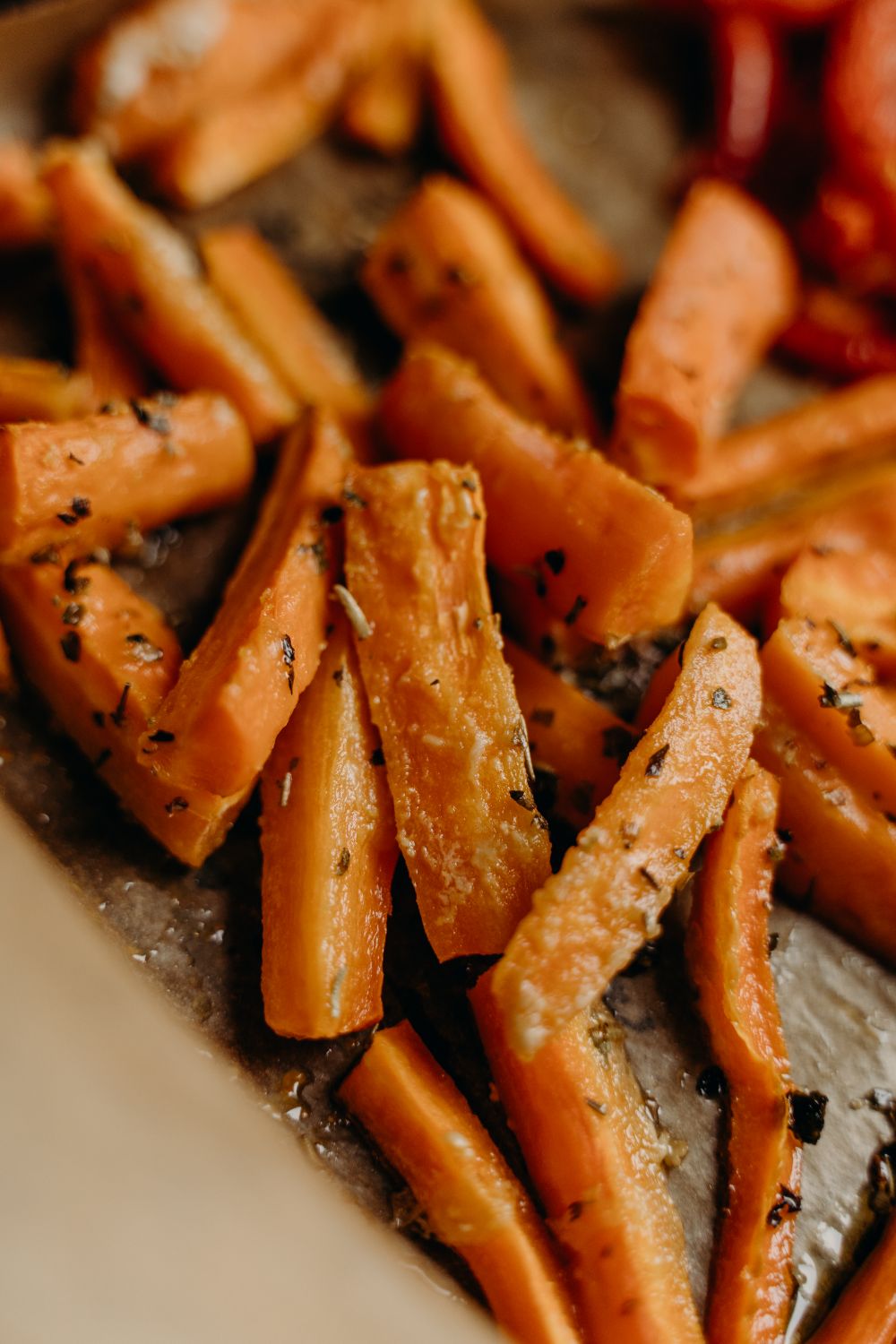
The pan setup deserves attention, too. Streit prefers placing the carrots directly on an oil-brushed baking sheet, writing that this produces the crispiest results in her recipe. Davies uses oiled foil and says parchment also works for her version. Those are different recipe approaches, not a reason to mix every instruction together. For Streit’s method, stick with the lightly oiled pan and use the browned exterior as your finishing cue.
Once the carrots are done, serving them promptly gives you the texture the recipe is designed to deliver. Davies recommends enjoying hers as soon as they’re ready, while Streit suggests serving smashed carrots warm as a side, appetizer, or snack. They can accompany a weeknight dinner or a holiday roast, and Streit also pairs them with cucumber yogurt sauce, ranch yogurt dip, or hummus. The dipping sauce is optional; the browned edges are the main event.
Leftovers won’t retain exactly the same crispness, a limitation Streit acknowledges in her storage advice. For reheating, she recommends a skillet with a little oil over medium heat for a few minutes per side, or a baking sheet in a 400-degree-Fahrenheit oven for 5 to 10 minutes, until warm. That gives you a practical second act for any carrots that survive dinner, without pretending yesterday’s batch will emerge unchanged.