The S&P 500 Is Back at All-Time Highs as Wall Street Extends Historic Rally.
Wall Street’s summer rally found another gear Tuesday as the S&P 500 charged back into record territory, completing a sharp recovery from weeks of anxiety over artificial intelligence, Middle East tensions and stubbornly high borrowing costs.
The benchmark index climbed above 7,700 during afternoon trading on August 4, reaching its first intraday record since early June. At one point, the Dow Jones Industrial Average had gained more than 900 points to trade above 54,100. At the same time, the Nasdaq Composite jumped more than 2% as investors rushed back into technology and semiconductor shares.
This was not another cautious step higher. It was a forceful return to risk-taking, powered by strong corporate profits, renewed confidence in the AI boom and a dramatic fall in oil prices.
Wall Street Completes a Stunning Comeback
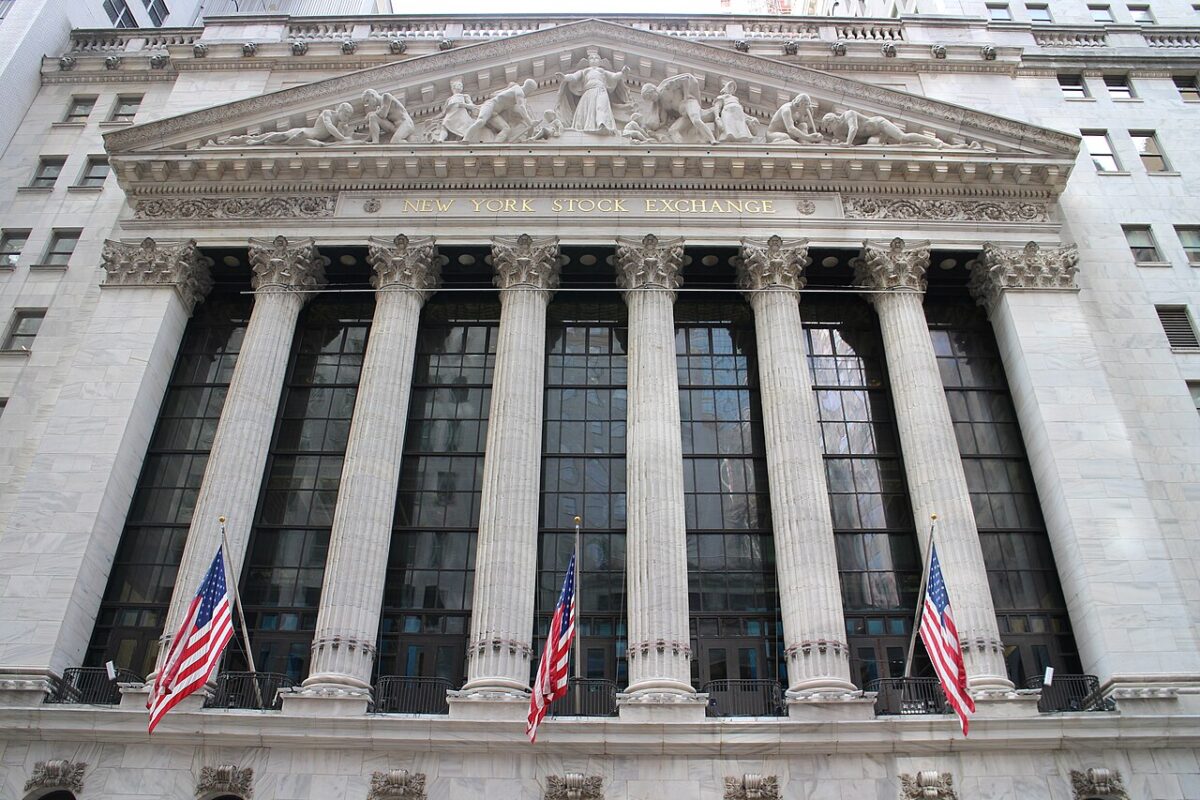
The S&P 500’s record caps a remarkable turnaround. The index had slipped almost 5% from its June peak as investors questioned whether the market’s biggest technology winners had become too expensive. The Nasdaq fell nearly 10% from its own high in late July, approaching correction territory as chipmakers and software companies suffered sharp swings.
Yet the bull market never fully broke. Investors bought shares during pullbacks, while money rotated into financial, healthcare and industrial companies. That movement kept the market within reach of its records even when enthusiasm for technology weakened.
Monday provided the launchpad for Tuesday’s surge. The S&P 500 rose 1.5% to 7,600.50, ending only 0.1% below its former peak. The Dow climbed 693 points to a record 53,178.41, and the Nasdaq gained 2.1%. Through Monday, the S&P 500 was up 11% in 2026, the Dow had gained 10.6%, and the Nasdaq had risen 11.5%.
Earnings Give the Rally Real Strength

Corporate America’s stronger-than-expected performance is providing the rally with a firmer foundation.
By July 31, 61% of S&P 500 companies had reported second-quarter results. Of those businesses, 86% delivered earnings per share above analysts’ forecasts, beating the five-year average of 78% and the 10-year average of 76%. Seventy-seven percent also posted revenue above expectations.
Strong earnings give the rally more substance. Many companies are already converting AI spending, infrastructure demand and consumer resilience into measurable gains.
The S&P 500’s blended year-over-year earnings growth rate stood at 47.4% at the end of July, potentially its strongest quarterly pace since 2021. Alphabet and Amazon contributed unusually large gains, but the earnings surprise remained above recent averages after excluding those companies.
Those results matter because Wall Street has spent months debating whether stock prices moved too far ahead of reality. The latest earnings season suggests that at least some of the optimism is being supported by genuine revenue growth and stronger profits.
Palantir and Caterpillar Reignite the AI Trade
Palantir Technologies became Tuesday’s most dramatic symbol of renewed confidence. Its shares soared after the company raised its annual revenue forecast, reinforcing the belief that businesses and governments are turning AI experiments into paying contracts.
Investors had spent much of the summer asking whether vast spending on chips, cloud computing and data centers could justify elevated valuations. Strong results from Microsoft and Amazon eased those concerns, and Palantir added evidence that AI demand remains powerful.
Caterpillar revealed the physical side of the same boom. The industrial giant raised its annual revenue growth forecast as AI data-center construction increased demand for power-generation and heavy equipment. Its shares climbed, helping lift the price-weighted Dow to another record.
Data centers require generators, turbines, cooling systems, construction machinery and enormous amounts of electricity. Caterpillar’s performance showed how AI spending is spreading into manufacturing and infrastructure, not merely software.
That development broadens the AI story considerably. The boom is no longer limited to companies designing advanced chips or creating artificial intelligence platforms. It is also benefiting the businesses that construct, power and maintain the enormous facilities needed to run those systems.
For investors, that creates a wider range of potential winners. It also makes the rally appear less dependent on a small collection of Silicon Valley giants.
Falling Oil Prices Ease Inflation Fears
Wall Street also received a major lift from the energy market.
U.S. crude fell 5.4% to about $75.98 a barrel, while Brent crude dropped 5.2% to roughly $79.38. The decline followed comments from U.S. and Qatari officials suggesting progress toward an agreement that could improve oil flows through the Strait of Hormuz. Secretary of State Marco Rubio said talks had advanced, although no final deal had been reached.
The strait is a critical route for global energy shipments. Disruptions can tighten supplies, raise fuel prices and add fresh inflation pressure. That had worried investors because expensive energy squeezes household budgets, increases business costs and makes it harder for the Federal Reserve to reduce interest rates.
Lower crude prices changed the market’s mood. They eased immediate inflation fears and helped push Treasury yields lower. The yield on the benchmark 10-year Treasury fell to about 4.64%, reducing some of the pressure that high borrowing costs place on stock valuations.
Sustained relief could lower fuel and transportation costs. Airlines, manufacturers, delivery companies and retailers all face higher expenses when energy prices surge. A continued decline in crude could give businesses more breathing room while reducing pressure on consumers.
However, another Middle East disruption could quickly send prices higher again. The oil market remains tied to diplomatic developments, shipping conditions and security in the Strait of Hormuz.
What the Record Means for Ordinary Investors
The S&P 500’s return to record territory matters beyond a single day’s headline.
The index sits inside countless retirement accounts, workplace pension plans, exchange-traded funds and personal investment portfolios. When the S&P 500 rises, millions of people may see the value of their long-term savings increase, even when they do not directly trade individual stocks.
A sustained rally can also improve household and business confidence. Companies may find it easier to raise money, issue shares, or fund expansion when markets are strong. Consumers with growing investment portfolios may feel more comfortable making major purchases.
The reverse is also true. A sudden pullback can quickly erase paper gains and weaken confidence. That is why the combination of stronger profits and lower energy costs carries more weight than a speculative rally driven only by momentum.
Wall Street now has a story that stretches from major trading desks to retirement savers and companies deciding whether to invest in their next factory, data center or expansion project.
The Rally Is Becoming Broader
The Dow and S&P 500 moved into record territory while the Nasdaq remained below its early June peak, despite Tuesday’s powerful technology rebound. The gap reflects the damage tech shares suffered in July and the market’s rotation toward other industries.
That rotation may make the rally less fragile by spreading gains beyond a small collection of giant companies.
When only a few technology stocks drive the market, one disappointing earnings report can drag an entire index lower. Broader participation gives the rally additional support from industrial, financial, healthcare and consumer companies.
Technology remains central, but investors are favoring companies with real customers, rising revenue and credible forecasts. The days when almost any company could attract attention simply by attaching itself to artificial intelligence may be fading.
The Nasdaq’s comeback suggests investors have not abandoned technology. They are demanding proof before rewarding it.
Record Highs Do Not Erase the Risks
The return to all-time highs does not guarantee an easy path ahead.
The S&P 500 trades at roughly 19.6 times projected earnings for the next 12 months. That is slightly below its five-year average of 19.9 but above its 10-year average of 19.0. The index is not at an unprecedented valuation, yet it remains expensive enough that weak earnings, renewed inflation or another oil shock could trigger a pullback.
Seasonal history also offers a warning. August through October has traditionally been the S&P 500’s weakest three-month period. Geopolitical uncertainty remains unresolved, Treasury yields are still elevated, and the largest technology companies continue to hold enormous influence over the major indexes.
There is also a difference between touching an intraday record and securing a record close. Tuesday’s session was still underway when the S&P 500 moved above its former peak. The closing bell will determine whether Wall Street officially locks in the milestone.
Even so, the market absorbed a near-correction in the Nasdaq, uncertainty around the Strait of Hormuz and doubts about AI valuations. Rather than collapse, it rebuilt momentum and returned to records.
The S&P 500 is back at all-time highs because investors currently see resilient earnings, falling oil prices and a widening AI investment boom as stronger forces than the risks still hanging over the market.
For now, the bulls have control again. Their next challenge is turning this dramatic comeback into a durable new chapter for Wall Street.