The Supreme Court’s Alabama Map Ruling Turns Its Legitimacy Crisis Into a Voting Rights Emergency
The Supreme Court’s recent decision in Alabama’s congressional map case did more than resolve a redistricting issue. It revealed a deeper crisis involving power, race, elections, and the Court’s readiness to change the rules when politics matter most.
We now see a Court that once told Alabama to give Black voters a fair chance to elect their preferred candidates, but now lets the state use a map that lower courts found discriminatory.
This is not just a minor procedural change. It is the kind of decision that makes Americans wonder whether the country’s top court is still acting as a court or has become a political referee who calls only fouls on one side.
The Supreme Court Legitimacy Crisis Now Runs Through Alabama
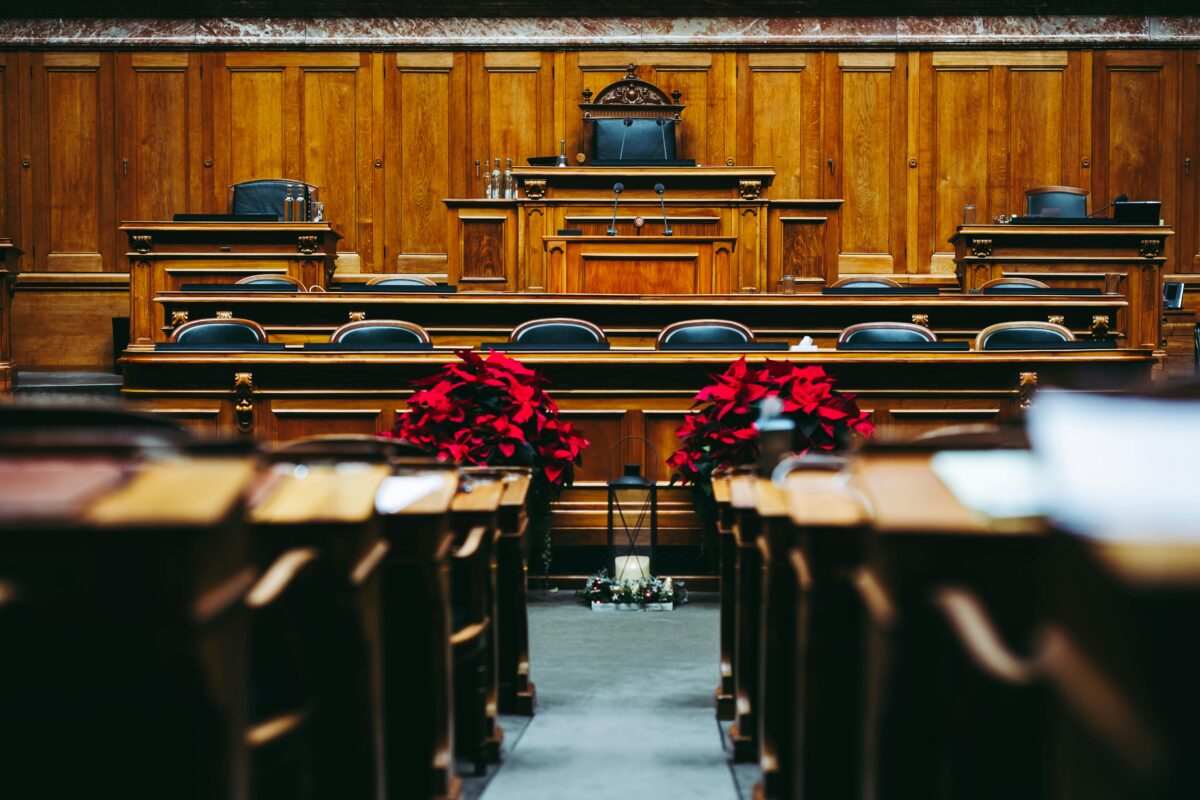
The phrase ‘Supreme Court legitimacy crisis’ might sound dramatic, but Alabama’s situation shows why it matters. The state has seven congressional districts, but Black voters, who make up a large part of the population, were left with only one district where they had a real chance to elect their preferred candidate under the disputed map.
Lower courts studied the record, heard evidence, and concluded that Alabama’s approach crossed the line.
Then the Supreme Court stepped in with an emergency order. This matters because emergency orders often come with little explanation, little time, and big real-world consequences.
Normally, the Court hears full arguments, builds a public record, and gives a detailed opinion. In this case, the country made a decision that could change representation for millions of voters, but without the transparency people expect from the nation’s highest court. This is why the question of legitimacy feels unavoidable. Courts earn trust through consistency, reasoning, restraint, and equal treatment. When the Supreme Court appears to lower one standard for state officials and raise another for voting-rights plaintiffs, it invites the public to see the law as a costume worn over power.
Allen v. Milligan Once Looked Like a Voting Rights Victory
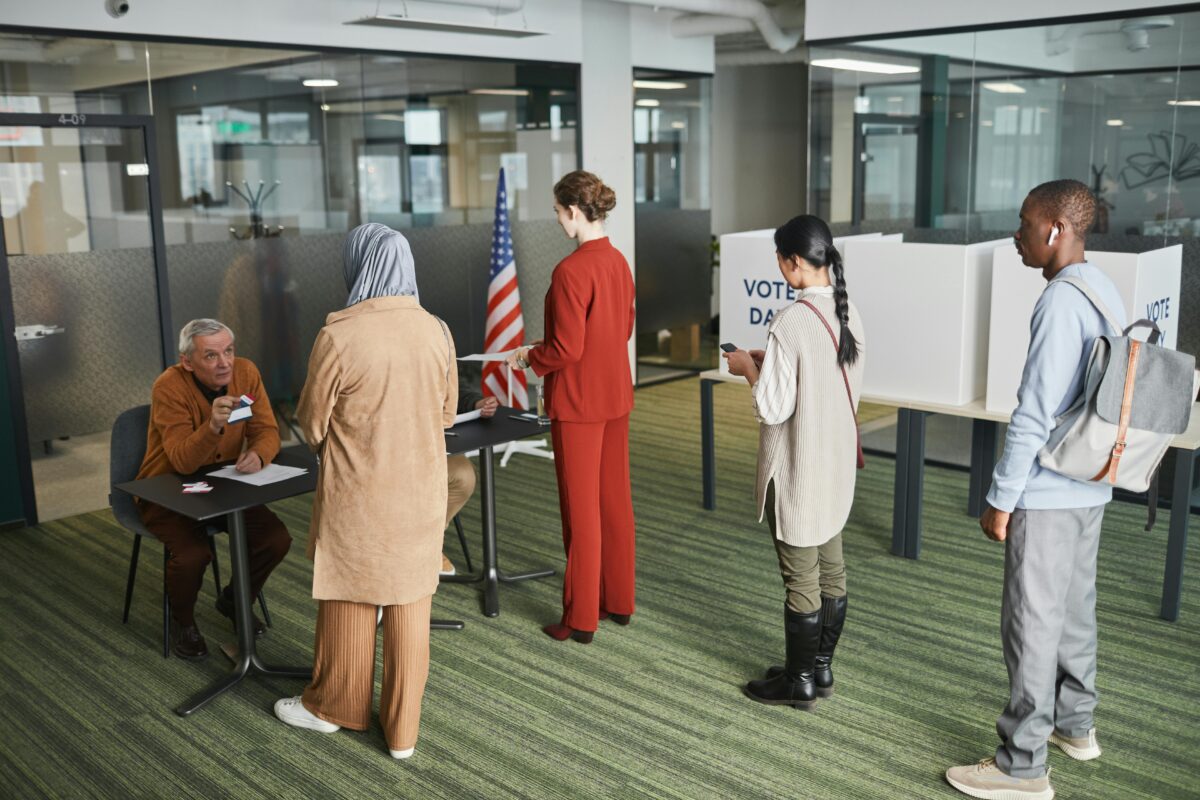
The Alabama case began as one of the most important modern tests of the Voting Rights Act. After the 2020 census, Alabama drew congressional lines that preserved only one Black-opportunity district. Black voters challenged the map, arguing that it diluted their voting power by spreading Black communities across multiple districts rather than allowing fair representation.
In 2023, the Supreme Court surprised many observers by siding with the plaintiffs in Allen v. Milligan. The Court affirmed that Alabama’s map likely violated Section 2 of the Voting Rights Act and that the state needed a map with two districts where Black voters had a real opportunity to elect their candidates of choice.
At the time, that decision seemed to show that the Court’s conservative majority had not completely given up on voting rights law.
The victory was short-lived. Alabama came back with a new map that still had only one such district. Lower courts did not see this as a small disagreement about drawing lines. They saw it as clear resistance to a legal order.
That is what makes the current controversy more intense. This is not just a case about maps. It is about what happens when a state loses, redraws the lines to keep the same problem, and then asks the Supreme Court for another chance.
Louisiana v. Callais Changed the Ground Beneath Voting Rights Cases
The turning point came with Louisiana v. Callais, a decision that reshaped how courts evaluate race, politics, and redistricting. The Court’s conservative majority made it much harder for plaintiffs to prove that a map unlawfully dilutes minority voting power.
The key problem is that race and party often overlap in the South, especially where Black voters heavily support Democratic candidates and white voters heavily support Republicans.
That overlap creates a loophole large enough for an entire redistricting strategy. A state can say it targeted Democrats, not Black voters.
Plaintiffs then face the almost impossible job of separating racial discrimination from partisan advantage in places where the two are closely tied by history, geography, and voting patterns.
We should be clear about the danger here. If states can defend racially harmful maps by calling them partisan maps, then voting rights protections become weaker exactly where they are needed most.
The law now asks harmed voters to prove discrimination in ways that ignore how it often works today. Discrimination rarely uses old language. Instead, it hides behind technical rules, computer models, partisan goals, and neutral-sounding map guidelines. Standard Gives States a Powerful Shield
One of the most troubling parts of the Alabama ruling is the Court’s emphasis on legislative good faith. On paper, that sounds reasonable. Courts should not assume lawmakers act unlawfully without evidence.
In practice, this presumption can act as a shield that protects discriminatory results, even when the evidence raises serious concerns. I’ll accuse Alabama of discrimination. It reviewed testimony, exhibits, legislative history, districting choices, and the state’s response to earlier court orders.
It found that Alabama’s process and final map showed intentional discrimination. Findings like this are supposed to matter, especially since trial courts are meant to judge evidence directly.
The Supreme Court’s emergency action sends the opposite message. It says that even a detailed lower court record might not be enough. It tells voting rights plaintiffs that the standard of proof keeps getting higher every time they try to meet it.
It tells lawmakers that using neutral language might be enough to pass review, even when the real effect is clear and serious.
The Shadow Docket Is Becoming a Major Force in American Elections
The Supreme Court’s emergency docket, often called the shadow docket, has become one of the most consequential parts of American law. It allows the Court to act quickly in urgent disputes.
That speed can be needed. But it can also be risky when emergency orders decide big constitutional issues without full arguments or detailed explanations.
Redistricting cases are not abstract. A congressional map can determine which communities get heard, which candidates can compete, and which party gains a path to power.
When the Court uses emergency orders to change these maps, it does more than handle lawsuits. It changes how democratic representation works.
That is why the Alabama decision feels so urgent. The Court did not just pause a lower court order. It allowed a map with a highly contested racial history to be used in a real election.
Millions of voters may feel the effects before the legal process is finished. Once an election is held with a disputed map, the harm cannot be fully remedied.
Black Voters Are Asked To Carry the Burden Again
The moral weight of this case falls heaviest on Black voters in Alabama. For generations, Black communities in the state fought barriers that kept political power out of reach. The Voting Rights Act was born from that history.
It was designed to stop states from using clever legal machinery to weaken minority voting strength after formal segregation fell.
Modern vote dilution does not need literacy tests or poll taxes. It can happen through district lines that split communities, pack voters into one district, or reduce their influence just enough to make representation unlikely.
The method may seem more acceptable on paper, but the outcome can feel all too familiar.
When courts make these claims harder to prove, they do not create fairness. They create exhaustion. Voters have to sue, wait, win, see the state resist, go back to court, win again, and then face a Supreme Court that changes the rules.
That cycle drains time, money, faith, and civic energy. For communities that have already spent generations fighting for political voice, that burden is not theoretical.
The Alabama Ruling Could Encourage More Mid-Decade Map Fights
The effects of this decision will not stop at Alabama’s borders. Redistricting usually happens after the census every ten years. But today’s political climate has made mid-decade map fights more appealing, especially when control of Congress is close and every seat counts.
If states learn that they can redraw maps, defend them as partisan, and rely on courts to presume legislative good faith, more aggressive redistricting battles may follow.
The risk is not just that one party wins an extra seat. The bigger problem is that voters become less important than the people drawing the maps.
Democracy works best when voters pick their representatives. Gerrymandering flips this by letting representatives pick their voters. When race is involved, it adds another problem by turning demographic identity into a tool for political control.
Why This Decision Feels Bigger Than One Map
This case touches on three big American worries at once. First, it raises fears that voting rights protections are being weakened from within. Second, it strengthens the belief that the Supreme Court applies election rules unevenly.
Third, it adds fuel to the argument that the Court’s conservative majority is using procedural tools to reach politically convenient outcomes.
That mix is why people keep using the word ‘illegitimate’ in public debate. Legitimacy does not mean everyone agrees with every decision. Courts often make unpopular choices. But legitimacy means the public believes the court is guided by law, not by loyalty to one side.
When the Court’s rules seem steady in one case and suddenly change in another, trust breaks down. When detailed lower court findings are ignored without a full public explanation, trust is damaged again.
When voters see rights recognized one year and weakened the next, they start to think that legal protection depends more on who is on the Court than on the Constitution itself.
What the Supreme Court Has Put at Risk
The Supreme Court has put more than Alabama’s congressional map at risk. It has put the credibility of voting rights enforcement at risk. It has put the meaning of equal protection at risk. It has put its own claim to neutral authority at risk.
A court that expects public obedience must show its reasoning. A court that overturns or weakens major rights protections should explain its decisions with extra care.
A court that intervenes in elections must apply timing rules consistently, especially when voters and administrators are already moving through the election process.
Instead, the Alabama ruling sends a clear message: lower-court evidence might not be enough; Voting Rights Act claims may be harder to win; constitutional discrimination claims may receive less protection; and states may have more freedom to change maps even when the effects are immediate.
The Real Question Is No Longer Just Legal
The Alabama ruling forces a harder national question: what happens when the people most harmed by a political map win in court, only to watch the rules shift before the remedy can fully hold?
That question cannot be answered with legal language alone. It exists in the space between legal theory and real democracy. It is found in counties where voters wonder if their ballots still count equally.
It lives in congressional districts drawn with surgical precision. It is present in congressional districts drawn with exact precision. It is also present in the growing suspicion that the Supreme Court is not just interpreting the rules of democracy, but also deciding who benefits from them. A Supreme Court that loses public trust does not lose power overnight, but it loses something more important: the belief that its power is deserved.
And once that belief starts to fade, every unsigned order, every emergency action, and every unexplained change in the law becomes part of a bigger story. The Alabama map ruling is not just another redistricting case. It is a warning sign for the future of American democracy.