The World’s Most Difficult Languages to Learn and Why They’re So Challenging
Ever tried learning a new language and felt like your brain was doing gymnastics? Maybe you struggled to roll your R’s in Spanish or couldn’t remember whether a French word was masculine or feminine.
Now imagine learning a language where changing the pitch of your voice changes the meaning of a word, or where reading a newspaper means recognizing thousands of unfamiliar characters.
Welcome to the fascinating world of difficult languages!
According to the U.S. Department of State’s Foreign Service Institute (FSI), some languages can take approximately 2,200 classroom hours to reach professional working proficiency. That’s a serious commitment, especially compared with languages such as Spanish or Italian. United States Department of State
But here’s something interesting: the hardest language depends largely on which language you already speak.
For native English speakers, these languages present some of the biggest challenges.
Mandarin Chinese: When Your Voice Changes Everything

Mandarin Chinese is widely spoken in China and Taiwan, and its biggest surprise for English speakers is that pronunciation isn’t just about getting the sounds right.
It’s also about getting the pitch right.
Mandarin has four main tones, plus a neutral tone. The syllable “ma,” for example, can mean different things depending on which tone you use.
Imagine ordering something at a restaurant and realizing that your voice went up when it should have gone down!
Then there’s the writing system.
Instead of learning an alphabet, students must become familiar with Chinese characters. Recognizing, remembering, and writing these characters takes considerable practice.
The FSI places Mandarin among its most challenging languages, with an estimated 88 weeks of intensive instruction.
Arabic: One Language, Many Everyday Varieties

Arabic presents an unusual challenge because learning the formal language doesn’t automatically mean understanding every everyday conversation.
Modern Standard Arabic is widely used in formal writing, education, and news broadcasts. However, people across Arabic-speaking countries also use regional spoken varieties.
Someone studying formal Arabic might still struggle to follow a casual conversation in Morocco or Egypt.
And that’s before tackling the writing system!
Arabic is written from right to left, and letters often change shape depending on their position within a word.
For English speakers, it’s like learning a new set of road signs while driving on the opposite side of the road.
Japanese: Three Writing Systems in One Language
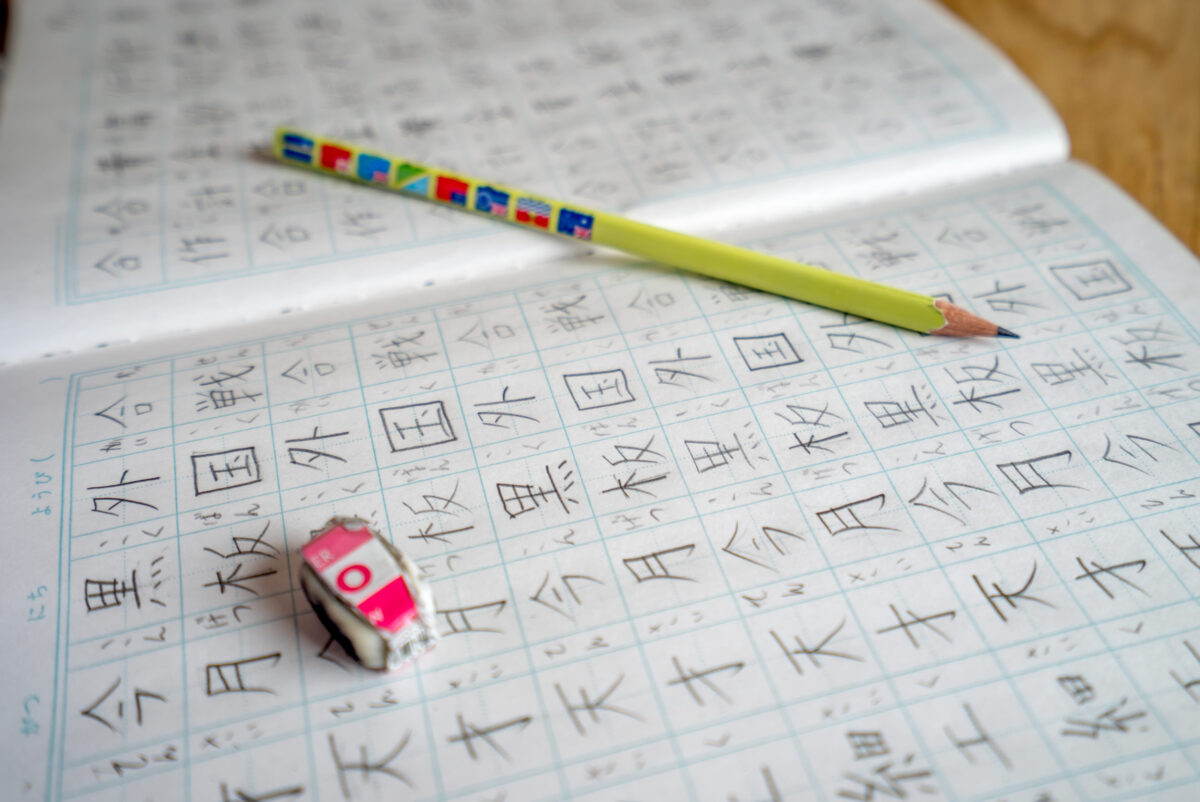
Imagine learning one writing system, celebrating your achievement, and discovering that two more are waiting.
That’s part of the Japanese learning experience.
Japanese commonly combines three writing systems:
- Hiragana, used for many native Japanese words and grammatical elements.
- Katakana, often used for foreign loanwords.
- Kanji, characters of Chinese origin used to represent words and meaningful parts of words.
The grammar also differs considerably from English.
English speakers typically say, “I eat sushi.” Japanese often places the verb at the end of the sentence.
Japanese communication also involves levels of politeness that depend on the situation and the relationship between speakers.
The good news? Japanese pronunciation is relatively approachable in some ways. The writing and grammar are where many learners encounter bigger obstacles.
Korean: Easy Alphabet, Tricky Grammar
Here’s a surprise: Korean has a writing system that many beginners can start learning fairly quickly.
It’s called Hangul, and its letters are organized into syllable blocks.
But don’t confuse learning to read the alphabet with mastering the entire language.
Korean uses sentence structures that differ from English, and verbs change depending on factors such as politeness and formality.
You might speak differently to a close friend than you would to a teacher or older stranger.
Korean also has sound distinctions that English speakers may initially find difficult to hear or reproduce.
The FSI puts Korean alongside Mandarin, Arabic, and Japanese in its highest difficulty category. Family Management Advice
Cantonese: A Language Where Tone Really Matters
If Mandarin’s tones sound challenging, Cantonese offers another interesting test.
Cantonese, commonly spoken in Hong Kong, Macau, and parts of southern China, has a complex tone system.
Descriptions often identify six contrastive tones, although traditional counting systems may list more.
That means similar-sounding syllables can carry different meanings depending on pitch.
Cantonese also has pronunciation features and everyday expressions that differ from Mandarin.
Learning Mandarin doesn’t automatically mean understanding spoken Cantonese.
Like Mandarin, Cantonese is included in the FSI’s most difficult category for native English speakers.
Russian: Grammar That Keeps You Guessing
Russian might seem approachable once you learn its Cyrillic alphabet.
But the grammar has other plans.
Russian uses six commonly taught grammatical cases. These cases affect how nouns, pronouns, and adjectives change depending on their roles in a sentence.
English often relies on word order to show who’s doing what. Russian frequently uses word endings to communicate those relationships.
Stress patterns and unfamiliar consonant sounds add another challenge.
Still, Russian isn’t in the FSI’s highest category. It belongs to Category III, generally associated with approximately 1,100 classroom hours.
Hungarian and Finnish: The Grammar Champions
Hungarian and Finnish might not be the first languages that come to mind when people discuss difficult languages.
But their grammar can surprise English speakers.
Both languages use extensive systems of grammatical cases, with endings that express relationships English often communicates using separate words.
Finnish is commonly described as having 15 grammatical cases, while Hungarian has an even larger inventory under many grammatical descriptions.
Their vocabulary also shares fewer familiar connections with English than languages such as Dutch or German.
Rather than treating the endings as random obstacles, learners gradually discover patterns that make them easier to understand.
Polish: When Consonants Become a Puzzle
Polish is another language that can make English speakers look twice at a word.
Its spelling includes combinations such as “sz,” “cz,” and “szcz,” which represent sounds or sequences unfamiliar to many beginners.
Polish also uses seven grammatical cases and has complex systems of noun gender and word endings.
The alphabet is based on Latin letters, which gives English speakers a familiar starting point.
However, pronunciation and grammar demand plenty of practice.
So, Which Language Is Actually the Hardest?
There isn’t one universal winner.
The Foreign Service Institute groups languages according to the training typically needed for native English speakers to reach professional proficiency.
Its estimates include:
| Language group | Approximate classroom hours |
|---|---|
| Spanish, Italian, Dutch | 600–750 |
| German, Swahili | 900 |
| Russian, Finnish, Hungarian | 1,100 |
| Arabic, Mandarin, Cantonese, Japanese, Korean | 2,200 |
These are estimates for intensive professional training, not promises about how long every learner will take. United States Department of State
A Japanese speaker learning Korean, for example, may recognize certain grammatical patterns that seem completely unfamiliar to an English speaker.
Your background matters.
The Secret to Learning a Difficult Language
Here’s the encouraging part: difficult doesn’t mean impossible.
You don’t need to memorize an entire dictionary before having your first conversation.
Start with common expressions, listen regularly, and practice speaking even when your pronunciation isn’t perfect.
Flashcards with spaced repetition can help with vocabulary. Short listening sessions can make unfamiliar sounds easier to recognize. Conversations with proficient speakers offer opportunities to put everything together.
Most importantly, measure progress in small achievements.
Understanding your first sentence in Mandarin or reading your first Japanese sign is worth celebrating.
After all, the hardest language isn’t necessarily the one with the most grammar rules or unfamiliar characters. Sometimes, it’s simply the one you haven’t started learning yet.
And who knows? Your next favorite language might be the one that currently looks impossible.