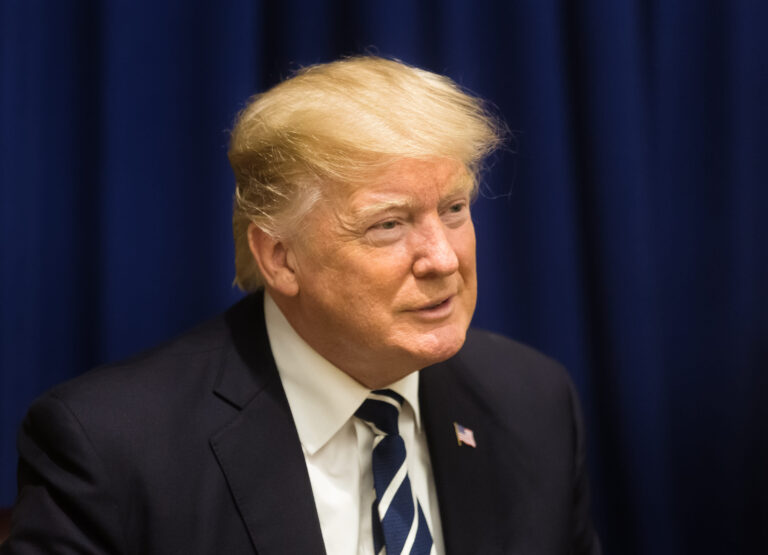
Trump and Graham’s Unlikely Journey From Bitter Rivals to Brothers-in-Arms as Their Political Bond Surprised America
When Lindsey Graham called Donald Trump on Saturday evening, the South Carolina senator had just returned from Ukraine and sounded tired. Still, he was focused on unfinished business in Washington, including election legislation he wanted the president to support.
Neither man apparently knew it would be their final conversation. Hours later, Graham died following what his office described as a brief and sudden illness. He was 71. Trump said he received the news early Sunday and struggled to believe it. The president later called Graham “a member of the family” and ordered American flags lowered in his honor.
It was an emotional ending to one of the most dramatic political relationships of the Trump era. Graham and Trump were never natural allies. One was a military lawyer and veteran senator shaped by John McCain’s internationalist worldview. The other was a political outsider who stormed into the Republican Party, mocked its leaders and challenged its foreign-policy establishment.
They began as bitter rivals. They became golfing partners, legislative collaborators, and two of the loudest voices in the Republican movement. Their journey was not a straight line. It was marked by fury, reconciliation, public breakups, and repeated returns. Yet by the end, the former enemies had become something close to political brothers-in-arms.
A rivalry built on insults
The hostility erupted during the 2016 Republican presidential campaign. Graham was running for president as an experienced national-security candidate. Trump was dismissing many of the party’s traditional leaders as weak, ineffective and disconnected from voters.
Their confrontation intensified after Trump attacked McCain, Graham’s closest political friend, questioning the Arizona senator’s status as a war hero because he had been captured during the Vietnam War.
Graham responded by calling Trump a “jackass.” Trump struck back during a South Carolina campaign rally by reading Graham’s cellphone number aloud to the crowd. The stunt forced Graham to replace his phone and inspired a humorous campaign video in which he destroys old devices.
Behind the comedy was genuine anger. Graham described Trump in extraordinarily harsh terms and warned that choosing him would destroy the Republican Party. He accused Trump of appealing to fear and prejudice, while Trump called Graham a disgrace and mocked his standing among South Carolina voters. There appeared to be no path from that feud to friendship. Then Trump won.
Golf helped change the conversation
After Trump entered the White House in 2017, Graham faced a choice familiar to many establishment Republicans. He could remain permanently opposed to the new president, or he could seek areas where cooperation might yield results.
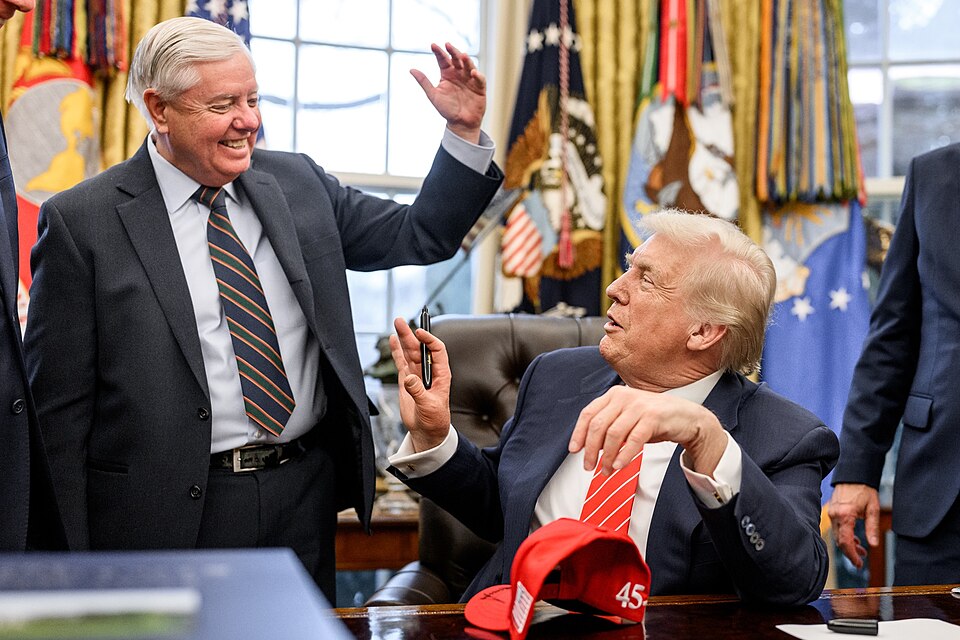
Graham chose engagement. Meetings at the White House softened the hostility. Golf accelerated the transformation. The two men began playing together at Trump’s courses, where hours away from television cameras gave them room to argue, joke and develop a personal connection.
By October 2017, they had played multiple rounds together. Publicly, Graham began sounding less like Trump’s enemy and more like a senator who believed he had learned how to communicate with him. The relationship worked because both men offered something the other needed.
Trump gained an experienced senator who understood Congress, foreign policy, and the federal judiciary. Graham gained direct access to a president who had transformed the Republican electorate and could make or break political careers with a single endorsement.
But reducing their alliance to a matter of convenience misses part of the story. Over time, their exchanges became warmer and more personal. Graham could disagree with Trump, absorb an angry response, and eventually return to the conversation. That resilience became the defining feature of their partnership.
The Kavanaugh battle forged a stronger alliance
The confirmation fight over Supreme Court nominee Brett Kavanaugh became a turning point. During a tense Senate Judiciary Committee hearing in September 2018, Graham delivered an explosive defense of Kavanaugh and accused Democrats of using unverified allegations to destroy the nominee’s reputation.
The moment electrified conservatives. It also impressed Trump. Graham’s intervention helped establish him as one of the president’s most effective defenders in the Senate. Trump later described it as the finest moment of Graham’s congressional career.
Their alliance soon expanded beyond one confirmation battle. As Judiciary Committee chairman, Graham helped advance Trump’s judicial nominees. More than 200 federal judges were confirmed during Trump’s first term, reshaping the courts and giving the administration one of its most lasting achievements.
Graham also became a frequent television surrogate, defending Trump during investigations, impeachment battles and disputes with Democrats. The senator who had once predicted Trump would destroy the Republican Party was now helping construct Trump’s legacy.
January 6 nearly ended everything
Their friendship faced its greatest rupture after the Jan. 6, 2021, attack on the U.S. Capitol. Standing on the Senate floor after lawmakers returned to certify the presidential election, Graham declared that he had reached his limit. He acknowledged the significance of Trump’s presidency but said it was time to move on.
For a moment, the relationship appeared finished. Trump’s supporters turned on Graham, and Graham openly criticized the president’s conduct. The anger was personal as well as political. After years of defending Trump, Graham believed the administration’s final weeks had gone too far.
But the separation did not last. Within months, Graham was again speaking with Trump and encouraging Republicans to recognize his continuing influence. By 2022, Graham argued that the party could neither advance nor expand without the former president.
It was another remarkable reversal, but it followed the pattern that had defined their relationship. Their arguments could be brutal, yet rarely permanent.
Their friendship survived real disagreements
Graham’s loyalty never meant complete agreement. He maintained a more interventionist approach to foreign policy than many of Trump’s “America First” supporters. Graham remained one of Washington’s strongest advocates for Ukraine, Israel and aggressive pressure against Iran.
He also clashed with Trump over abortion policy in 2024 after Trump refused to support a federal ban. Trump criticized Graham publicly and suggested he regretted endorsing him, while Graham refused to abandon his position.
More recently, Graham objected to Trump’s broad pardons for people convicted in connection with the Capitol attack, warning that pardoning those who committed violence could create a dangerous precedent. Yet these disputes no longer carried the finality of their early feud.
Trump and Graham had learned how to argue without permanently severing the relationship. Sen. Tim Scott later summarized their bond, saying they did not always agree but had discovered how to remain friends. That ability is rare in modern Washington, especially in Trump’s political orbit, where disagreement can quickly become exile.
From rival to indispensable ally
During Trump’s second term, Graham became an important connection between the White House and the Senate. He supported major parts of the president’s legislative agenda, worked on election-related measures and frequently communicated with Trump about disputes on Capitol Hill. Fox News reported that Graham often shuttled between Senate negotiations and conversations with the White House, serving as both an advocate and an intermediary.
Trump returned the loyalty. He backed Graham’s 2026 reelection campaign and praised him during a June tele-rally in South Carolina. Graham won the Republican primary and publicly thanked Trump in language that reflected how far the relationship had traveled from the bitterness of 2015.
The man Trump once suggested could not win a race for local dogcatcher had become one of the few senators welcomed into his political inner circle.