Trump Launches EU Trade Investigation Over Tech Fines as New Tariff Dispute Looms
A new trade dispute is forming between the United States and the European Union, and this time the clash is not over steel, cars, or agriculture. It is centered on something that powers everyday life: technology.
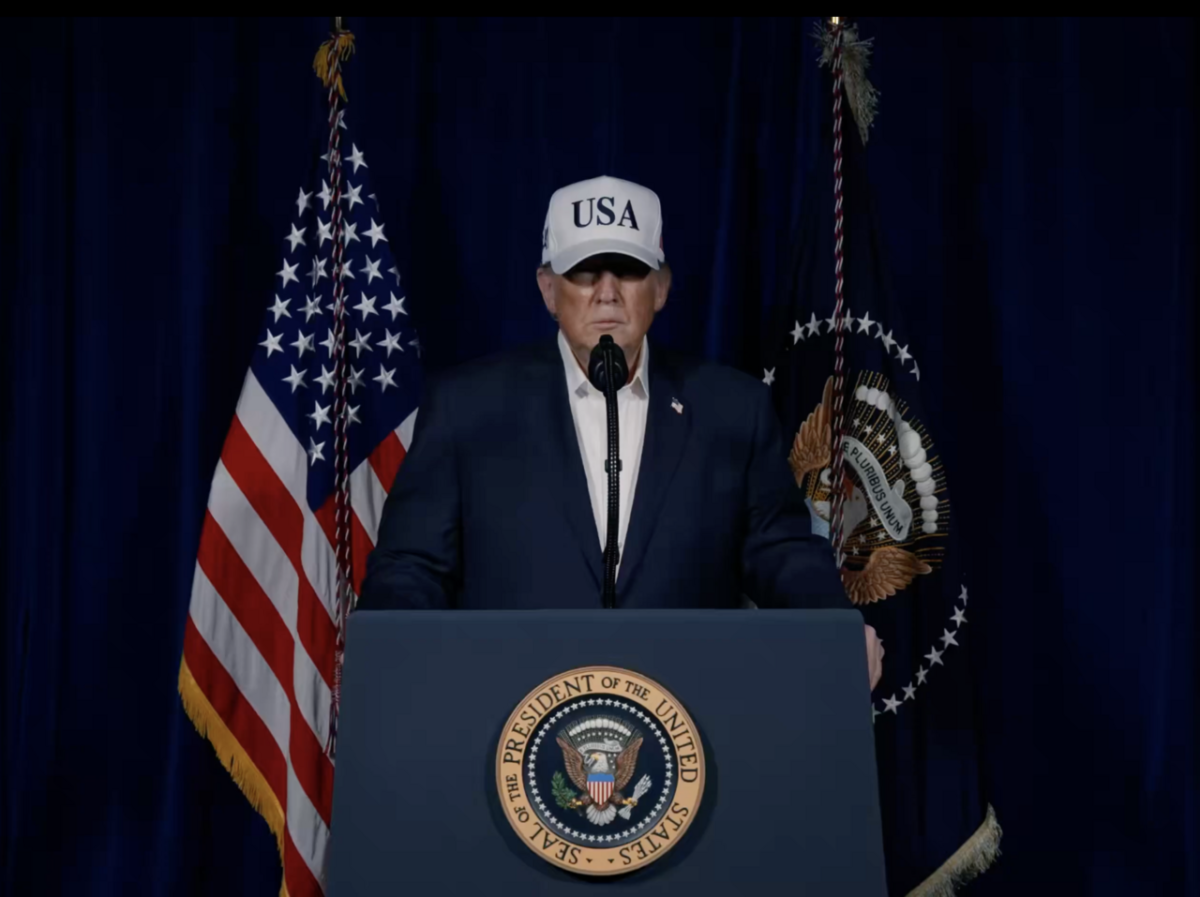
President Donald Trump has ordered a trade investigation into the European Union over penalties imposed on major American technology companies, arguing that European regulators are unfairly targeting U.S. businesses.
The move could open the door to new tariffs, but no tariffs have been imposed yet. The investigation is the first step in a process that could lead to further trade action.
The dispute places some of the world’s biggest companies, including Google, Apple, Meta and Amazon, at the center of another major U.S.-Europe economic disagreement.
Trump Targets EU Tech Regulations With Section 301 Investigation
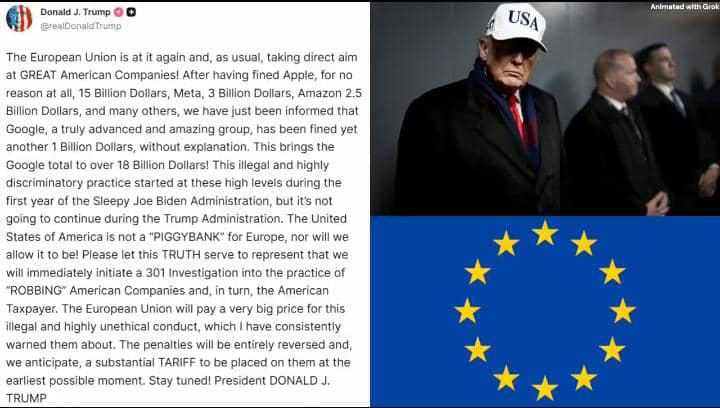
Trump announced that the United States would begin a Section 301 investigation, a trade tool that allows the government to examine whether foreign policies or practices unfairly harm American businesses.
In a statement shared on social media, Trump accused the European Union of targeting American companies through large regulatory penalties.
“The United States of America is not a ‘PIGGYBANK’ for Europe,” Trump wrote, arguing that the EU should reverse penalties against U.S. companies.
He also warned that tariffs could follow if the administration determines that European actions unfairly disadvantage American businesses.
A Section 301 investigation does not automatically result in tariffs. The process typically involves gathering evidence, reviewing the foreign policy or practice in question, and deciding whether a trade response is justified.
Google Fine Becomes the Latest Flashpoint
The latest dispute follows a European Commission decision involving Google.
European regulators fined Google approximately €890 million, or about $1 billion, over alleged violations of European digital competition rules.
The European Union has argued that its technology regulations are designed to protect competition, consumers and smaller businesses. Officials have repeatedly said the rules apply to companies operating in Europe regardless of where those companies are headquartered.
American technology companies have pushed back against some European regulations, arguing that certain rules unfairly focus on U.S. firms because of their size and influence.
The disagreement reflects a broader tension between Washington and Brussels over how governments should regulate powerful technology platforms.
Why Big Tech Has Become a Global Trade Issue

The conflict is not limited to Google.Trump also referenced previous European penalties involving other major American companies, including Apple, Meta and Amazon.
For years, European regulators have increased scrutiny of large technology companies through laws such as the Digital Markets Act and Digital Services Act.
Supporters of those laws say large platforms have too much influence over online markets and need stronger oversight.
Critics argue that American companies are being singled out and face heavier restrictions than competitors elsewhere.
That disagreement has now moved from regulatory agencies into international trade discussions.
The EU Says It Is Enforcing Its Own Rules
European officials have rejected the idea that the bloc is targeting American businesses because they are American.
The European Commission has said its digital regulations apply equally to all companies operating in the European market.
Officials argue that technology companies must follow European competition and consumer protection laws just as businesses in other industries do.
The EU has also pushed back against previous U.S. criticism of its digital policies, saying regulation is a normal part of governing large markets.
What Could Happen Next?
The immediate next step is the Section 301 investigation.
U.S. trade officials will examine whether European policies unfairly harm American companies. If the investigation finds wrongdoing, possible responses could include negotiations, trade agreements or tariffs.
However, the process could take time.
A tariff announcement is not automatic, and the investigation does not mean American consumers or businesses will immediately face higher costs.
For companies operating across both markets, the uncertainty itself can create challenges.
Technology firms must navigate different rules in the United States, Europe and other regions, while investors watch closely for signs of a wider trade conflict.
A Bigger Fight Over Who Controls the Digital Economy
The dispute highlights a larger question facing governments worldwide: Who should set the rules for the digital economy?
The United States has traditionally emphasized innovation and limiting government interference in technology markets.
The European Union has taken a more aggressive regulatory approach, arguing that stronger rules are necessary to protect competition and consumers.
Both sides say they are protecting fairness.
But with billions of dollars in company penalties and possible tariffs now involved, the disagreement has moved beyond technology policy. It has become a major economic and diplomatic issue.
For now, the biggest question is whether the investigation leads to negotiations or becomes the next major U.S.-EU trade confrontation.