Trump Pauses Further Strikes on Iran as Ceasefire Collapses and Hormuz Crisis Keeps Oil Markets on Edge
President Donald Trump has paused additional U.S. attacks on Iran after two days of retaliatory strikes, but the conflict remains far from settled as the collapse of the ceasefire, renewed threats against commercial shipping and reports of an Iranian assassination plot keep the Middle East on high alert.
Washington has agreed to continue negotiations requested by Tehran, even as Trump publicly declared that the ceasefire was “over.” The mixed message reflects the difficult position now confronting both countries. We are watching military escalation, indirect diplomacy, and economic pressure unfold simultaneously, with the Strait of Hormuz once again emerging as the focal point of pressure.
Iran’s attacks on commercial vessels prompted the latest American retaliation. U.S. Central Command said Iranian forces targeted three ships traveling through the Strait of Hormuz, describing the attacks as a dangerous violation of the ceasefire and a threat to freedom of navigation. The United States subsequently struck targets inside Iran before halting additional operations.
The crisis is already reaching beyond the battlefield. Oil traders, shipping companies, Gulf governments, and American motorists are responding to every military announcement and diplomatic signal. Although crude prices declined Friday on hopes that ship traffic could recover, both major oil benchmarks remained on course for strong weekly gains.
Trump Says Iran Talks Will Continue, but the Ceasefire Is Over
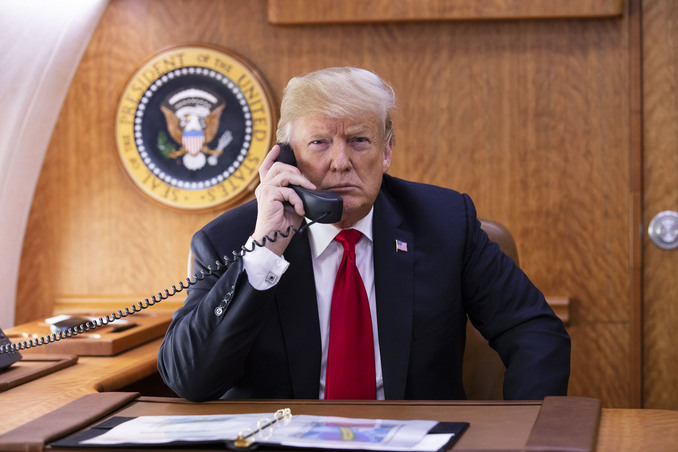
Trump announced that Iran had asked to continue negotiations and that the United States had agreed. At the same time, he emphasized that Washington no longer considered the ceasefire valid.
The statement leaves the United States and Iran in an unusual position. Formal negotiations may continue even though the agreement designed to restrain military action is no longer functioning. Qatar has sent negotiators to Iran to reduce tensions and establish conditions for renewed talks, particularly regarding commercial navigation through the Strait of Hormuz.
The immediate question is no longer simply whether negotiations will resume. We must also determine whether either side is willing to avoid military action while those negotiations take place.
Iranian officials have rejected any suggestion that Tehran will surrender under American pressure. Mohammad Bagher Ghalibaf, Iran’s parliament speaker and a leading negotiator, said the conflict would not end with Iran’s capitulation. He argued that Tehran must remain militarily prepared even as it participates in diplomacy.
That position makes a rapid breakthrough difficult. Washington wants assurances that Iranian forces will stop targeting vessels and threatening Gulf military installations. Tehran wants restrictions on American operations and recognition of what it considers its security interests around the Persian Gulf.
Without enforceable terms, negotiations could become little more than a temporary pause between rounds of military action.
U.S. Retaliatory Strikes Follow Attacks on Commercial Tankers
The latest confrontation accelerated after Iran was accused of attacking three commercial vessels in the Strait of Hormuz.
CENTCOM identified the ships as the Marshall Islands-flagged Al Rekayyat, the Saudi Arabia-flagged Wedyan, and the Liberian-flagged Cyprus Prosperity. American officials described the attacks as deliberate violations of the ceasefire and warned that U.S. forces remained prepared to hold Iran accountable.
The United States then carried out strikes against Iranian targets. Iran responded with attacks directed at American and allied military positions across the Gulf. Reports described Iranian missile and drone operations involving Bahrain, Kuwait, and Qatar, further expanding the geographical reach of the confrontation.
Commercial shipping is now caught between military deterrence and insurance calculations. Even when a shipping lane is technically open, vessels may delay departures if operators believe crews, cargo, or tankers face an elevated risk of attack.
That distinction matters. A complete physical closure of the Strait of Hormuz is not required to disrupt the oil market. Shipping can slow dramatically when tanker owners, insurers, and charterers conclude that the potential cost of passage has become too high. Higher insurance premiums, security costs, and freight rates can raise energy prices even when oil continues moving through the waterway.
Strait of Hormuz Becomes the Center of the Conflict
The Strait of Hormuz connects the Persian Gulf to the Gulf of Oman and the Arabian Sea. It is one of the world’s most important energy corridors.
The U.S. Energy Information Administration estimated that approximately 23.2 million barrels per day of oil moved through the strait during the first half of 2025. That represented about 29 percent of global maritime oil flows. The narrow channel carries crude oil, condensate, petroleum products, and liquefied natural gas from major Gulf exporters. Saudi Arabia, Iraq, Kuwait, the United Arab Emirates, Qatar, and Iran all depend on the surrounding maritime network to reach international customers.
Asian economies are particularly exposed. EIA data showed that 84 percent of the crude oil and condensate and 83 percent of the liquefied natural gas passing through Hormuz in 2024 went to Asian markets. China, India, Japan, and South Korea were among the largest destinations.
The United States imports less Gulf oil than in previous decades, but that does not protect American households from a disruption in the Strait of Hormuz. Oil is traded in a global market. A supply loss in Asia can push international prices higher, affecting refinery costs, diesel prices, aviation fuel, and gasoline across the United States.
Iran has attempted to establish greater authority over passage through the strait, including through a new organization that reportedly requires vessels to obtain passage permits. The International Maritime Organization’s governing council called on countries to reject Iran’s sovereignty claims and oppose measures that interfere with lawful international navigation.
U.S. naval officials have also maintained that no single country can close or control the waterway. American forces have supported a southern transit corridor near Oman designed to move ships away from more dangerous areas.
Oil Prices Remain Volatile Despite Friday’s Decline
Oil prices moved lower Friday as traders reacted to the pause in American strikes and the possibility of renewed negotiations. Brent crude fell to approximately $75.78 per barrel, while West Texas Intermediate declined to about $71.25. Despite the daily drop, Brent remained on track to gain more than 5 percent for the week, while WTI was positioned for a weekly increase of nearly 4 percent.
The market’s reaction shows how quickly sentiment can change. Prices rise when traders expect tanker delays, production losses, or wider war. They fall when diplomatic activity suggests that shipping could continue without prolonged interruption.
However, the underlying supply situation remains fragile. The International Energy Agency reported that the earlier reopening of the Strait of Hormuz supported a partial recovery in global oil supply. June supply increased by about 4.1 million barrels per day, but overall volumes remained approximately 9.4 million barrels per day below prewar levels.
The IEA has warned that renewed U.S.-Iran hostilities could disrupt the expected recovery and threaten projections for a global oil surplus in 2027. Middle Eastern oil flows had already suffered an extraordinary shock after traffic through Hormuz fell from roughly 20 million barrels per day before the conflict to an average of only 2.7 million barrels per day during March, April, and May.
That supply gap forced producers, refiners, and governments to reorganize trade routes. More oil moved from the Americas and other non-Gulf suppliers toward Asian markets. Strategic reserves helped soften the disruption, but they could not eliminate higher transportation costs or shortages in specific refined products.
American Gas Prices Rise as the Iran Conflict Reaches the Pump
The national average price for regular gasoline stood at approximately $3.88 per gallon on July 10. The figure remains below the conflict-era peak, but it is still substantially higher than prices recorded before fighting disrupted Gulf oil exports. Gasoline prices had begun to ease as tanker traffic recovered, only to rise again when the ceasefire broke down.
American motorists, therefore, face a market driven by two competing forces. The first is improving global production. EIA expects oil output and trade flows to continue recovering if Hormuz remains accessible. The agency forecasts average U.S. gasoline prices of about $3.80 per gallon in the third quarter of 2026 and approximately $3.40 per gallon in the fourth quarter, as inventories rebuild and summer demand declines.
The second force is renewed military escalation. Every attack on a tanker, port, refinery, or Gulf military installation increases the possibility that those forecasts will change. Gasoline does not respond only to the current supply of crude oil. Retail prices also reflect refinery capacity, fuel inventories, transportation expenses, seasonal demand, and expectations about future supply.
Diesel prices may become especially important. Trucks, agricultural equipment, construction machinery, ships, and freight trains depend heavily on diesel. A sustained increase can spread through the economy by raising the cost of moving food, building materials, and consumer goods. For households, the effect may appear first at gas stations. For businesses, it can manifest as higher delivery costs, airfares, and supplier charges.