Trump Revives Reflecting Pool Fight, Points to James Comey as Mystery Deepens Over “86 47” Message
A dispute that began with damage at one of America’s most recognizable landmarks has now become another political battle involving Donald Trump and former FBI Director James Comey. Trump has suggested that the “86 47” markings connected to the Lincoln Memorial Reflecting Pool were likely inspired by Comey’s controversial seashell post, adding a new layer to a controversy already involving a dropped vandalism case, contractor disputes and questions over what the evidence actually proves.
The controversy has grown far beyond the damage itself. What started as an investigation into what happened at the Reflecting Pool has become a debate over accountability, government power and whether the original explanation for the damage was correct. While Trump continues to argue that intentional vandalism occurred, prosecutors later pointed to contractor-related problems and dismissed the case against former Olympic canoeist David Hearn, who had been accused in connection with the incident.
A Historic Landmark Becomes the Center of a Political Storm
The Lincoln Memorial Reflecting Pool is not an ordinary public space. It is one of Washington’s most recognizable landmarks, a location tied to presidential history, national ceremonies, and some of the most important moments in American public life. That symbolism has made the dispute over its damage far more significant than a typical property case.
The controversy emerged after problems were discovered following a major renovation project at the site. The dispute quickly expanded from a question about physical damage into a larger argument over whether the cause was intentional destruction, construction problems, or a combination of issues.
Trump Links the “86 47” Message to James Comey
Trump has brought former FBI Director James Comey into the controversy by suggesting that the “86 47” message found at the site was likely connected to Comey’s previous social media post showing seashells arranged to display the same numbers. The president has argued that the phrase was more than a coincidence, but no public evidence has established that Comey had any connection to the Reflecting Pool damage.
The “86 47” controversy itself has already been politically explosive. Comey’s seashell image drew attention because some interpreted the numbers as a message directed at Trump, who is the 47th president. Comey disputed that interpretation, and the debate over the meaning of the post has continued separately from the Reflecting Pool investigation.
The Dropped Case Against David Hearn Changed the Direction of the Story
The Reflecting Pool controversy took another turn when prosecutors moved to dismiss the case against David Hearn, a retired Olympic canoeist who had been accused of damaging the site. The decision shifted attention toward questions about whether investigators had acted too quickly and whether the original vandalism theory had been fully supported.
Officials later cited contractor-related issues connected to the renovation as a factor in the damage, creating a competing explanation for what happened. The result was a dispute between those who believe the damage was deliberate and those who argue the evidence pointed toward construction problems rather than criminal activity.
Evidence, Accusations and the Fight Over What Really Happened
At the center of the controversy is a question that has shaped the entire dispute: what does the evidence actually show?
Trump has continued to argue that vandalism occurred and has criticized the decision to drop the case. Supporters of that viewpoint point to reported observations from witnesses and the physical damage itself. However, prosecutors and critics have raised concerns about whether the available evidence supported criminal charges against Hearn.
The disagreement demonstrates how quickly a criminal investigation can become a political battle. Once national figures became involved, the debate moved beyond the Reflecting Pool itself and into a broader argument over trust, accountability and competing versions of events.
Trump’s Long History With Comey Adds Another Layer

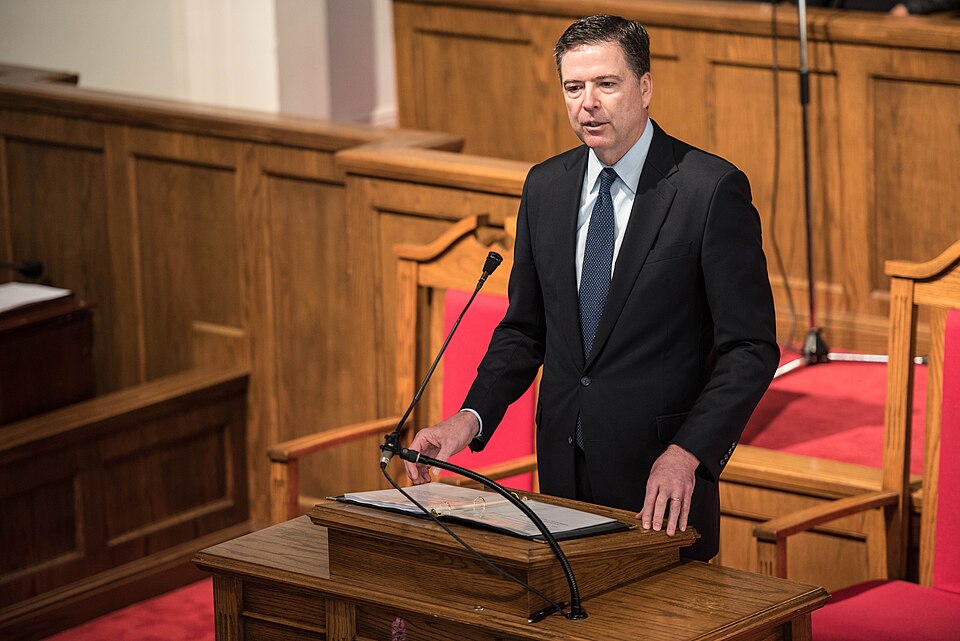
Gage Skidmore from Peoria, AZ, United States of America, CC BY-SA 2.0, via Wikimedia Commons
The latest clash is also shaped by years of tension between Trump and Comey. Their relationship became one of the most controversial chapters of Trump’s first presidency after Trump removed Comey as FBI director in 2017 during the Russia investigation era.
Since then, Comey has remained one of Trump’s most recognizable critics, while Trump has repeatedly attacked his former FBI director. Bringing Comey into the Reflecting Pool dispute adds another chapter to a rivalry that has continued across multiple political controversies.
A Small Message, a Famous Landmark and a Much Bigger Political Fight
The Reflecting Pool dispute has become a symbol of how quickly a local investigation can turn into a national controversy. A damaged landmark, a dropped criminal case and a decades-long political rivalry have combined into a story that touches law enforcement, politics and public trust. For now, the confirmed facts remain that damage occurred at the Reflecting Pool, David Hearn’s case was dismissed, and Trump has continued to argue that wrongdoing took place.
The alleged connection between Comey’s “86 47” post and the damage remains a claim rather than a proven fact. The dispute is no longer only about what happened to a historic pool in Washington. It has become another chapter in the ongoing debate over evidence, accountability, and the lasting political battles surrounding Donald Trump and his opponents.