Trump Threatens to “Complete the Job” Against Iran as Hormuz Crisis Spreads to Bahrain and Kuwait
Iran says it struck U.S.-linked targets in Bahrain and Kuwait after American attacks on Iranian military sites, while Tehran warns that any challenge to its role in the Strait of Hormuz will raise tensions.
Iran Warns Against Any Challenge Over Hormuz

Iran’s foreign minister, Abbas Araghchi, has warned that the Strait of Hormuz cannot fully return to normal unless Tehran plays the main role in managing traffic through the waterway. Speaking in Baghdad, he said Iran is responsible for restoring maritime movement to pre-war levels, but he also warned that outside pressure would only worsen tensions.
His message came as Gulf countries called for the strait to stay open and safe for trade. Kuwait, Bahrain, and other Gulf states depend heavily on the smooth passage through the Strait of Hormuz. The waterway is important for oil exports, gas shipments, trade routes, and regional stability.
Araghchi’s comments show why Hormuz is now at the center of the crisis. This is no longer only about one round of American and Iranian strikes. It is also about who controls one of the world’s most important shipping passages.
Iraq’s foreign minister stressed the need to keep the passage open. Gulf leaders know that any serious disruption in the Strait of Hormuz could affect countries far beyond the Middle East. The strait carries a large share of the world’s oil and liquefied natural gas, so even limited military activity there can shake global markets.
Araghchi also connected the Hormuz crisis to Lebanon. He repeated Iran’s position that Israel must withdraw from Lebanon and stop its strikes there. That matters because Tehran is treating Hormuz, Lebanon, and wider ceasefire talks as linked issues rather than separate problems.
For now, Hormuz remains the pressure point. Every warning about the Strait carries military, diplomatic, and economic weight.
Trump Says U.S. May Be “Forced” to “Complete the Job”
President Donald Trump has issued a sharp warning to Iran after American forces launched new strikes on Iranian targets. In a Truth Social post, Trump said the United States may reach a point where it can no longer be “reasonable” and may be forced to “militarily complete the job.”
He also warned that if such action happens, the Islamic Republic of Iran “will no longer exist.” That statement raised fears that the conflict could move beyond limited strikes and retaliation.
The warning came after the U.S. hit several Iranian military targets. American officials said the strikes were a response to Iranian attacks on commercial shipping near the Strait of Hormuz. U.S. Central Command said the targets included surveillance systems, communication networks, air-defense sites, drone storage facilities, and minelayer capabilities.
Iran rejected Washington’s explanation. Tehran accused the United States of violating the ceasefire and attacking Iranian territory. Iranian officials said the country would defend its sovereignty. The Islamic Revolutionary Guard Corps also warned that any further U.S. attack would bring a stronger response.
Soon after Trump’s warning, Kuwait said its air defenses were responding to hostile missiles and drones. Bahrain also reported sirens and said Iranian strikes damaged a residential building near its international airport. No deaths were reported, but the damage showed how quickly the crisis had spread into Gulf territory.
Vice President JD Vance also defended the administration’s position. He said the United States had already weakened Iran’s nuclear program and still held the advantage, whether or not a final deal was reached.
Trump’s words make diplomacy harder. Iran will not want to look weak after such a public threat. Washington may also feel pressure to respond strongly if Iran launches another attack. The Gulf states are now caught between the two sides, trying to protect their territory while avoiding a wider war.
Trump also announced that he would nominate Lance Schroyer as the next director of U.S. Immigration and Customs Enforcement. Schroyer is a former Oklahoma State Trooper and U.S. Marine. The announcement came during a day dominated by the Middle East crisis.
Hezbollah Warns Over Lebanon-Israel Deal
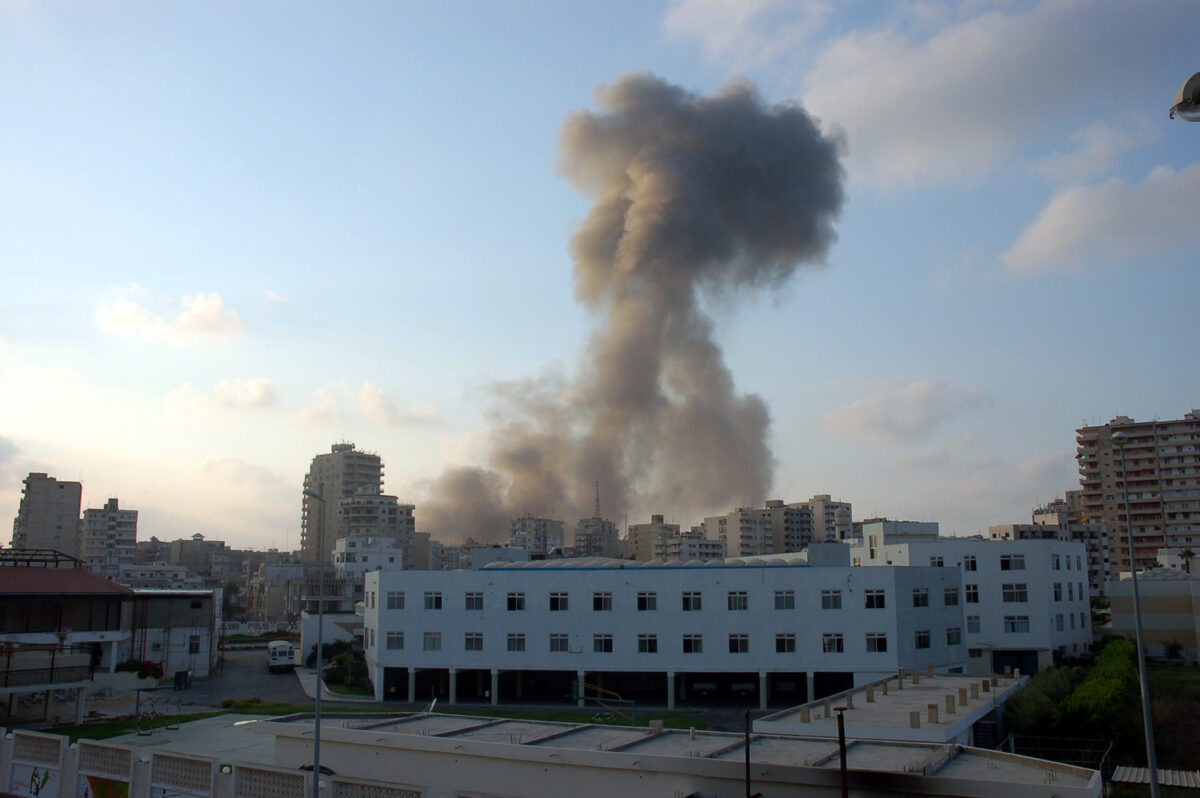
A Hezbollah lawmaker, Hassan Fadlallah, has warned that Lebanon could face internal conflict over a new framework agreement with Israel. He said Hezbollah rejects the deal and does not believe it will be carried out.
The agreement was signed in Washington and is meant to move Lebanon and Israel toward an end to fighting between Israel and Hezbollah. One of the most sensitive parts of the deal involves plans connected to disarming Hezbollah. The Iran-backed group strongly opposes that idea.
Lebanese President Joseph Aoun told Trump that the Lebanese state would take responsibility for carrying out the agreement. But Hezbollah’s leadership has rejected the deal, calling it a surrender of Lebanese sovereignty.
This matters because Hezbollah is backed by Iran. Any fight over Hezbollah’s weapons could become part of the wider U.S.-Iran-Israel crisis.
IRGC Warns of Stronger Response
Iran’s Islamic Revolutionary Guard Corps has warned that Tehran will respond with greater force if the United States launches more attacks. An IRGC spokesperson said Washington cannot be trusted and accused the U.S. of breaking its commitments.
The warning shows how weak the ceasefire has become. Iran believes U.S. strikes damaged the trust needed for talks. Washington believes force is needed to stop Iranian attacks on ships and U.S.-linked sites.
This is dangerous because both sides may now believe escalation helps them. The U.S. may see strikes as a way to weaken Iran. Iran may see retaliation as a way to prove it cannot be pressured.
Gulf States Condemn Iranian Attacks
Bahrain and Kuwait strongly condemned Iran’s missile and drone attacks. Kuwait said its air defenses intercepted the threats and reported no injuries. Bahrain said one residential building near its airport was damaged, but no one was killed.
The attacks alarmed Gulf governments because they showed how fast the conflict can reach civilian areas and allied territory. Even without deaths, the political message is serious.
Kuwait’s missile interceptions may increase calls for stronger regional air defense. Bahrain’s damaged building may deepen public concern about civilian safety.
Gulf states want U.S. protection, but they do not want their countries turned into battlefields. They rely on stable ports, airports, energy sites, and trade routes. A wider war would threaten all of them.