Trump Says U.S. Strikes in Nigeria Helped Stop Christian Killings, But the Full Story Is More Complicated
It was the kind of line designed to travel fast.
Speaking at the Faith & Freedom Coalition’s 2026 Policy Conference in Washington, President Donald Trump turned to Nigeria and made a dramatic claim about U.S. military action overseas.
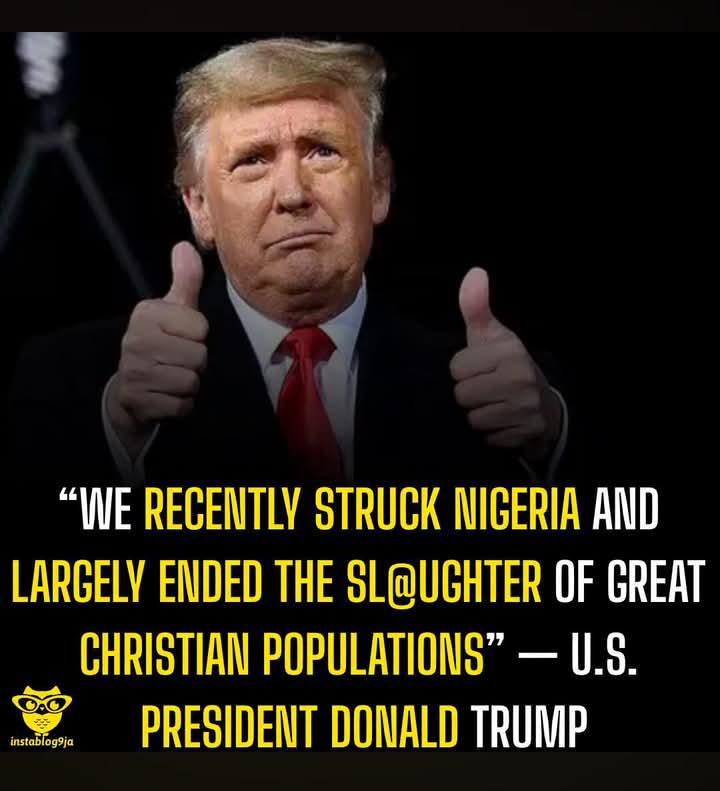
“As you know, we recently struck Nigeria and largely ended the slaughter of great Christian populations,” Trump said.
The room heard a strong message: America saw Christians under attack, hit the terrorists responsible, and changed the story. For Trump’s conservative Christian audience, it was a powerful moment. It connected faith, foreign policy, and force in one sentence.
But Nigeria’s security crisis is not simple. Christians have suffered terrible attacks in the country. That is true. Churches, villages, pastors, farmers, and families have been targeted in deadly violence. But Muslims and other communities have also been killed, kidnapped, displaced, and terrorized by armed groups.
That is why Trump’s statement deserves careful treatment. The U.S. did carry out strikes in Nigeria. Nigerian authorities did coordinate with Washington. Terrorist targets were hit. But the claim that the strikes “largely ended” the killing is harder to prove.
Nigeria is still battling terrorism, banditry, kidnappings, farmer-herder violence, and criminal networks across different regions. One strike can disrupt a militant group. It can kill commanders. It can send a warning. But ending mass violence across a country as large and complex as Nigeria takes far more than one military operation.
What Trump Was Talking About
Trump’s remark appears to refer to two major U.S.-backed actions in Nigeria.
The first happened on December 25, 2025, when U.S. Africa Command confirmed strikes against ISIS-linked targets in Sokoto State, in northwestern Nigeria. According to the U.S. military, the operation was carried out in coordination with Nigerian authorities.
U.S. officials said multiple ISIS terrorists were killed. Gen. Dagvin Anderson, commander of U.S. Africa Command, said the aim was to protect Americans and disrupt violent extremist organizations.
Trump framed the strike in more emotional terms. He said the attackers had been killing Christians and presented the operation as a response to religious persecution.
Nigeria’s government used a different tone. Foreign Minister Yusuf Maitama Tuggar described the strike as a joint counterterrorism operation and said it “has nothing to do with a particular religion.”
That distinction matters. Abuja did not deny the terrorist threat. It did not deny that communities were suffering. But Nigerian officials wanted the world to understand that the violence is broader than a simple Christian versus Muslim story.
The second major development came in May 2026, when Trump and Nigerian President Bola Ahmed Tinubu announced that U.S. and Nigerian forces had killed Abu Bilal al Minuki, also known as Abu Bakr al Mainuki. He was described by Nigerian authorities as a senior Islamic State-linked figure connected to ISWAP, the Islamic State West Africa Province.
Tinubu praised the operation as a “significant example of effective collaboration in the fight against terrorism.” Nigerian military officials said the operation took place in Borno State and involved close coordination with U.S. Africa Command.
Trump called al-Minuki the second in command of ISIS globally. Some analysts agree he was a major figure in jihadist networks in West Africa, though the exact level of his global rank has been debated publicly.
Either way, his reported death was a major counterterrorism win. But again, a major win is not the same thing as the end of Nigeria’s violence.
Nigeria’s Crisis Is Bigger Than One Strike
Nigeria’s security emergency has many layers.
In the northeast, Boko Haram and ISWAP have terrorized communities for years. In the northwest, armed gangs and extremist networks have carried out kidnappings, village raids, and attacks on rural communities. In the Middle Belt, land disputes, ethnic tensions, religious identity, and weak security often collide in deadly ways.
That is why the story can be so difficult to explain. Religion is part of it, but not the only part. Poverty, land pressure, weak policing, porous borders, extremist ideology, and organized crime all play a role.
For Christian communities, the fear is very real. Many believers in parts of Nigeria feel abandoned, exposed, and targeted. Their churches have been attacked. Their villages have been raided. Their loved ones have been killed or kidnapped.
Religious freedom advocates have long argued that the Nigerian government has failed to protect vulnerable Christian communities and punish attackers. For them, Trump’s words sounded like long-awaited recognition.
But Nigerian officials often push back against language that frames the crisis only as anti-Christian violence. Their argument is that terrorists and armed groups also kill Muslims, attack mixed communities, and target people for ransom, territory, cattle, and control.
Tinubu has tried to present the fight as a national security issue. In earlier messages, he has emphasized protecting “Christians, Muslims, and all Nigerians from violence.”
That does not erase Christian suffering. It simply means the full picture is broader and messier than one campaign line.
Why Trump’s Claim Hit So Hard

Trump’s line worked because it had emotional force.
It told supporters that he acted where others hesitated. It told Christian voters that persecution abroad was not being ignored. It also fit Trump’s political image: direct, forceful, and willing to use American power against enemies.
For his supporters, the message was simple and satisfying. Terrorists killed Christians. Trump hit back. The killing slowed.
For critics, the message was too neat. They argue that Nigeria’s violence cannot be reduced to one religious storyline, and that airstrikes alone cannot solve deep security failures on the ground.
Both reactions show why the comment matters.
The verified facts are serious enough on their own. U.S. forces struck ISIS-linked targets in Nigeria. Nigerian authorities worked with Washington. A senior Islamic State-linked figure was later killed in a joint operation. These are significant developments.
But the claim that the slaughter has been “largely ended” is not fully supported by the public record. Nigeria continues to face deadly violence in several regions. Armed groups remain active. Rural communities still live with fear.
That is the heart of the story.
Trump can claim credit for ordering the force. U.S. Africa Command can say it disrupted extremist networks. Nigeria can say the operations were about terrorism, not religion. Religious freedom advocates can say Christian suffering has finally received attention. Analysts can warn that killing commanders does not automatically end insurgencies.
All of those things can be true at once.
The real test is not the applause line in Washington. It is what happens in Nigerian communities after the drones leave, after the statements fade, and after the headlines move on.
Can farmers return to their fields without fear? Can children go to school safely? Can churches and mosques open without guards outside? Can families sleep without listening for motorcycles, gunfire, or strange movement in the dark?
That is how peace will be measured.
A strike can destroy a camp. A raid can kill a commander. A speech can electrify a crowd.
But Nigeria’s story will not be settled by one sentence.
It will be settled by whether ordinary people, Christian and Muslim alike, can live without being hunted.