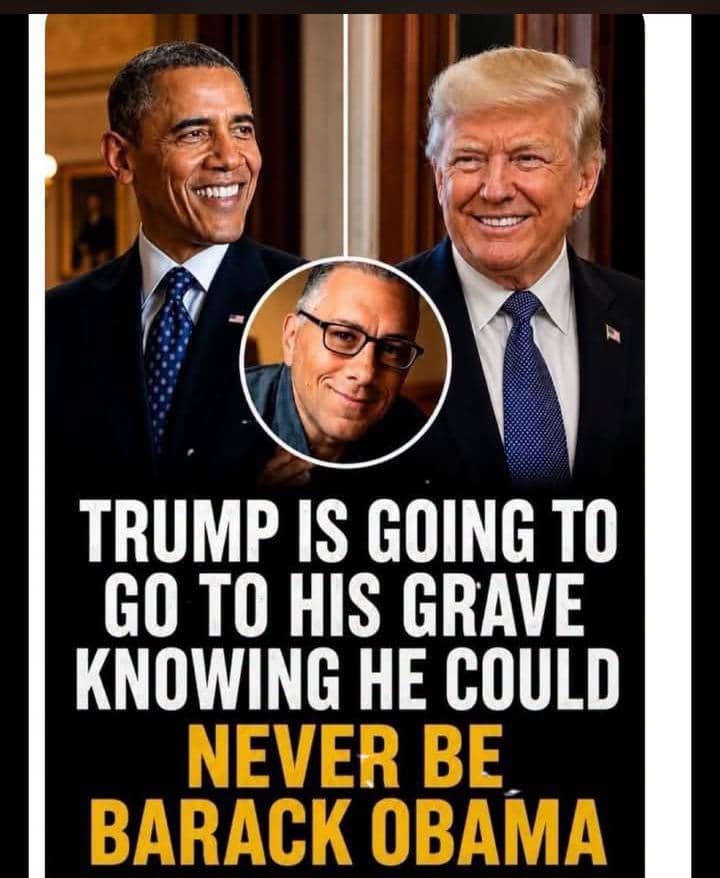
“Trump Will Go to His Grave Knowing He Could Never Be Barack Obama,” Viral Comment Sparks New Political Debate
A single line circulating online has reignited an old political debate: “Trump is going to go to his grave knowing he could never be Barack Obama.” The comment, which appears to be a personal opinion shared online rather than a verified statement from a named public figure, sparked conversations about how Americans view the legacies of two presidents who changed the political landscape in very different ways.
The debate reflects a long-running question in American politics: how history will remember Donald Trump and Barack Obama. Supporters of Obama often point to his historic 2008 election, calm public image, and international reputation, while Trump’s supporters argue that his presidency transformed the Republican Party and reshaped political conversations across the country.
The comparison is not just about policies. It is also about public perception, personal branding, and the very different ways both men connected with voters. While the two presidents rarely share the same political space, their names remain among the most discussed figures in modern American politics.
A Tale of Two Presidents With Completely Different Political Identities
Barack Obama entered the White House in 2009 after becoming the first Black president in U.S. history. His campaign was built around themes of hope, unity, and change, with the slogan “Yes We Can” becoming one of the most recognizable political messages of the modern era.
Obama’s supporters often highlight moments such as his 2008 victory speech in Chicago, where he told supporters, “Change has come to America.” His presidency also produced major policy achievements, including the Affordable Care Act, the expansion of healthcare coverage, and the appointment of two Supreme Court justices.
Donald Trump’s rise followed a completely different path. A businessman and television personality before entering politics, Trump won the presidency in 2016 by presenting himself as an outsider willing to challenge Washington’s traditional leadership.
Trump’s supporters have praised his approach as direct and unconventional. They point to issues such as tax cuts, conservative judicial appointments, immigration policies, and his “America First” agenda as reasons they believe his presidency left a lasting impact.
The contrast between the two men has fueled constant comparisons. Obama was often associated with measured speeches and a polished political image, while Trump became known for his blunt communication style and willingness to openly challenge critics.
The Battle Over Legacy and Public Image
Much of the debate surrounding the viral comment centers on legacy. Presidential reputations are often shaped not only by policies but also by how leaders are remembered by supporters, critics, and future generations.
Obama remains a major figure in global politics after leaving office. His speeches, books, and public appearances continue to attract large audiences. His supporters argue that his historic presidency gave millions of Americans a sense of representation that had never existed before.
Trump, meanwhile, has maintained a powerful connection with his political base long after leaving office. His rallies, endorsements, and influence over Republican politics have kept him at the center of national debate.
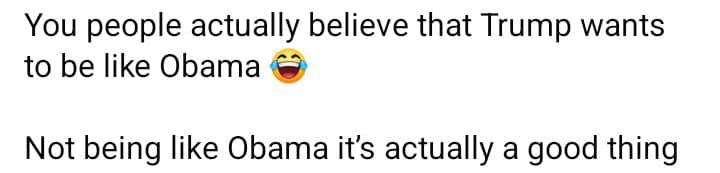
The phrase about Trump never being able to be Obama is ultimately an opinion, not a measurable fact. It reflects the views of critics who believe Obama’s public image and historical significance stand apart from Trump’s. However, Trump’s supporters would likely argue that comparisons between the two miss the point because they represent entirely different movements.
Even some of Trump’s political opponents have acknowledged his ability to dominate media attention and maintain voter loyalty. His influence on American politics has been one of the most significant developments of the past decade.
Why Comparisons Between Obama and Trump Never Seem To End
The fascination with comparing Obama and Trump comes from the fact that both presidents broke political expectations. Obama changed the history books by becoming the first Black president. Trump disrupted decades of political tradition by winning the White House without holding prior elected office.
Their communication styles also created two very different political cultures. Obama was known for carefully crafted speeches and a focus on broad themes, while Trump built a reputation around direct statements, social media engagement, and frequent public commentary.
Former President Obama once said that democracy depends on citizens being willing to “disagree without being disagreeable.” Trump’s approach has often been viewed differently, with supporters praising his willingness to fight opponents while critics argue his style increased political division.
The viral statement comparing Trump and Obama captures a broader argument that has existed since Trump first entered politics: whether presidential success should be measured through symbolism, policy outcomes, popularity, influence, or historical change.
In the end, history will judge both presidents through different lenses. Obama’s supporters will remember a groundbreaking presidency that represented a major cultural milestone, while Trump’s supporters will point to a movement that reshaped American politics.
The debate over who left the bigger mark is unlikely to disappear anytime soon. For many Americans, Obama and Trump represent two completely different visions of what presidential leadership should look like.