Elena Kagan Says Supreme Court Is Not a Rubber Stamp for Trump, but Selective Resistance Leaves Deeper Questions
The most revealing part of Justice Elena Kagan’s defense of the Supreme Court was not her claim that it sometimes restrains President Donald Trump. It was the fact that such a defense now appears necessary. When a sitting justice must insist that the Supreme Court is not a rubber stamp for Trump, the institution is already confronting a serious crisis of public confidence.
Kagan delivered that message to lawyers and judges gathered for the 9th U.S. Circuit’s conference in Bellevue, Washington. She acknowledged that the court remains deeply conservative and often embraces ideas she believes are profoundly wrong. Still, she argued that major rulings on tariffs and birthright citizenship show that the justices can reject Trump when his administration reaches beyond lawful executive power.
Her argument deserves serious consideration, but it does not settle the larger debate. The court has blocked some of Trump’s most ambitious claims while approving many other parts of his agenda. That record suggests the Supreme Court may not be Trump’s rubber stamp, but it often operates as a selective brake that engages only after presidential power has moved dangerously close to its outer limits.
A defense that reveals how much trust has already disappeared
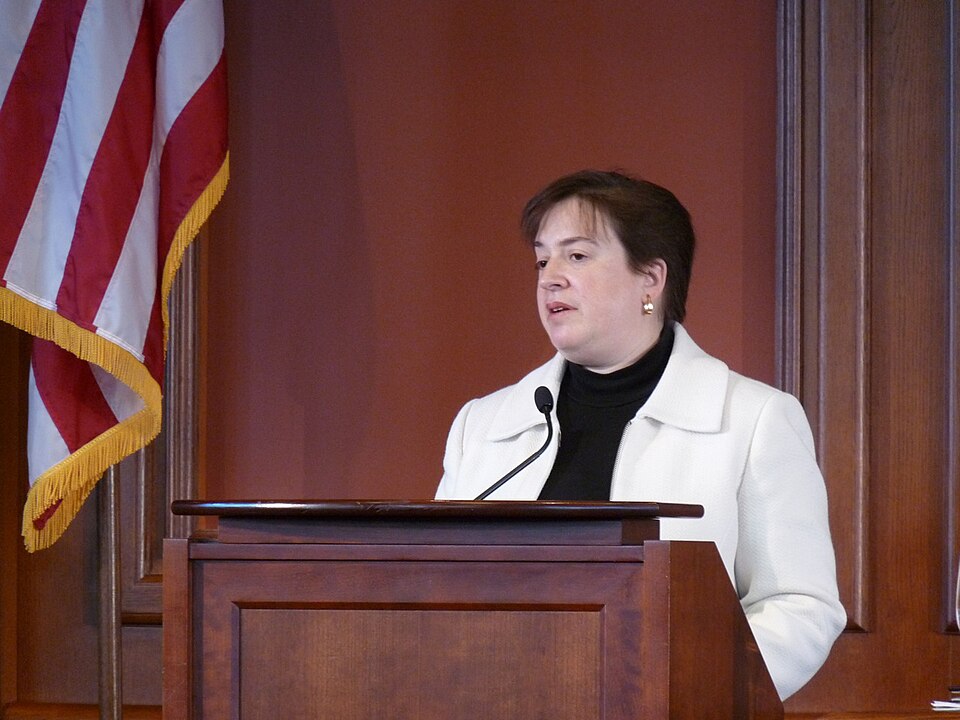
Kagan did not pretend that the court occupies some neutral ideological space. Six conservative justices hold a durable majority, and the court has frequently advanced positions associated with the conservative legal movement. Her point was narrower: ideological alignment does not automatically prove presidential control.
That distinction carries legal force, but it does not resolve the political problem. The Trump administration has prevailed in the vast majority of its cases before the court so far, including disputes involving immigration enforcement and presidential authority over federal agencies. Against that record, the tariff and citizenship decisions appear important but exceptional.
Kagan said the court has checked the executive branch at significant moments. She also rejected the description of the justices as puppets of the administration. Yet when the Supreme Court is not a rubber stamp for Trump, the statement becomes a necessary public defense, exposing how deeply suspicions of political influence have entered the national conversation.
Public opinion makes Kagan’s challenge even harder. Gallup found Supreme Court approval at 39 percent in July 2025, the lowest point in its 25-year trend. Republican approval stood at 75 percent, while Democratic approval fell to 11 percent, creating a record 64-point partisan gap.
By September 2025, 43 percent of Americans described the court as too conservative. Only 42 percent approved of its overall performance, while 52 percent disapproved. Fewer than half of Americans expressed confidence in the federal judicial system for the fourth consecutive year.
Those numbers reflect more than disagreement with isolated rulings. They show that many citizens now view the court through the same partisan lens used to judge Congress or the White House. A judicial institution can survive criticism, but it faces greater danger when large portions of the public question its motives rather than merely its conclusions.
The court looks less like a rubber stamp than a selective brake
The strongest version of Kagan’s argument does not portray the court as consistently hostile to Trump. It presents the justices as a selective brake that activates in unusually consequential cases. The Supreme Court is not a rubber stamp for Trump, but it has often allowed his administration considerable room before deciding that a claim crossed a legal boundary.
That pattern matters because modern presidents rarely accumulate power through one dramatic announcement. They expand authority through emergency declarations, immigration directives, regulatory changes, personnel decisions and aggressive interpretations of old statutes. Each successful claim can shift the accepted limits of presidential action.
A president does not need to win every case to reshape the balance among the branches of government. He only needs enough victories to establish new precedents, weaken institutional resistance and discourage future challenges. Two major defeats may stop specific policies without reversing the broader movement of power toward the executive branch.
The court’s conservative majority has supported important portions of Trump’s immigration agenda and strengthened presidential control over parts of the federal bureaucracy. Those rulings have practical consequences for migrants, civil servants, regulators, businesses and communities. They also help explain why critics remain unconvinced by isolated examples of judicial resistance.
The difficult question is not whether the justices have ever stopped Trump. They clearly have. The harder question is how much authority they have permitted him to accumulate before deciding that a particular action went too far.
Kagan can therefore prove that Trump does not control every outcome. She cannot prove from two cases that the court applies equal skepticism across his entire agenda. Judicial independence requires consistency, not simply the ability to produce occasional presidential defeats.
Trump’s tariffs turned an emergency law into an economic weapon

The tariff case gave Kagan her clearest example of judicial resistance. Trump invoked the International Emergency Economic Powers Act, known as IEEPA, to impose duties linked to drug trafficking and international trade deficits. The administration treated decades-old emergency language as a source of broad tariff authority.
Trump imposed a 25 percent duty on most Canadian and Mexican imports and a 10 percent duty on most Chinese imports. He also imposed tariffs of at least 10 percent on imports from every trading partner, with dozens of countries facing higher rates. The administration later adjusted several of those duties as negotiations and legal challenges continued.
The policy affected more than diplomatic relationships. Importers faced changing costs, companies reconsidered supply chains, and consumers risked paying higher prices as businesses passed along additional expenses. A presidential interpretation of an emergency law had placed enormous areas of economic activity under White House control.
The Supreme Court ruled in February 2026 that IEEPA did not authorize the president to impose those tariffs. The court noted that Congress knows how to grant tariff power explicitly and had not done so in the emergency statute. The law allowed the president to regulate certain transactions, but it did not mention duties or tariffs.
Chief Justice John Roberts announced the judgment, with central portions supported by liberal and conservative justices. The coalition crossed the court’s usual ideological divisions. That alignment strengthened Kagan’s argument that the Supreme Court is not a rubber stamp for Trump.
However, the ruling also exposed the scale of the administration’s attempted expansion. Trump tried to transform an emergency statute into a mechanism for restructuring global commerce without a new vote in Congress. The court eventually closed that door, but only after businesses, governments and consumers had endured prolonged uncertainty.
The case also raised a historical concern about emergency power. Presidents often gain authority during crises because Congress acts quickly or writes broad laws. Once those powers exist, later administrations may use them for purposes that lawmakers never anticipated.
Trump’s tariff program demonstrated how easily an emergency statute could become a tool of ordinary economic policy. If the court had accepted his interpretation, future presidents could have imposed wide-ranging duties by declaring economic conditions unusual or threatening. The decision prevented that outcome, but the administration’s willingness to attempt it remains significant.
Birthright citizenship placed families inside a constitutional experiment
Trump’s birthright citizenship order presented an even more personal test of executive authority. Issued on January 20, 2025, the directive sought to deny automatic citizenship to certain children born in the United States. It focused on children whose parents lacked lawful permanent status or held temporary permission to remain.
The order challenged the long-established understanding of the Fourteenth Amendment’s Citizenship Clause. That provision declares that people born or naturalized in the United States and subject to its jurisdiction are citizens. Trump argued that children of some noncitizens fell outside that protection.
The dispute reached far beyond legal theory. Citizenship determines access to passports, voting rights, federal protection and a permanent legal place in American society. Families faced the possibility that a presidential order could alter their children’s status from the moment of birth.
The Supreme Court rejected Trump’s interpretation on June 30, 2026. Roberts wrote that children born in the United States to parents who are unlawfully or temporarily present remain subject to American jurisdiction. They therefore receive citizenship at birth under the Fourteenth Amendment.
Kagan joined the majority, along with Justices Sonia Sotomayor, Amy Coney Barrett and Ketanji Brown Jackson. The unusual coalition again demonstrated that the Supreme Court is not a rubber stamp for Trump. Conservative and liberal justices united to reject a central part of his immigration agenda.
Yet the victory cannot erase the uncertainty that preceded it. Families had to consider whether the government might deny their newborn children birth certificates, passports or recognition as Americans. Courts eventually restored the constitutional rule, but the administration had already placed thousands of potential families inside an unprecedented legal experiment.
The history behind the Citizenship Clause makes that attempt especially serious. The Fourteenth Amendment emerged after the Civil War and repudiated the Supreme Court’s notorious decision in Dred Scott v. Sandford. It established national citizenship beyond the reach of shifting state policies or presidential preferences.
Trump’s order sought to narrow that guarantee through executive action rather than a constitutional amendment. The Supreme Court stopped him, but the episode exposed how aggressively the administration was prepared to test established rights. A constitutional system should not depend on families having enough money, time and legal support to defend citizenship that the nation has recognized for generations.
An ethics code without an umpire weakens Kagan’s case
Kagan’s defense also runs into the court’s unresolved ethics problem. The justices adopted their first formal code of conduct in November 2023 after criticism involving undisclosed travel, gifts and relationships with wealthy benefactors. The document directs justices to protect judicial independence and avoid conduct that creates an appearance of impropriety.
The code represented a significant institutional acknowledgment. For years, the Supreme Court operated without a dedicated ethics document comparable to the rules governing lower federal judges. Its adoption showed that public pressure had become impossible to ignore.
What the code still lacks is a clear independent enforcement structure. Kagan has supported creating a committee of retired judges to examine possible violations. However, the sitting justices have not agreed on how enforcement should work or whether an outside body should receive meaningful authority.
That leaves the nation’s most powerful judges largely responsible for judging their own behavior. Members hold lifetime appointments, make decisions that cannot be appealed and rarely explain their recusal choices. Without credible enforcement, ethical promises depend heavily on voluntary compliance.
A court can produce legally defensible rulings and still damage itself through weak accountability. When Kagan says the Supreme Court is not a rubber stamp for Trump, Americans must assess more than case outcomes. They also examine financial disclosures, gifts, recusals and relationships that could create doubts about impartiality.
The absence of enforcement makes those doubts harder to answer. A written code may describe admirable standards, but standards gain credibility when institutions establish procedures for investigating violations. Otherwise, the code risks appearing designed to calm criticism rather than impose meaningful discipline.
Kagan’s proposal for retired judges offers a limited but potentially useful solution. Former judges understand judicial independence and could evaluate complaints without sitting directly alongside the people under review. Their involvement would not resolve every controversy, but it could introduce distance and transparency.
The court’s reluctance to adopt even modest external review reveals a deeper problem. The justices demand independence from political pressure but often resist accountability outside their own chambers. Independence protects judges from retaliation, but it should not become a shield against legitimate ethical scrutiny.
Trump entered the courtroom, but the courtroom refused his spectacle
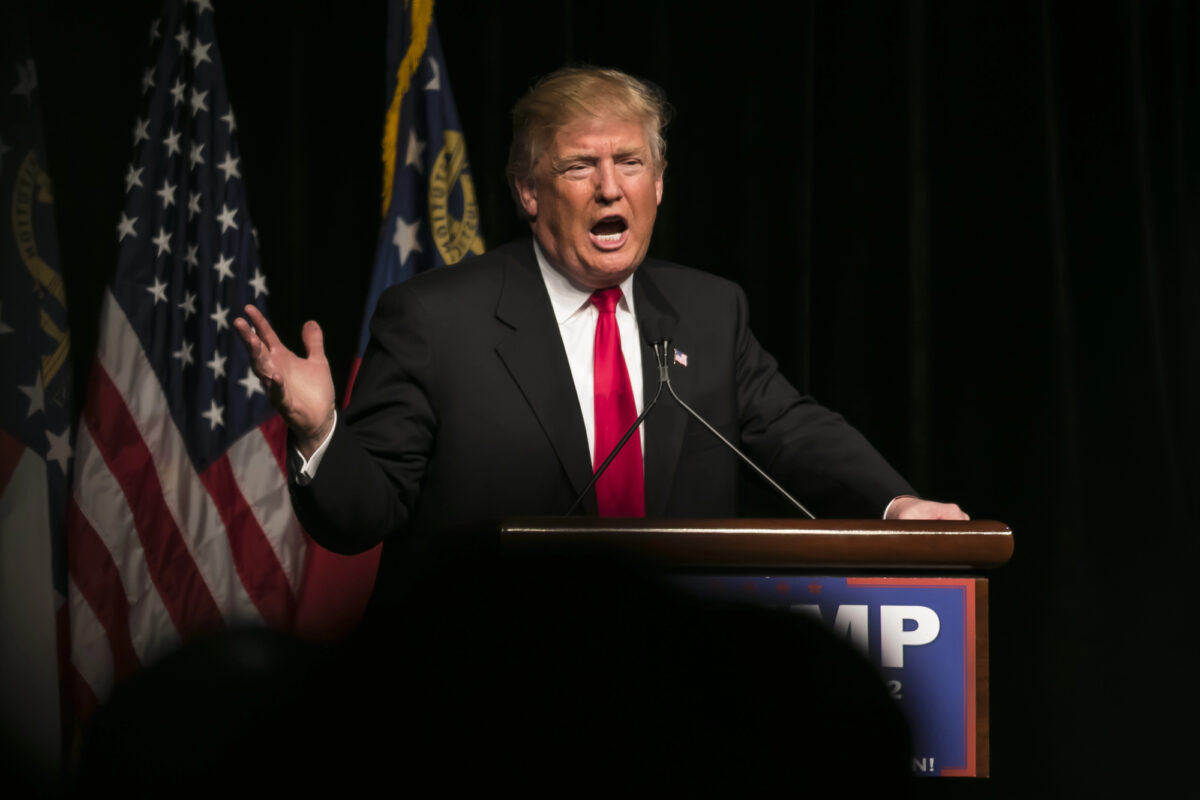
Kagan also described a remarkable scene from the birthright citizenship arguments. Trump became the first sitting president to attend oral arguments at the Supreme Court. His arrival could have transformed the hearing into another display of presidential visibility and power.
Instead, Trump sat away from the bench in an area commonly used by members of Congress. The court did not formally announce his presence, and many spectators could not see him. The justices continued questioning the lawyers without changing their procedures.
Trump remained for roughly half of the lengthy arguments. He left when lawyers challenging his order began presenting their side. Kagan described the appearance as largely uneventful and suggested he might have discovered that presidential ceremony carried little weight inside the courtroom.
The moment gave physical form to her larger argument. In most Washington settings, a sitting president becomes the center of attention. Inside the Supreme Court, Trump had no microphone, no rally audience and no authority to direct the proceedings.
He had to sit quietly while lawyers and justices examined the legality of his actions. The courtroom required him to occupy the role of observer rather than commander. For a president who often dominates public events, that loss of control carried powerful symbolism.
His early departure complicated the image. Trump witnessed arguments supporting his order but did not remain for the full presentation against it. That choice may reinforce concerns that political leaders increasingly treat legal proceedings as performances rather than opportunities to hear competing constitutional claims.
The court’s refusal to provide ceremony showed institutional confidence. It treated the president as a litigant whose power remained subject to law. In that narrow but memorable sense, the scene confirmed that the Supreme Court is not a rubber stamp for Trump.
Still, symbolism cannot carry the entire burden of legitimacy. A quiet courtroom does not erase controversial rulings or ethical disputes. Independence must appear in the court’s reasoning, standards and treatment of power long after the president leaves the building.
Occasional resistance cannot carry the entire burden of legitimacy
Kagan is right that the court has checked Trump on questions of extraordinary importance. The tariff ruling protected Congress’s role in taxation and trade. The citizenship decision preserved a constitutional guarantee with direct consequences for families across the country.
Those cases make it inaccurate to describe every conservative justice as a passive instrument of the White House. They show that legal principles, historical interpretation and institutional boundaries can still produce decisions that frustrate the president. The Supreme Court is not a rubber stamp for Trump in the literal sense.
However, “not a rubber stamp” sets a remarkably low standard for the nation’s highest court. Judicial independence requires more than rejecting the president’s boldest claims after approving many other expansions of executive authority. It requires a consistent willingness to examine power without regard to the political identity of the person exercising it.
The court must also confront the gap between how its members understand their work and how the public experiences it. Roberts has rejected the description of judges as political actors, while Jackson has warned that the institution risks appearing political. Both concerns can exist at the same time.
Justices may sincerely follow their interpretations of law while producing a pattern that appears politically predictable. Public trust cannot rest entirely on private intentions. It depends on transparent reasoning, consistent standards and ethical rules that citizens can see working.
Kagan’s comments therefore defend the court while unintentionally revealing its vulnerability. She provided strong evidence that Trump cannot command every result. She did not provide a complete answer to concerns about the many cases in which the court has strengthened his administration.
The Supreme Court may not serve as Trump’s unquestioning instrument, but selective resistance offers limited reassurance. A constitutional democracy needs a court that applies firm boundaries before presidential power becomes entrenched, not merely after the most extreme claims reach the justices.
The final measure of independence will not come from one justice’s speech or two historic rulings. It will come from the court’s willingness to restrain power consistently, enforce meaningful ethical standards and explain its decisions with enough clarity to command respect beyond one political party. The question is no longer simply whether the Supreme Court can say no to Trump, but whether Americans will still trust the institution when it finally does.