Trump Turns Up Heat on John Thune as SAVE America Act Slams Into a 7-Vote Senate Wall.
President Donald Trump wants action before the August recess. Still, a 53-47 Republican majority remains 7 votes short of the Senate’s usual 60-vote threshold, leaving Majority Leader John Thune caught between White House pressure and unforgiving congressional math.
WASHINGTON President Donald Trump’s frustration with Senate Majority Leader John Thune burst into public view on July 23, turning a stalled election bill into a high-stakes Republican showdown. With roughly 2 weeks remaining before senators begin their August break, the White House is demanding movement on the SAVE America Act while Thune insists that urgency cannot replace missing votes.
White House Press Secretary Karoline Leavitt delivered the warning in 1 blunt sentence, telling reporters that Trump’s patience was “running out.” She said the president wanted lawmakers to pass as much of the legislation as possible before the recess, arguing that the House had completed its work and the Senate now had to deliver.
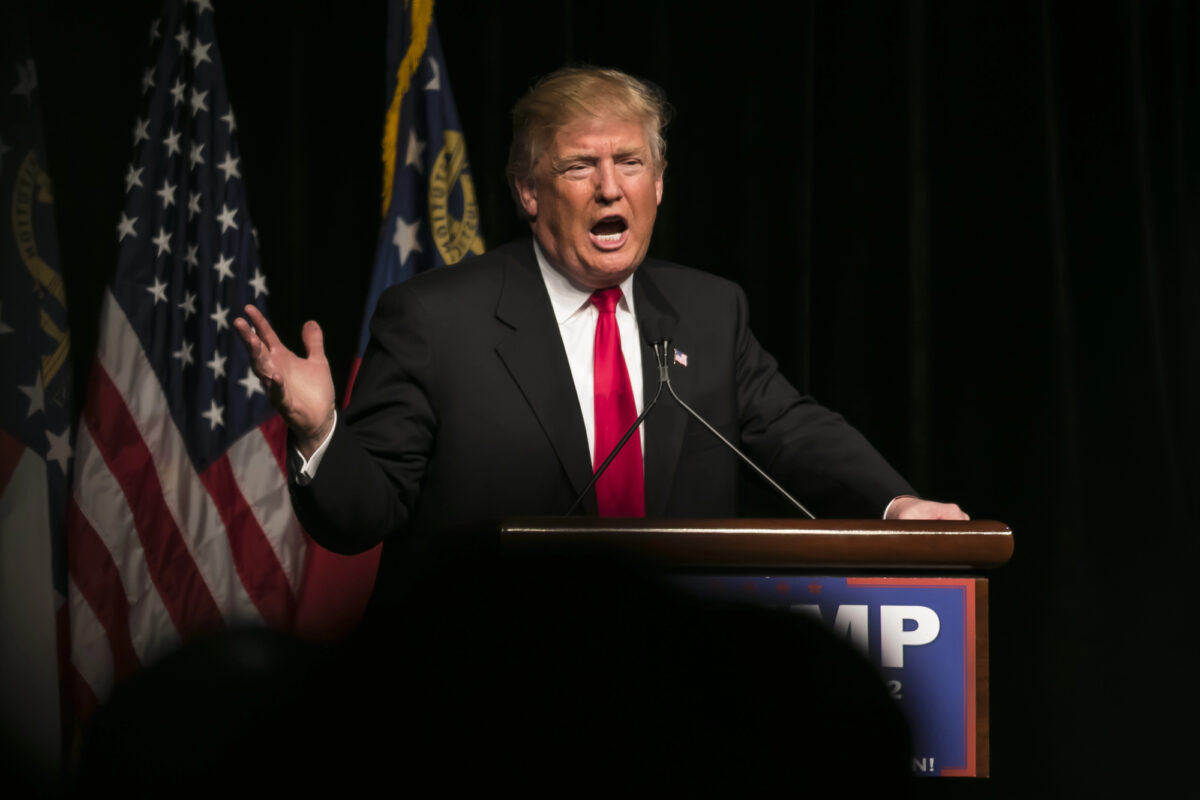
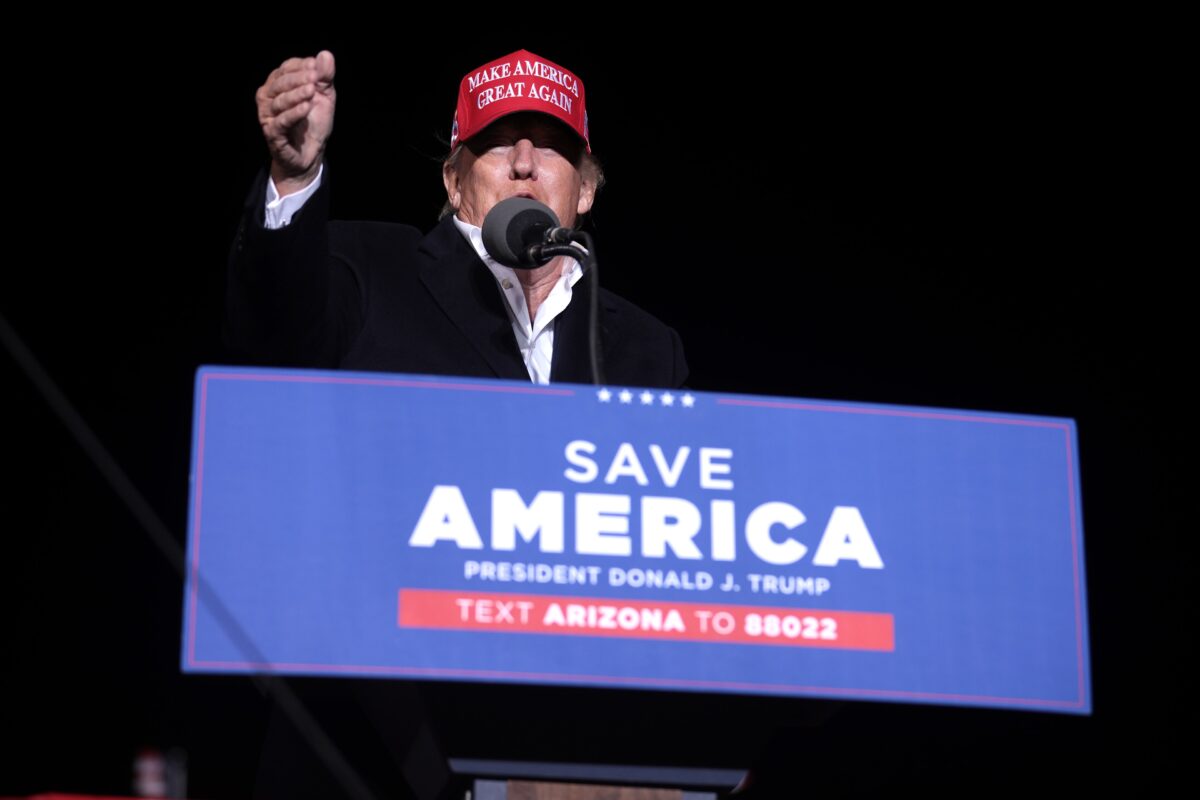
The confrontation had been building for at least 24 hours. During a July 22 speech in Marietta, Georgia, Trump praised House Speaker Mike Johnson but described the Senate as a chamber where legislation is sent “when you want it to die.” He then urged supporters across all 50 states to contact Thune and pressure him to approve the election package.
The Trump-Thune Fight Comes Down to 3 Numbers: 53, 60 and 50
Republicans hold a 53-47 Senate majority, but most major legislation requires 60 votes to end debate and overcome a filibuster. That leaves Trump’s party 7 votes short before internal Republican opposition is even considered. Reaching a simple majority through another process would still require at least 50 senators, plus a potential tie-breaking vote from Vice President JD Vance.
That is why Thune pushed back so sharply. The 65-year-old Senate leader told the White House to “get on the phone and get the votes,” arguing that blaming Republican leadership does not change the chamber’s arithmetic. He later said he could not currently “count to 50” on the House budget resolution that Republicans hope to use as an alternative pathway.
The warning is not theoretical. A June 25 effort to attach SAVE America provisions to a nearly $70 billion immigration package failed by a 48-50 vote. Four Republicans, Susan Collins, Lisa Murkowski, Mitch McConnell and Thom Tillis, joined participating Democrats in opposing the amendment, meaning the proposal failed to secure even a simple majority before reaching the larger 60-vote procedural barrier.
Tillis then turned the political temperature up another level by declaring “1,000% confidence” in Thune. The North Carolina Republican argued that anyone in the White House questioning Thune’s leadership was not qualified for the job, an unusually direct defense that showed the pressure campaign could unite some Senate Republicans behind their leader instead of forcing them toward Trump.
House Republicans Open a $95 Billion Back Door
House Republicans have responded to the Senate blockade by opening at least 3 legislative routes. During a narrow procedural vote, the House advanced debate on a $95 billion budget framework, a defense authorization bill, and a separate measure involving stock trading by members of Congress. SAVE America provisions were connected to those efforts in different forms.
The $95 billion framework contains $60 billion for defense, $13 billion for intelligence, $12 billion for agricultural assistance, and $10 billion for voter-identification incentives over 10 years. That financial structure is designed to give Republicans a budgetary argument for using reconciliation, a process that can bypass the normal 60-vote filibuster threshold.
The strategy sounds powerful, but it creates a 2-stage test. Both chambers must first approve the budget resolution, and lawmakers must then write a second reconciliation bill that satisfies the Senate’s strict budget rules. Thune has already warned that the first stage may fail because he does not yet see the 50 Republican votes required to move the House framework.
What the SAVE America Act Would Require
At its core, the SAVE America Act would create a 2-part federal verification system. People registering for federal elections would have to provide documentary proof of U.S. citizenship, while voters would face government-issued photo-identification requirements when casting ballots.
Trump’s preferred package would also sharply limit mail-in voting. Other Republican-backed provisions connected to the broader legislative push have involved women’s sports and gender-transition procedures for minors, expanding the political fight beyond election administration alone.
The proposal could have consequences beyond first-time registration. Many already registered voters may not immediately face new requirements, but people changing an address, updating a name or completing a fresh registration could be asked to provide citizenship documents.
With millions of Americans moving each year, even 1 routine address change could trigger additional paperwork for an otherwise eligible voter. That detail has become central to the debate because registration updates are common before federal elections.
Supporters argue that 1 federal standard would close gaps between state registration systems and prevent noncitizens from entering voter rolls. The White House frames the measure as a basic rule that American citizens, and only American citizens, should determine the outcome of federal elections.
Critics counter that federal law has already prohibited noncitizen voting in federal elections for roughly 30 years and that documented prosecutions remain uncommon. A Reuters review of federal cases identified 129 people charged under the noncitizen-voting prohibition since 1996, with 73 convictions or guilty pleas.
The review did not find evidence of a coordinated national operation large enough to decide a federal election. Supporters respond that low prosecution totals may also reflect weaknesses in detection, creating a wider dispute over whether rare documented cases prove the system works or reveal gaps that remain hidden.
The 21.3 Million-Voter Question
One of the largest practical concerns involves access to paperwork. Research from the University of Maryland’s Center for Democracy and Civic Engagement estimated that more than 21.3 million adult U.S. citizens may not have easy access to documentary proof of citizenship.
The same research estimated that 2.6 million citizens lack any government-issued photo identification. It also found that approximately 34.5 million people may not possess a driver’s license or state identification card showing their current name and address.
Those numbers do not mean that all 21.3 million people would automatically lose the ability to register. Many could obtain replacement documents, use alternative records or receive assistance from election officials. However, the estimates reveal how a requirement that sounds simple during a 30-second political speech could become a nationwide administrative challenge.
Name changes create another potential barrier. Millions of married or divorced Americans have birth certificates carrying surnames that no longer match their current identification. Some voters could therefore need a marriage certificate, divorce decree, or court document to prove that 2 different names belong to the same person.
That issue could fall especially heavily on women, who are more likely to change their surnames after marriage. Election offices would need clear procedures for reviewing multiple documents without creating long delays, inconsistent decisions or unnecessary voter-registration rejections.
Kansas provides a state-level example frequently cited by opponents. A documentary citizenship requirement blocked more than 30,000 registration applicants before courts struck the policy down. Critics say the episode shows how verification systems can capture eligible citizens along with the small number of ineligible applicants they are designed to stop.
Supporters argue that better implementation, clearer rules and expanded document options could prevent similar problems at the federal level. The disagreement therefore involves both the principle of citizenship verification and the practical question of whether thousands of local election offices could administer it fairly.
Reconciliation Is Not a Guaranteed Escape Route
Reconciliation reduces the Senate threshold from 60 votes to a simple majority, but only for provisions with a direct and substantial effect on federal spending or revenue. It cannot automatically be used to pass any policy that the majority party places inside a budget package.
Under the Senate’s Byrd Rule, a senator can challenge language whose financial impact is merely incidental to its broader policy purpose. If the presiding officer sustains that challenge, preserving the provision can require the same 60 votes Republicans are trying to avoid.
That creates a serious risk for the proposed $10 billion voter-identification section. Grants to states clearly involve federal spending, but requirements covering citizenship documents, mail ballots and voter registration primarily regulate elections.
The Senate parliamentarian could allow some of the funding while removing policy conditions that do not satisfy reconciliation rules. Republicans could therefore spend weeks building a budget package only to see major parts of Trump’s preferred election overhaul stripped from the final bill.
House Republicans have effectively built a 2-track strategy. One path places election provisions inside broader defense or spending legislation, while the second uses the $95 billion reconciliation framework.
The defense route faces the filibuster and bipartisan Senate negotiations. The budget route faces the Byrd Rule and the immediate problem of reaching 50 Republican votes. Neither option offers Trump a fast or guaranteed victory.
A September Funding Deadline Competes With Trump’s Demand
Thune’s calendar contains another immovable number: September 30, when current federal government funding is due to expire. Congress must negotiate legislation capable of keeping agencies open before a shutdown deadline arrives.
The Senate leader has described government funding as a top priority, while Trump wants election legislation moved before lawmakers leave for the August recess. That means Thune is balancing at least 3 competing pressures: avoiding a shutdown, managing the SAVE America fight and protecting senators who oppose eliminating the filibuster.
For Trump, the clock is even more political. The November midterm elections are less than 4 months away, and Republicans are fighting to retain control of both chambers during the final 2 years of his presidency.
Passing the bill could energize supporters who view election security as unfinished business. Another failure could give Democrats a powerful example of Republican divisions at a moment when the GOP controls the White House, the House and the Senate.
The calendar also limits how many chances Republicans have left. Every day devoted to government funding, defense legislation or nominations reduces the floor time available for another SAVE America vote.
Thune must decide whether another public defeat would advance the legislation or confirm that the votes remain missing. Trump, meanwhile, appears to believe that forcing senators to vote can expose opponents and build pressure ahead of the midterms.
Trump’s Pressure Campaign Could Produce the Opposite Result
Trump’s strategy depends on turning 1 Senate leader into the face of congressional inaction. By directing supporters toward Thune, the president can argue that the White House is fighting while Senate procedure and Republican hesitation are blocking the agenda.
Thune’s response redirects that pressure toward at least 4 Republican skeptics and the Senate’s Democratic bloc. His message is that a majority leader can schedule votes, negotiate amendments and make public appeals, but he cannot create support that does not exist.
The conflict also exposes the danger of eliminating the filibuster for 1 bill. A simple-majority Senate could help Republicans pass Trump’s priorities today. Still, the same rule could allow a future Democratic majority to approve voting, labor, gun-control, or statehood legislation with only 50 votes.
Several Republican senators see that long-term risk as greater than the short-term reward. Their resistance is not necessarily opposition to voter identification itself. It reflects concern about permanently changing an institution that could fall under Democratic control after 1 election cycle.
Public attacks on Thune may also strengthen his position inside the Senate Republican conference. Senators often defend the chamber’s independence when they believe the executive branch is attempting to dictate outcomes.
Tillis’ “1,000% confidence” statement was a warning that criticism from the White House could unite lawmakers behind Thune. Instead of isolating the majority leader, Trump’s pressure campaign could make senators less willing to reward the tactic.
The Bottom Line: Trump Has Pressure, but Thune Has the Math
The SAVE America Act is trapped behind 3 major barriers: a 7-vote filibuster gap, at least 4 Republican defectors during a recent amendment fight, and uncertainty over whether its election rules can survive reconciliation.
Trump can increase the political cost, direct millions of supporters toward Thune and demand action before the August recess. What he cannot do alone is transform 48 votes into 50 or turn 53 Republican seats into the 60 votes generally required under regular Senate procedure.
That is what makes this confrontation bigger than a dispute between 2 powerful Republicans. It is a test of whether presidential influence can overpower Senate rules, divided lawmakers and a legislative calendar moving rapidly toward 3 deadlines: the August recess, the September funding cutoff and the November midterms.
For now, Thune holds the schedule, Trump commands the political megaphone and the SAVE America Act remains exactly where the president does not want it: several votes away from the finish line.