Trump’s America 250 Party Was Supposed to Unite the Country. Instead, It Became a National Mall Stress Test
America’s 250th birthday was supposed to feel big, proud, and almost impossible to argue with. A nation only gets one semiquincentennial, and the moment should have been built around fireworks, flags, music, families, and that rare feeling that the country could pause its fighting long enough to celebrate together.
Instead, President Donald Trump’s July Fourth celebration in Washington has become much more complicated. There will be a massive fireworks show. There will be military flyovers. The National Mall will become the center of the country’s birthday weekend. But around the spectacle is a familiar American problem: even a national celebration now feels politically loaded.
A Birthday Party Became a Political Mirror
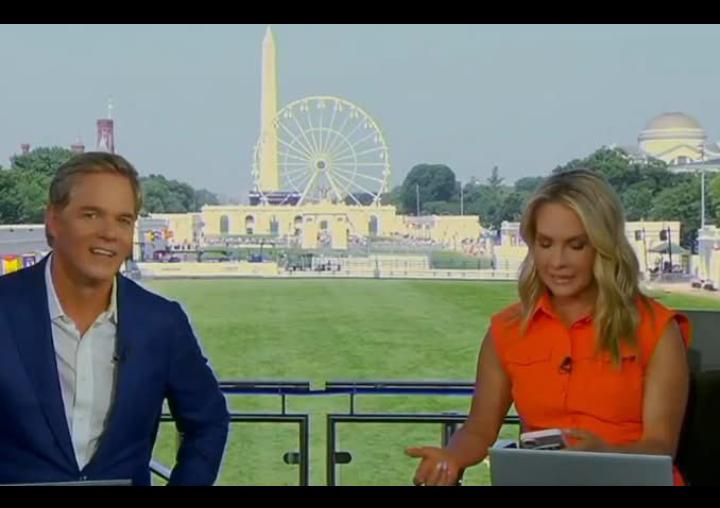
The July Fourth event is not just another fireworks night. It is tied to America’s 250th anniversary, with Trump-backed Freedom 250 organizing major programming in Washington, D.C., including the “Salute to America” celebration and fireworks on the National Mall.
On paper, that sounds simple enough. It is America’s birthday. People gather. Music plays. Fireworks light up the sky. But the national mood is no longer simple. For Trump supporters, the event looks like a patriotic show of strength and pride. For critics, it looks like another moment where the president places himself at the center of a public occasion that should belong to everyone.
That is why this event has drawn so much attention before the fireworks even begin. It is not only about who attends or how big the crowd gets. It is about what the celebration represents in a country where almost every public symbol now gets pulled into politics.
The Fireworks Are Huge, But So Are the Questions
Freedom 250 has promoted the fireworks show as historic, with hundreds of thousands of pyrotechnic effects expected to be launched from multiple locations around the National Mall, West Potomac Park, and the Potomac River. The display is expected to last more than half an hour, making it one of the biggest visual moments of the holiday weekend.
That kind of scale is impressive, but it also brings pressure. A large show means large crowds. Large crowds mean security lines, blocked roads, heat concerns, transportation problems, and long waits for families who simply want to enjoy the night without getting trapped in chaos.
Local officials and event organizers have urged visitors to use public transportation or rideshare services because parking around the National Mall will be extremely limited. That is practical advice, but it also hints at the bigger reality: this is not a casual neighborhood fireworks show. This is a national production, and every part of it has to work in public view.
The Heat Made Everything Feel Riskier
One of the biggest concerns around the celebration is not political at all. It is the weather. Dangerous heat has been part of the conversation, especially with large crowds expected to stand outside for hours before the evening program and fireworks begin.
That concern became even more noticeable after Trump teased the idea of giving lengthy remarks. At one rally, he suggested he could make “a really long speech,” a line that quickly became part of the story because the setting matters. Long speeches and extreme heat are not a comfortable combination for a crowd packed onto the National Mall.
Organizers moved public entry to the evening, and official guidance has reminded attendees to prepare for crowds, security checks, and summer conditions. For many families, the question is not whether the fireworks will be worth watching. It is whether the full experience will be safe, manageable, and worth the trouble.
The National Mall Spectacle Has Already Faced Setbacks
Before the main fireworks show, the broader America 250 rollout had already faced criticism and awkward headlines. The Great American State Fair, another major part of the National Mall programming, has been promoted as a major patriotic attraction with state and territory pavilions, performances, exhibits, and classic fair-style entertainment.
But reports of modest crowds and logistical problems complicated the image organizers wanted to project. That contrast is exactly why the story has stuck. The official pitch is grand, polished, and patriotic. The public conversation has been messier.
When a celebration promises unity and historic scale, every empty patch of grass and every operational hiccup becomes part of the narrative. A small problem can start to look symbolic when the event itself is already being judged as a test of national mood.
A Stage Mishap Gave Critics More Ammunition
The celebration also faced a safety scare during rehearsal after part of the Freedom 250 stage structure reportedly came apart. Dancers had to move out of the way, though no injuries were reported. Organizers later said additional safety steps were taken.
For any large public event, technical problems can happen. Stages are complex. Rehearsals exist for a reason. But this mishap occurred during an event already under close scrutiny, making it more than a backstage issue.
To critics, the stage problem became a symbol of a production that looked too ambitious, too rushed, or too focused on spectacle. To supporters, it was likely just another exaggerated complaint about a major event that would still go on. Either way, it added to the sense that this birthday celebration was carrying more weight than a normal holiday program.
The Reflecting Pool Became Its Own Controversy

Even the Lincoln Memorial Reflecting Pool has been pulled into the drama. The pool, one of the most recognizable civic backdrops in America, became a separate story after complaints about algae, damage, and surface issues following the renovation.
Trump said he would repair the pool after July Fourth and suggested sabotage was involved, though public evidence supporting that broader claim had not clearly emerged. That detail matters because the Reflecting Pool is not just another feature on the National Mall. It is part of the country’s visual memory.
It has framed marches, memorials, protests, speeches, and moments of national grief and pride. So when the backdrop for America’s 250th birthday becomes a story of maintenance and blame, the symbolism is hard to ignore. Even the scenery seems caught in the country’s arguments.
The Fight Is Also About Whose America Gets Celebrated
The deeper tension around America 250 is not only about fireworks, speeches, or crowd size. It is about whose version of America gets placed at the center of the celebration.
Trump allies have leaned into a patriotic and, at times, religiously framed vision of the anniversary. Critics and interfaith groups have pushed for a broader celebration that emphasizes religious liberty, inclusion, civil rights, and the unfinished work of American democracy.
That is the real argument underneath the ceremony. Is America 250 supposed to be a party, a sermon, a campaign-style rally, a history lesson, or a national reckoning? Different groups are answering that question in very different ways, and the National Mall event has become one of the clearest stages for that debate.
History Itself Is Under Pressure
A 250th birthday forces a country to tell a story about itself. That can be inspiring, but it can also be uncomfortable. The United States has founding ideals worth celebrating, but it also has painful chapters that cannot be honestly ignored.
Museums, parks, historians, educators, and cultural institutions are now facing pressure over how to present America’s difficult history during the anniversary year. The debate includes how much attention should be given to slavery, Indigenous dispossession, civil rights struggles, immigration, inequality, and other parts of the American story that do not fit neatly into a fireworks show.
That is why this celebration feels bigger than one night in Washington. A country turning 250 is not only asking people to wave flags. It is asking which parts of the national story should be lifted up, which should be confronted, and who gets to decide the tone.
Counter-Events Show How Divided the Country Is
Trump’s July Fourth plans have also helped spark alternative 250th-anniversary events organized by civil rights groups, progressive organizations, religious leaders, and ethnic minority communities. These gatherings frame the anniversary as a time to examine democracy, race, immigration, equality, and constitutional rights instead of simply celebrating national greatness.
That does not mean Americans hate the Fourth of July. It means many Americans no longer agree on what patriotism should sound like. For some, patriotism means standing proudly for the flag and celebrating the country’s power. For others, patriotism means telling the uncomfortable truth out loud and demanding that the country live up to its promises.
That divide is not new, but America 250 has made it harder to avoid. The holiday is still shared. The meaning is not.
The Real Story Is Bigger Than Trump
Trump is the face of this year’s National Mall spectacle, but the tension around America 250 is larger than one president. The United States is trying to celebrate a milestone birthday while many citizens are exhausted by political conflict, economic pressure, culture-war battles, and distrust in major institutions.
That is why the event feels so strange. It is festive on the surface, but anxious underneath. There will be fireworks in the sky, music on the Mall, flags in the crowd, and cameras everywhere. But behind the performance is a country still arguing about what it is, who it belongs to, and whether one big show can make people feel united again.
The celebration may still produce powerful images. The flyovers may thrill the crowd. The fireworks may look spectacular on television. But the bigger question will remain after the smoke clears.
A Celebration With Fireworks, Heat, and a Lot of Baggage
America’s 250th birthday should have been one of the easiest civic moments to embrace. Instead, Trump’s National Mall celebration has become a revealing snapshot of the country itself: loud, proud, divided, dramatic, and unsure whether it is celebrating the same story.
The fireworks may be beautiful. The crowd may cheer. The night may still deliver the grand patriotic images organizers want. But the deeper issue will not disappear when the final shell fades over Washington.
The real question is not whether America can throw a birthday party. It clearly can. The question is whether America can still agree on exactly what it is celebrating.