Trump’s “Godless Communists” Warning Turns New York’s Socialist Wave Into a National Political Weapon
Donald Trump’s latest political message is not just a critique of Democrats; it is a structured attempt to define the emotional battlefield of the 2026 midterms.
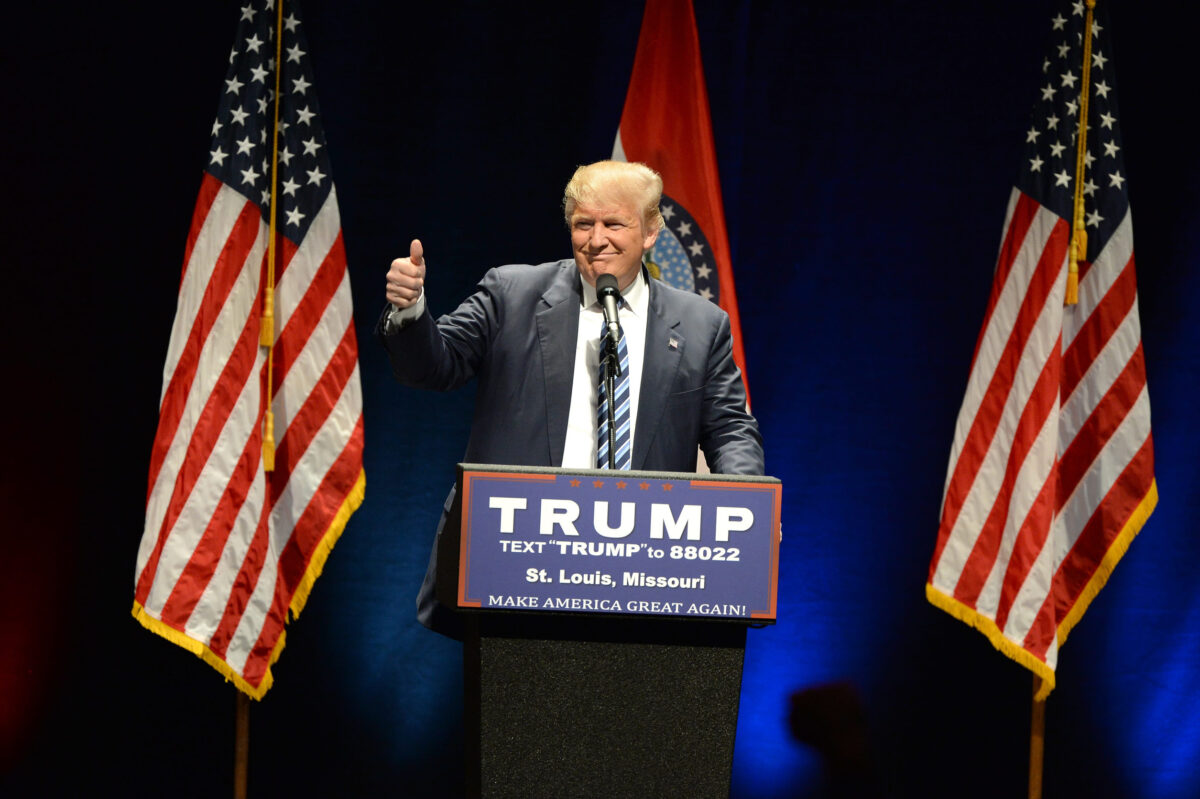
Speaking at the Faith & Freedom Coalition’s Road to Majority conference, Trump labeled New York’s emerging democratic socialist victories as evidence of a deeper national transformation. His warning that “godless communists” would turn American cities into slums was less about policy detail and more about political framing. It was designed to compress a complex ideological shift into a single, emotionally charged narrative.
At the center of that narrative is New York, where progressive candidates backed by Mayor Zohran Mamdani’s political network have gained ground in Democratic primaries, signaling a visible shift in the party’s urban core.
The New York Effect: How Local Primaries Became National Ammunition
The recent Democratic primary victories in New York, including wins by Claire Valdez, Brad Lander, and Darializa Avila Chevalier, have become more than local political outcomes. They now serve as symbolic evidence in a broader national debate over the direction of the Democratic Party.
What makes this moment politically powerful is not just who won but what those wins represent.
In political communication terms, New York is acting as a policy signal amplifier:
- Progressive victories in deep-blue districts are rapidly translated into national messaging.
- Those messages are reframed as evidence of a party-wide ideological shift.
- That framing is then used in swing-state political advertising and fundraising.
This is how local elections become national narratives almost instantly in the digital political ecosystem.
Semantic Inflation: When “Socialism” Becomes a Catch-All Political Weapon
One of the most important dynamics in Trump’s messaging is not the accusation itself but the underlying linguistic structure.
The term “socialism” has undergone what political linguists call semantic inflation.
Originally tied to specific economic systems, it now often includes:
- Progressive taxation policies
- Rent regulation proposals
- Public healthcare expansion
- Anti-corporate messaging
- Urban governance experiments
In Trump’s framing, and increasingly in Republican messaging, “socialism” also absorbs:
- Urban decline fears
- Crime anxiety narratives
- Religious cultural concerns
- Anti-establishment sentiment
This expansion transforms the word into a political container for uncertainty, allowing complex urban problems to be explained through a single ideological label.
Faith as Infrastructure: The Hidden Engine Behind the Messaging
Trump’s choice of venue, the Faith & Freedom Coalition, is not a symbolic decoration. It is an operational infrastructure.
Religious political networks in the United States function as:
- Voter mobilization systems
- Messaging distribution channels
- Trust-based communication ecosystems
By using religious language such as “godless communists,” Trump is not just describing opponents; he is activating identity-based political participation.
This creates a dual-layer message system:
- Surface layer: economic and political criticism of socialism
- Deep layer: moral and spiritual identity reinforcement for conservative voters
In this structure, politics becomes less about policy preference and more about belief alignment and cultural belonging.
Urban Stress Feedback Loop: Why Cities Keep Producing Political Extremes
Behind the rhetoric lies a structural reality: cities are becoming self-reinforcing political environments.
The cycle looks like this:
- Housing costs rise and affordability declines.
- Voters shift toward more aggressive intervention policies.
- Progressive candidates gain traction with bold economic proposals.
- National critics frame those policies as radical or destabilizing.
- Backlash strengthens opposing ideological movements.
This creates an urban stress feedback loop, in which economic pressure continuously generates ideological polarization.
New York is currently one of the clearest examples of this cycle in motion.
Generational Political Split: Two Different Realities, One Election
One of the most underappreciated dynamics in this conflict is generational divergence in political fear.
Older voters:
- Associate “communism” with historical authoritarian systems
- Prioritize stability, security, and institutional continuity.
- Respond strongly to religious and national identity messaging.
Younger voters:
- Associate “capitalism” with housing unaffordability and debt
- Prioritize access, affordability, and systemic reform.
- Respond strongly to economic justice messaging.
The result is not simply disagreement; it is parallel interpretations of reality shaped by different economic and historical experiences.
New York as a Political Export Engine
New York is no longer just a city; it is a narrative production center for national politics.
What happens there quickly becomes:
- Campaign advertising material in swing states
- Fundraising language for national committees
- Cable news framing for ideological debate
This makes New York function like a political export engine, where local outcomes are transformed into national ideological products.
Trump’s speech effectively accelerates this process by packaging New York’s socialist victories into a ready-made national warning.
Faith vs Affordability: The Central Collision of 2026
At the core of the emerging political divide are two competing value systems:
Faith-centered governance framing:
- Moral order
- Cultural identity
- Traditional values
- Institutional stability
Affordability-centered governance framing:
- Rent and housing access
- Healthcare costs
- Wage stagnation
- Economic mobility
Neither side is purely ideological in abstraction; both are rooted in lived experience. The conflict emerges from which experience voters prioritize when economic and cultural pressures collide.
Opposition Branding War: Politics as Competing Marketing Systems
Modern American politics increasingly resembles a branding war rather than a policy debate.
Conservative framing:
- “Godless communists”
- “Radical left”
- “Urban decay”
Progressive framing:
- “Corporate capture”
- “Donor-class politics”
- “Economic injustice”
Each side is not just arguing they are constructing competing emotional identities for the same electorate.
Psychological Positioning Before the Midterms
The most strategic layer of Trump’s messaging is timing.
The goal is not only to win arguments in the present but to shape voter perception before the full policy debate begins.
This creates three parallel campaigns:
- Emotional campaign (fear, identity, belonging)
- Economic campaign (cost of living, affordability)
- Institutional campaign (trust in parties, cities, government)
The side that first defines the emotional baseline gains a structural advantage in how all subsequent information is interpreted.
The Real Battle Beneath the Labels

Stripped of rhetoric, the conflict is not simply socialism versus capitalism.
It is a deeper struggle over:
- Who gets to define economic normalcy in America?
- Whether cities are seen as failing systems or evolving systems
- Whether political identity is rooted in faith, affordability, or both
- Whether voters prioritize stability or transformation
Trump’s “godless communists” framing is designed to lock that debate into a moral and cultural register before it becomes purely economic.
But New York’s socialist surge suggests the counter-movement is equally strong: a belief that affordability itself is becoming the defining moral issue of American politics.
The midterms will determine which definition takes hold first.