Trump’s Hernández Pardon Returns to Haunt DNI Nominee Jay Clayton in Tense Senate Hearing
Sen. Jack Reed’s blunt challenge exposed a contradiction the Trump administration has struggled to explain: how can Washington promise relentless action against international drug trafficking while freeing a former president once portrayed by U.S. prosecutors as a protector of violent cocaine cartels?
A federal prosecution once celebrated as proof that political power could not shield an alleged cartel partner returned to Washington as a test of presidential judgment.
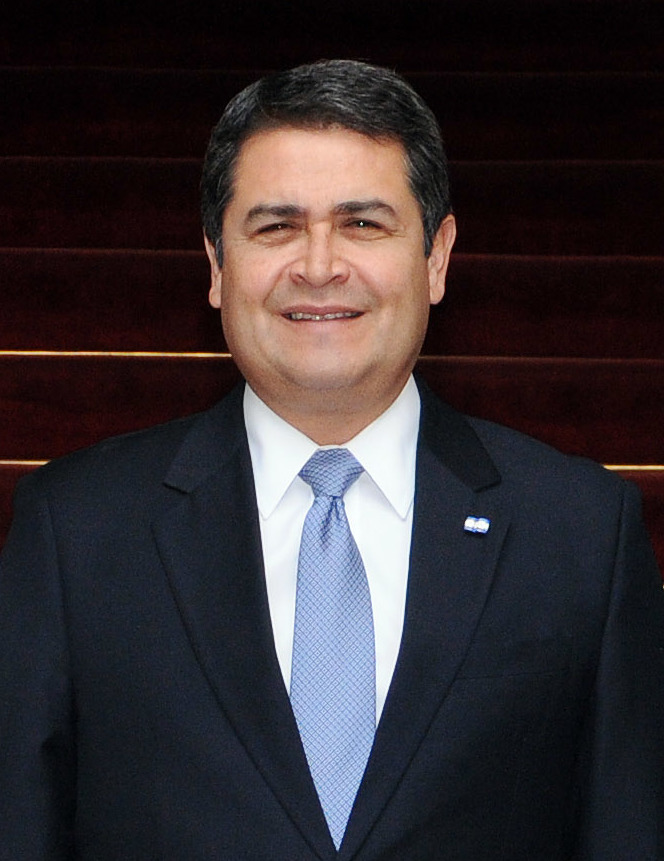
During Jay Clayton’s confirmation hearing for director of national intelligence, Sen. Jack Reed confronted President Donald Trump’s nominee over the pardon of former Honduran President Juan Orlando Hernández. Hernández had received a 45-year prison sentence after a Manhattan jury convicted him of cocaine importation and weapons offenses.
Clayton defended Trump’s sweeping constitutional pardon power. However, he did not explain why Trump used it to release a former foreign leader whose prosecution Clayton’s own office had publicly praised.
The exchange was about more than one controversial pardon. We were watching senators test whether Clayton could defend law enforcement, protect intelligence independence and provide uncomfortable answers when a president’s actions clash with his administration’s stated priorities.
Reed Used Clayton’s Own Words Against Him
Reed began by referring to a September 2025 speech in which Clayton highlighted the Southern District of New York’s successful prosecution of Hernández and other senior Honduran officials.
Clayton’s prepared remarks described powerful officials who partnered with violent cartels to distribute tons of cocaine to the United States. He placed the Hernández prosecution alongside cases involving Venezuelan officials, alleged narco-terrorism and international trafficking organizations.
Reed then pointed to the contradiction. On December 1, 2025, Trump granted Hernández a full pardon, ending a sentence that was supposed to keep him imprisoned for decades.
“Why would the President of the United States pardon someone that you had convicted?” Reed asked.
Clayton declined to discuss the internal pardon process. When Reed asked whether he knew of any quid pro quo, Clayton said he was unaware of one. No evidence presented during the hearing established that Trump received anything in exchange for granting clemency.
Still, Clayton never answered Reed’s central policy question: why did the president free a man whose prosecution federal officials had repeatedly described as a major victory against international narcotics trafficking?
One Important Detail Changes the Framing
Reed’s question was politically powerful, but one factual clarification is essential.
Clayton did not personally convict Hernández.
A federal jury returned its guilty verdict in March 2024, and U.S. District Judge P. Kevin Castel imposed the 45-year sentence that June. Damian Williams, not Clayton, was the U.S. attorney leading the Southern District of New York at the time.
Clayton assumed leadership of the office later and adopted the prosecution as part of its institutional record. His September 2025 speech celebrated the Hernández case as evidence that federal prosecutors could reach corrupt political leaders operating alongside cartels.
That distinction makes Reed’s criticism more precise. Clayton did not personally secure the verdict, but he publicly praised it before the president effectively dismantled its punishment.
The question for Clayton was therefore not whether Trump reversed his personal work. It was whether an incoming intelligence chief could honestly address a decision that undermined a prosecution his office had held up as a model.
The Case Was Built as a Warning to Powerful Cartel Partners
The Hernández prosecution was never presented as an ordinary drug case.
Federal prosecutors said the former president helped facilitate the movement of approximately 400 tons of cocaine through Honduras toward the United States. They accused him of accepting drug money, protecting traffickers, and using law enforcement and military resources to support criminal organizations.
The jury convicted Hernández of conspiring to import cocaine, possessing machine guns and destructive devices in furtherance of that conspiracy, and conspiring to use those weapons. His sentence included 45 years in prison, five years of supervised release, and an $8 million fine.
At sentencing, prosecutors emphasized that the case was supposed to warn political leaders around the world that status would not protect them if they helped traffickers target the American market.
Trump’s pardon sent the opposite signal. It demonstrated that even one of America’s most heavily promoted international drug convictions could be neutralized by presidential clemency.
That reversal may have consequences beyond Hernández. Foreign investigators, cooperating witnesses, and partner governments may now question whether the risks of assisting American prosecutions are worth taking when political intervention can later erase years of work.
Trump Offered a Political Explanation, Not New Evidence
Trump said Hernández had been treated “harshly and unfairly.” He later claimed that people in Honduras considered the prosecution a political setup associated with the Biden administration.
Hernández and his supporters had long argued that cooperating drug traffickers falsely accused him to reduce their own sentences. A personal letter from Hernández also reached Trump through longtime political ally Roger Stone.
However, Trump’s public statements did not identify newly discovered evidence, a recanting witness, prosecutorial misconduct confirmed by a court or a Justice Department finding that the trial had been fundamentally unfair.
The investigation also cannot be described solely as a Biden-era creation. Hernández was indicted after a lengthy investigation that involved conduct stretching across several years, while related cases against Honduran officials developed under multiple U.S. administrations.
The pardon was unquestionably within Trump’s constitutional authority. Yet possessing the legal power to act does not automatically answer questions about judgment, consistency, or motive.
A Pardon Freed Hernández, but It Did Not Prove Innocence
The legal story became more complicated in April 2026.
Following Trump’s pardon, the U.S. Court of Appeals for the Second Circuit dismissed Hernández’s appeal as moot and ordered the lower court judgment vacated. Hernández’s supporters celebrated the development as a complete vindication.
But the appeals court did not conduct a new trial, reconsider witness credibility, or issue a finding that Hernández was innocent. The appeal became moot because the pardon had removed the active punishment Hernández was challenging.
That distinction matters.
A pardon reflects an executive decision to grant clemency. A vacated judgment following a moot appeal is a procedural result. Neither action, by itself, amounts to a judicial conclusion that the jury heard false evidence or returned an incorrect verdict.
Any article describing Hernández simply as “cleared” would therefore leave readers with an incomplete impression of what happened.
Trump’s Decision Entered Honduran Politics at a Critical Moment
The timing of the pardon announcement gave the controversy an international political dimension.
Trump announced his intention to pardon Hernández immediately before Honduras’ November 2025 presidential election. He had also endorsed Nasry “Tito” Asfura, the candidate of Hernández’s conservative National Party.
The intervention abruptly shifted the campaign’s focus. Honduran voters were no longer debating only domestic concerns, corruption, and economic conditions. They were also confronting a U.S. president’s endorsement and his decision to free one of the country’s most divisive former leaders.
We cannot conclude that the pardon determined the election. Voters had formed opinions long before Trump intervened, and Hernández remained deeply polarizing.
Still, the episode showed how presidential clemency can operate as more than a criminal-justice tool. In this case, it became entangled with diplomacy, partisan politics, and questions about American influence over a smaller neighboring democracy.
Honduras Still Wants Hernández Arrested
Trump’s pardon applied only to Hernández’s federal case in the United States. It did not provide worldwide immunity.
On December 8, 2025, Honduran Attorney General Johel Zelaya announced an international arrest warrant seeking Hernández’s detention. The development created a remarkable legal split: the United States freed a former Honduran president while authorities in his home country continued seeking his arrest.
Hernández did not immediately return to Honduras after leaving U.S. custody. His wife said he planned to remain away from the country while assessing the legal and political situation.
That unresolved exposure gives the story a sharper ending than the pardon alone suggests. Trump ended the American sentence, but he did not necessarily end Hernández’s legal jeopardy.
Clayton’s Independence Was the Real Subject of the Hearing
The pardon exchange was one part of a broader effort to determine whether Clayton could resist presidential pressure.
Other senators questioned him about subpoenas issued to New York Times journalists during a national-security leak investigation. Clayton also faced repeated questions about who won the 2020 presidential election, responding that Joe Biden had been certified rather than directly stating that Biden won.
These moments were connected by one central concern.
The director of national intelligence must coordinate among numerous agencies and deliver evidence-based assessments, even when those conclusions anger the president. The job requires more than administrative experience. It demands the confidence to distinguish verified intelligence from political preference.
Clayton arrived without a conventional intelligence background. His supporters see a disciplined former Securities and Exchange Commission chairman and federal prosecutor capable of restoring stability. His critics want proof that he will not shape answers around Trump’s sensitivities.
When Reed asked about Hernández, Clayton explained the president’s authority but avoided evaluating the decision. That may have been tactically safe during a confirmation hearing, but it offered little evidence that he would confront Trump with unwelcome conclusions behind closed doors.
Two Versions of America’s Drug War Collided
The Hernández pardon also exposed a larger contradiction in U.S. drug policy.
Washington has embraced aggressive enforcement against alleged smugglers, cartel members, couriers, and narcotics networks. The Trump administration has expanded that approach through military operations against suspected trafficking vessels and pressure on governments accused of protecting criminal groups.
Yet Hernández was not accused of being a minor transporter. Prosecutors portrayed him as a head of state who used the machinery of government to protect an enormous cocaine pipeline.
His pardon invites an uncomfortable question: why do suspected low-level traffickers face maximum force while a politically connected former president receives extraordinary mercy?
Supporters can argue that clemency exists to correct injustice, including politically motivated prosecutions. Critics can answer that the White House has not released enough evidence to establish that this prosecution was corrupt.
What remains is a damaging appearance of unequal enforcement: one drug war for people without power and another for those with access, international allies, and influential advocates.
Clayton Explained the Power, but Not the Decision

Reed was never seriously disputing Trump’s constitutional authority to grant a federal pardon. He was challenging the credibility of an administration that promises uncompromising action against narcotics trafficking while freeing a former president tied by a jury to hundreds of tons of cocaine.
Clayton’s refusal to speculate may have protected his nomination. It did not resolve the contradiction.
We were left with a pardon that ended a 45-year sentence, complicated a foreign election, weakened a celebrated prosecution, and created new questions about the judgment of the man nominated to oversee American intelligence.
Clayton explained who had the power to free Juan Orlando Hernández. The administration still has not convincingly explained why that power was used.