Trump’s Iran War Frustration Is the Clearest Warning Yet That the Conflict Could Spiral
Wars do not always become most dangerous when the first missile is launched. Sometimes, the real danger begins months later, when the original strategy has stalled, public patience is fading, and military pressure has failed to produce a political solution.
That is why President Donald Trump’s reported anger over the Iran war deserves more attention than another headline about his temper. During a recent Oval Office meeting, Trump reportedly called Iranian leaders “scumbags” and “lunatics.” An administration official also said he saw few attractive choices beyond continuing military strikes. The outburst came nearly five months into a conflict that has resisted the quick ending Trump once predicted.
The most dangerous phase may be starting now

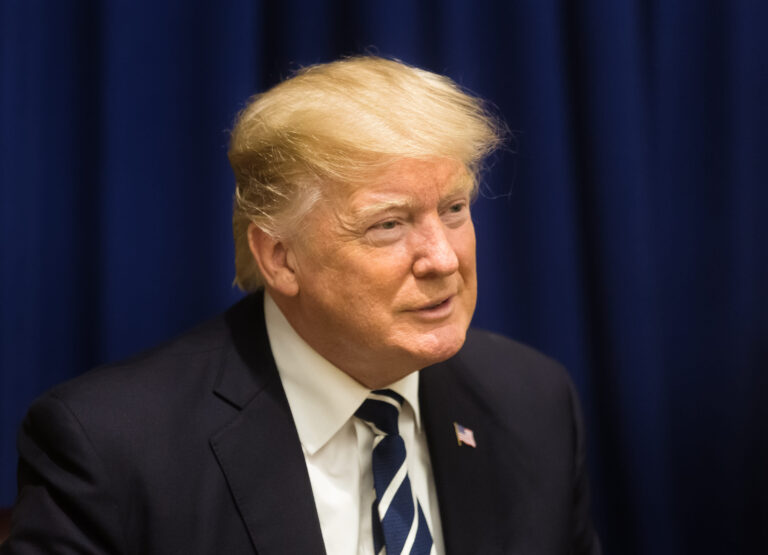
Gage Skidmore from Peoria, AZ, United States of America, CC BY-SA 2.0, via Wikimedia Commons
The opening stage of a military campaign usually follows prepared target lists, intelligence assessments and carefully written statements. The next stage is often less predictable. It begins when bombing causes destruction but not surrender, negotiations produce meetings but not agreements, and every attack creates pressure for a larger response.
Trump’s frustration matters because Iran has transformed the conflict into a test of endurance. Washington can strike harder, but Tehran can rebuild damaged facilities, retaliate through regional partners and keep commercial shipping under threat. Continued attacks may fail to produce a settlement, while stopping them could be portrayed as retreat.
That is the trap now forming around the White House.
A war without a clear finish line
The Trump administration has described several objectives, including preventing Iran from obtaining a nuclear weapon, weakening its missile forces, protecting American personnel and restoring shipping through strategic waterways. Together, those goals create a conflict without one clear definition of victory.
That confusion has reached the American public. A Reuters/Ipsos poll found that only about one-third of Americans support the war. It also found that 69% believe Trump has not clearly explained the purpose of U.S. military involvement. Trump initially suggested the campaign could last four or five weeks, but it has continued for roughly five months.
The difficult question is no longer whether the United States can damage Iran. It clearly can. The question is what Iran must do for Washington to declare victory, stop attacking and begin withdrawing from the conflict.
Without that answer, every military achievement risks becoming another temporary headline.
Frustration can turn strategy into spectacle
The central danger is that the war becomes personal.
Once Iran’s refusal to bend is viewed as a humiliation for Trump, military decisions could shift from achieving defined national-security goals to producing a visible demonstration of dominance. A larger strike might create dramatic footage and triumphant headlines. It could also provoke attacks against American troops, Gulf energy facilities or civilian vessels.
Each Iranian response would then generate demands for another U.S. retaliation. Washington would strike to restore deterrence. Tehran would respond to prove it could not be intimidated. Both governments would describe their actions as necessary and defensive, even as the conflict expanded.
This is how limited wars grow. They rarely announce their transformation with one obvious decision. They expand through a chain of supposedly controlled responses.
The Strait of Hormuz is Iran’s strongest pressure point

Iran does not need to defeat the United States in a traditional battlefield contest. It only needs to make the war expensive enough that Washington’s political coalition begins to fracture.
The Strait of Hormuz gives Tehran enormous leverage. Roughly one-fifth of global energy supplies normally travel through the waterway, but shipping remains severely restricted. Reuters reported that only six commodity-carrying vessels passed through on Monday, despite growing optimism surrounding negotiations.
Oil prices fell to their lowest level in more than a week as hopes for diplomacy increased. That market reaction tells its own story. Prices drop when investors believe the conflict may cool, then face renewed pressure whenever military threats return.
Another bombing campaign could therefore reach American households without a missile ever landing on U.S. soil. Higher fuel, transportation and manufacturing costs would carry the war into grocery stores, airports and family budgets.
Washington is already showing signs of strain
Congress has delivered its own warning. On July 23, the Republican-controlled House voted 214-208 to direct Trump to seek congressional approval before continuing hostilities. Four Republicans joined Democrats, although a similar Senate measure failed.
The resolution may not immediately stop military operations, but it reveals that opposition is no longer limited to antiwar activists or Trump’s traditional political opponents. An undefined mission, American casualties and rising economic pressure are becoming harder for lawmakers to defend.
Military resources present another challenge. The Wall Street Journal reported growing anxiety about U.S. missile inventories, noting that some advanced weapons can take three to five years to replace. A prolonged Iran campaign could reduce America’s ability to respond to a separate crisis elsewhere.
Diplomacy matters more than another dramatic strike

There are signs of an opening. U.S. attacks have paused, Oman has proposed a regional mechanism for managing the Strait of Hormuz, and Trump has spoken positively about negotiations. However, he has also warned that military action could resume if the talks fail.
That makes the current moment unusually fragile. Diplomacy cannot succeed if it is treated as a short intermission before the next bombing campaign. Negotiators need a workable framework covering commercial shipping, nuclear restrictions, military restraint and methods for verifying compliance.
Trump’s anger is therefore more than a personality detail. It is a warning that the president may be running out of patience before the conflict has produced a credible exit.
The United States still possesses overwhelming military power. What it lacks is a clear answer to the question that determines whether a war ends or expands: What outcome is enough?
Until that answer exists, every frustrated meeting inside the White House should be treated as more than political drama. It may be the sound of a limited war searching for its next, far more dangerous stage.