Trump’s Tariff Defense in Michigan Sparks New Fight Over America’s Auto Future: Jobs, Prices and the High Stakes Behind ‘America First’
President Donald Trump chose one of America’s most recognizable manufacturing symbols to defend his economic agenda: the Michigan auto industry.
Standing inside General Motors’ historic Milford Proving Ground, where generations of vehicles have been tested before reaching American roads, Trump argued that his tariff strategy is reshaping the future of domestic manufacturing. The visit featured high-performance vehicles, including the Corvette Z06 and Cadillac Escalade V, racing in an “America First” showcase designed to highlight American engineering and production power.
But behind the sound of engines and political applause is a complicated economic debate. Michigan’s auto sector sits at the center of a trade battle involving more than $500 billion in annual U.S.-Canada goods exchange, nearly 150 miles of GM testing roads, and hundreds of thousands of manufacturing jobs.
Trump’s supporters say tariffs are forcing companies to invest in American factories. Critics argue that higher import costs could increase expenses for automakers, suppliers and consumers. The outcome could influence not only Michigan’s economy but also the national debate over whether protectionist trade policies can rebuild America’s industrial base.
Trump Uses Michigan’s Auto Industry as Proof His Tariffs Are Working

Trump’s visit to GM’s Milford facility was carefully chosen. The location represents decades of American automotive innovation, employing approximately 4,200 workers and covering thousands of acres of vehicle testing infrastructure.
The president used the setting to argue that his administration’s tariffs have encouraged automakers to move more production into the United States. He pointed to new investments by companies like GM, saying the policy has pressured manufacturers to prioritize American factories over overseas production.
“America First” has become the central theme of Trump’s trade approach. The strategy focuses on using tariffs to make imported goods more expensive while encouraging companies to build factories, source materials and create jobs inside the United States.
The challenge, however, is measuring how much of the investment comes directly from tariffs versus other factors. Automakers also make decisions based on consumer demand, technology changes, government incentives, labor costs and long-term business strategies.
GM’s $4 Billion Investment Becomes a Symbol of Trump’s Argument.
General Motors has provided Trump with one of his strongest examples of domestic manufacturing expansion. The company announced a multibillion-dollar investment plan focused on increasing vehicle production inside the United States.
The investment represents a significant shift at a time when automakers are balancing traditional gasoline-powered vehicles, electric vehicles and changing global supply chains.
GM’s strategy includes expanding production capacity, upgrading factories and adjusting sourcing decisions. Supporters of Trump’s tariff policy argue that these moves show companies are responding to pressure to manufacture more products domestically.
However, the relationship between tariffs and investment is not simple. A company may build a U.S. factory because tariffs make imports more expensive, but it may also face higher costs if the parts needed for that factory come from overseas.
A modern vehicle can contain tens of thousands of individual components, and many supply chains stretch across multiple countries before a car reaches a dealership.
The Auto Industry’s Biggest Question: More Cars or More Jobs?
One of the most important debates surrounding Trump’s tariff strategy involves employment.
Michigan remains America’s automotive capital, but the industry has changed dramatically over the past several decades. Automation, robotics and efficiency improvements allow companies to produce more vehicles with fewer workers.
That creates a difficult economic reality: increased production does not always guarantee increased employment.
Michigan’s factories have continued producing vehicles at high levels, but employment numbers have faced pressure. The state’s auto sector must prove that new investments translate into long-term career opportunities rather than simply more efficient production.
For workers, the key question is not only how many vehicles leave the factory floor. It is whether those vehicles create stable wages, stronger communities and opportunities for future generations.
Tariffs Could Protect American Factories While Raising Costs
The strongest argument for tariffs is straightforward: if imported products become more expensive, companies may choose to manufacture more goods inside the United States.
This approach has historical roots. For decades, policymakers have used trade barriers to protect domestic industries from foreign competition.
However, tariffs can also create unintended consequences. Automakers depend heavily on global supply chains, meaning imported steel, aluminum, batteries, electronics, and mechanical components can become more expensive.
A tariff placed on one country may affect businesses thousands of miles away. A Michigan supplier using imported materials may face higher costs even if the final product is assembled entirely in America.
The result is a complicated economic equation:
- More domestic investment
- Higher production costs
- Potentially stronger American factories
- Possible increases in consumer prices
The final impact depends on which effect becomes stronger over time.
Canada Trade Tensions Put Michigan in the Middle
Michigan’s relationship with Canada makes the tariff debate especially important.
Detroit and Windsor operate as one of the world’s most connected automotive regions. Vehicles and parts often cross the border multiple times before reaching customers.
The opening of the Gordie Howe International Bridge highlighted that connection. The approximately $4.7 billion infrastructure project was designed to improve trade flow between the United States and Canada.
But the bridge opened during a period of growing trade tensions.
Trump’s administration has targeted Canadian imports with additional tariffs, while Canada has responded with its own measures. For Michigan companies, the dispute creates uncertainty because many businesses depend on predictable cross-border commerce.
The auto industry was built around cooperation between American and Canadian manufacturers. Any disruption can affect suppliers, factories and consumers on both sides of the border.
Consumers Could Decide Whether Trump’s Economic Message Succeeds
Political debates about tariffs often focus on factories and corporations, but consumers experience the effects through everyday prices.
The average American buying a vehicle is concerned about monthly payments, insurance costs, fuel expenses and repair bills.
If tariffs successfully create more domestic production without significantly increasing prices, Trump’s argument becomes stronger. Supporters could point to new factories, new jobs and stronger American manufacturing.
But if tariffs contribute to higher vehicle prices, reduced discounts or more expensive repairs, voters may become less supportive.
The political reality is simple: economic policies are ultimately judged at the kitchen table.
A factory announcement may create headlines, but a higher monthly car payment creates frustration.
Michigan’s Auto Industry Has Billions at Stake
The stakes extend far beyond one presidential visit.
Michigan’s automotive sector supports a massive network of manufacturers, suppliers, engineers, transportation companies and service businesses.
Companies including GM, Ford and Stellantis have announced billions of dollars in U.S. investments, showing continued confidence in American manufacturing.
Ford’s battery investments in Michigan demonstrate how the industry is changing. The future of auto jobs may involve not only traditional assembly lines but also batteries, software, artificial intelligence, and advanced manufacturing.
The next decade could determine whether Michigan remains the center of American automotive innovation or loses ground to competing regions.
Trump’s Michigan Visit Was About More Than Cars
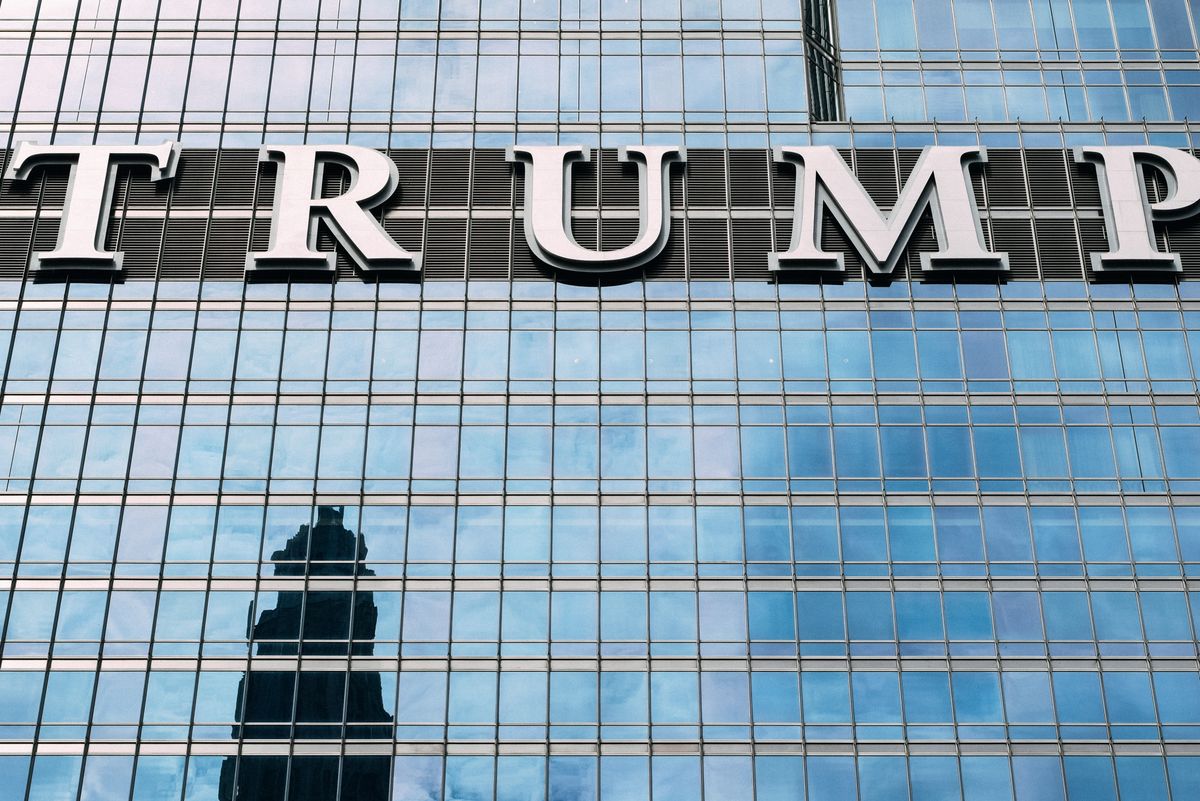
The timing of Trump’s visit also carried political significance.
Michigan remains one of the nation’s most important battleground states. Trump won the state in 2024 after losing it in 2020, making it a critical part of Republican efforts to maintain support among working-class voters.
The president connected his economic message with Republican candidates ahead of Michigan’s primary elections, using the auto industry as a symbol of his broader campaign promise to rebuild American manufacturing.
Democrats have argued that tariffs risk increasing costs and damaging relationships with trading partners.
Republicans counter that decades of globalization weakened American factories and that stronger trade barriers are necessary to rebuild domestic production.
The debate is not only about economics. It is about competing visions for America’s industrial future.
The Real Test of Trump’s Tariff Strategy Is Still Ahead
Trump’s Michigan appearance delivered the images his supporters wanted: American cars, American workers and a message of industrial revival.
But the true measure of success will not come from a single factory visit or a powerful speech.
It will come from whether workers see better opportunities, whether companies continue investing, whether suppliers survive and whether consumers can still afford the products being made.
The American auto industry has entered a new era where trade policy, technology and manufacturing are increasingly connected.
The engines at GM’s Milford facility can reach incredible speeds in seconds. The economic transformation Trump is promising will take years to prove.
For Michigan and the rest of America, the race has only begun.