UFC Champ Under Fire After Claiming Michelle Obama’s ‘Man’ Comment Was a Compliment
A post fight interview at UFC Freedom 250 has turned into a national controversy after heavyweight fighter Josh Hokit attempted to explain why he made a widely condemned remark about former first lady Michelle Obama during one of the most politically charged sporting events in recent memory.
Hokit, who had just scored a major win over Derrick Lewis at the White House event, used his time on the microphone to praise President Donald Trump, speak about faith, call out another fighter, and then make a false and offensive claim about Michelle Obama. The comment quickly moved beyond the fight itself and became a broader debate about free speech, public decency, political spectacle, and how far athletes should go when handed a live microphone on a national stage. The controversy did not fade after the event. It grew louder when Hokit appeared on The Ariel Helwani Show and claimed he believed he was “giving her a compliment.” That explanation raised even more criticism because many viewers saw it as an attempt to reframe an insult after the backlash had already arrived.
Josh Hokit’s Michelle Obama Comment Sparked Immediate Backlash
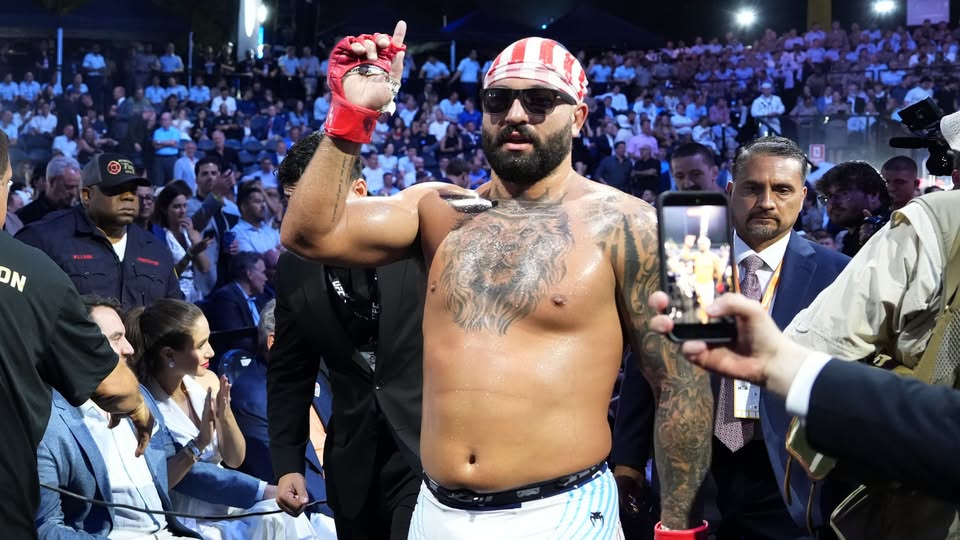
The moment happened after Hokit defeated Derrick Lewis in a heavyweight bout at UFC Freedom 250, a high profile event held on the South Lawn of the White House. With UFC commentator Joe Rogan holding the microphone, Hokit delivered a loud, theatrical post fight speech that quickly veered from celebration into political provocation.
Instead of keeping the focus on the fight, the win, or his next opponent, Hokit ended his remarks by targeting Michelle Obama. The line was brief, but the reaction was immediate. Clips circulated online, commentators criticized the remark, and the moment became one of the most talked-about parts of the event. We have seen athletes use post fight interviews to call out rivals, thank their teams, promote causes, or build their personal brands. Hokit did something different. He used the moment to make a claim about a former first lady that has long circulated in fringe political spaces and has repeatedly been condemned as false, personal, and degrading.
Hokit Later Claimed He Thought the Comment Was a Compliment
The controversy deepened when Hokit tried to explain himself in an interview with Ariel Helwani. Rather than offering a direct apology, he said he thought the remark was complimentary. According to reports, Hokit argued that calling Michelle Obama a man was, in his view, connected to strength, adversity, and toughness.
That explanation did not land the way he appeared to intend. Helwani pushed back during the interview, telling Hokit that he did not believe anyone viewed the statement as a compliment. That exchange became a second wave of the story because it showed Hokit was not simply being criticized for a spontaneous post-fight outburst. He was also being criticized for how he defended it afterward. For many viewers, the explanation sounded less like clarification and more like a doubling down. Hokit framed the comment as part of his right to speak freely, but critics argued that free speech does not erase public accountability. In other words, he could say what he said, but audiences, media figures, UFC fans, and public figures could also respond to it.
Dana White Called the Remark ‘Nasty and False’
One of the most notable responses came from Dana White, the UFC’s chief executive and a longtime supporter of Donald Trump. White has often defended fighters’ right to speak, including when they say provocative or controversial things. But in this case, he distanced himself from Hokit’s remark. White reportedly described the comment as “nasty and false” and said he was against saying such things about people’s families, even when those people are public figures. That response mattered because it came from someone who usually gives fighters wide room to express themselves.
The UFC has built much of its modern brand around personality, confrontation, trash talk, and emotional intensity. Fighters are encouraged to sell fights. They are encouraged to create moments. They are encouraged to stand out. But White’s response suggested that even in a sport where verbal warfare is part of the business, there is still a line between promotion and personal attacks.
Why the White House Setting Made the Controversy Bigger
The event’s location made the moment even more explosive. UFC Freedom 250 was not held inside a typical arena. It was staged at the White House, giving the fight card a symbolic weight that ordinary UFC events do not carry. A post-fight comment made in a Las Vegas arena may still go viral, but a comment made at the White House carries a different kind of meaning. The setting connected the UFC spectacle to national politics, presidential branding, and America’s culture wars. Hokit’s remark was not simply heard as fighter trash talk. It was interpreted as a political statement delivered from one of the most recognizable government settings in the country.
That is why the backlash moved so quickly beyond sports media. The story touched on entertainment, politics, race, gender, media responsibility, and the UFC’s relationship with political power. It became less about one heavyweight’s win and more about what kind of speech gets amplified when sports and politics are deliberately merged.
The Free Speech Defense Did Not End the Debate
Hokit defended his comment by pointing to freedom of speech, saying the moment showed how great the country is because people can make controversial statements without being killed for them. That argument became another flashpoint. We often see public figures invoke free speech after a controversial remark. But free speech is not the same as freedom from criticism. The First Amendment protects people from government punishment for speech in many circumstances. It does not require the public to accept the statement, praise it, ignore it, or treat it as harmless.
That distinction is central to the Hokit controversy. His supporters may argue that he had the right to say what he said. His critics can respond that the statement was offensive, false, and unworthy of the stage he was given. Both things can be true at the same time. A person can have the right to speak, and others can have the right to judge the speech harshly.
Michelle Obama Has Long Been Targeted by False Personal Attacks
Michelle Obama has spent years as a target of political attacks, conspiracy theories, and personal insults. As the first Black first lady of the United States, she became one of the most visible women in American public life. That visibility brought praise, influence, bestselling books, major public platforms, and global admiration. It also brought years of ugly commentary from political opponents and online communities.
Hokit’s comment landed inside that larger history. It was not heard in isolation because it echoed a false claim that has been used for years to demean Michelle Obama’s appearance, femininity, and identity. That is one reason the backlash was so sharp. Critics did not see the remark as original, funny, or edgy. They saw it as another version of a familiar insult. When public figures repeat claims that have already been used to degrade someone, the intent becomes less important than the effect. Hokit may say he meant the remark as a compliment, but the public reaction shows that many people heard it very differently.
A Post-Fight Microphone Can Build a Career or Damage a Reputation
For fighters, the post-fight interview is one of the most valuable moments in combat sports. A fighter may spend months training for a bout, but one microphone moment can change the public’s memory of the entire night. A smart callout can create a title shot. A powerful speech can win fans. A reckless comment can overshadow the victory. That is exactly what happened here. Hokit defeated Derrick Lewis, a major name in heavyweight MMA, yet the win was quickly buried under the controversy. Instead of the sports conversation focusing only on his performance, power, ranking, or future opponents, the headline became his Michelle Obama remark.
That is the risk of turning a victory speech into a political performance. It may generate attention, but attention is not always useful. Viral fame can harden a fan base, but it can also narrow a fighter’s public image. Hokit may have wanted to project confidence and rebelliousness. Instead, he now faces a news cycle defined by criticism, explanations, and questions about judgment.
UFC’s Brand Faces Another Culture War Test
The UFC has never been a quiet sports organization. It thrives on intensity, individualism, conflict, and raw personality. That edge has helped it grow into a global combat sports powerhouse. But the Hokit incident shows how quickly that edge can become a liability when political insults and personal attacks enter the broadcast. The organization now faces a familiar challenge: how to support fighter expression without allowing its platform to become a vehicle for demeaning public figures in ways that overshadow the sport. UFC fans are not a single political group. They include conservatives, liberals, independents, international viewers, casual fans, and hardcore fight analysts. Many tune in for competition, not political shock lines.
The more the UFC becomes tied to political spectacle, the more moments like this will be judged outside the normal boundaries of fight promotion. A heel persona may work inside the cage. It becomes more complicated when the target is not an opponent, a coach, or a rival fighter, but a former first lady.
The ‘Compliment’ Explanation Became Its Own Controversy
Hokit’s claim that he intended the remark as a compliment did not calm the situation because it asked the public to accept a meaning that many people found implausible. Compliments usually affirm. They do not rely on old conspiracy claims. They do not require the target to reinterpret an insult as praise. That is why the follow-up interview may have extended the story rather than closing it. A clear apology might have shifted the conversation. A refusal to discuss it might have shortened the cycle. But a defense built around the idea of “complement” gave critics a new reason to challenge him.
In modern media, the second statement often matters as much as the first. The original remark creates the controversy. The explanation reveals whether the person understands why people were upset. In Hokit’s case, many critics concluded that his explanation showed little awareness of why the comment was considered offensive.
What Happens Next for Josh Hokit and the UFC
The immediate question is whether the UFC will take any formal action. Based on available reporting, White condemned the statement but did not announce a major public punishment. That leaves the story in a familiar place: public criticism, organizational distancing, but no clear disciplinary endpoint. For Hokit, the controversy may follow him into future fights. He may gain support from fans who enjoy provocation and political defiance. He may also face louder boos, sharper media questioning, and a reputation that now extends beyond his fighting ability. In combat sports, a controversial identity can sell tickets, but it can also trap a fighter inside a narrow public role.
For the UFC, the incident is another reminder that live microphones are unpredictable. The organization can promote spectacle, but it cannot always control what spectacle becomes. At the White House, with national attention already high, one post fight line became bigger than the bout itself.
A Victory Overshadowed by a Remark That Would Not Go Away
Josh Hokit entered the night as a fighter looking to capitalize on a major win. He left it as the center of a national backlash. His statement about Michelle Obama, his later claim that it was meant as a compliment, and Dana White’s criticism of the remark have kept the story alive well beyond fight night. We can understand this controversy as more than a single offensive line. It is a window into the modern intersection of sports, politics, celebrity, and outrage. A fighter won a bout, took a microphone, and turned a professional milestone into a culture war headline.
That is the lasting lesson from the Hokit controversy. In today’s media environment, the fight does not always end when the referee steps in. Sometimes the bigger fight begins when the microphone turns on.