Washington, D.C. on Edge as Progressive Candidate Janeese Lewis George Nears Mayoral Victory Amid Trump Standoff
Washington, D.C., is heading toward a major political turning point as council member Janeese Lewis George, a Democratic Socialist, moves closer to becoming the city’s next mayor. Her rise comes at a moment of renewed tension with former President Donald Trump, who has repeatedly signaled interest in expanding federal control over the District if she wins.
For many residents, this is not just another election cycle. It is shaping up to be a defining moment in how much independence the capital will retain in the face of federal pressure.
Lewis George is now on track to win the mayoral race after securing a strong lead in the Democratic primary, according to election results and local reports. Her opponent, Kenyan McDuffie, conceded following the vote, effectively clearing her path toward the mayor’s office in a city where Democrats overwhelmingly dominate elections.
What Happened In The Primary Race
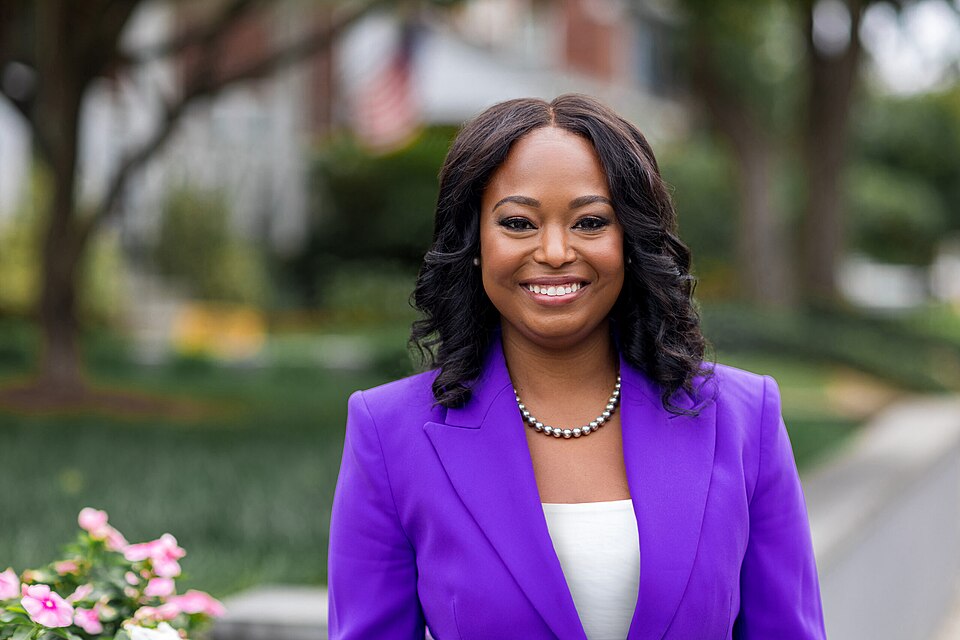
Lewis George, a former prosecutor and current DC council member, built a broad coalition during the campaign that included labor groups and progressive organizations. Her platform centered on reducing federal interference in local governance and drawing a firm line against cooperation between city police and federal immigration enforcement.
According to election reporting, she took a commanding lead on Tuesday night in the Democratic primary, a contest widely seen as the deciding race for the city’s leadership. DC has no strong Republican challenger for the mayor’s office, meaning the Democratic nominee is almost always favored to win the general election.
Kenyan McDuffie, a former council member who positioned himself as a more moderate candidate, conceded after the results became clear. He had received support from parts of the city’s business community and aligned more closely with current Mayor Muriel Bowser’s approach of balancing cooperation and criticism toward federal leadership.
With McDuffie’s concession, Lewis George is widely expected to become the next mayor once the general election concludes in November.
Why Residents And National Observers Are Paying Attention
The mayoral race is not happening in isolation. It is unfolding alongside escalating political tension between Washington’s local leadership and national power structures.
Former President Donald Trump has publicly suggested that he could “take back Washington and run it on a federal basis” if Lewis George were to become mayor, according to statements reported during the campaign cycle. Those remarks have intensified concerns among residents who already live in a city where Congress holds unusual authority over local governance.
Washington, DC is not a state. It operates under a limited self-governance system known as “home rule,” which allows residents to elect a mayor and city council while Congress retains ultimate authority over the district’s laws and budget.
That structure means local elections often carry national implications. For residents, it raises a recurring question: how much control should DC actually have over its own affairs?
Lewis George’s campaign leaned directly into that debate, promising to resist federal overreach and defend local authority. She has also pledged to limit cooperation between city police and US Immigration and Customs Enforcement, a position that has drawn strong support from progressive groups but criticism from moderates and business leaders.
Background On A Deeply Political City
Washington, DC has long been a unique political environment in the United States. With a population of more than 700,000 people, it is larger than many states, yet it does not have full voting representation in Congress.
The push for DC statehood has been a recurring issue for decades, supported by many local leaders, including both Lewis George and McDuffie. Advocates argue that residents pay federal taxes and serve in national elections but still lack full congressional representation.
Over the past several years, tensions between the White House and DC leadership have intensified. During Trump’s time in office and beyond, federal authorities have periodically increased their presence in the city, including deploying federal law enforcement and National Guard units during periods of heightened political or security concerns.
Lewis George has been outspoken about those actions, arguing that they undermine local democracy. In campaign remarks, she said residents of Washington elect their mayor and deserve leadership that “stands up to federal pressure” rather than yielding to it.
Her opponent, McDuffie, argued for a more cooperative approach, emphasizing economic stability and working relationships with federal agencies that operate within the city.
What Happens Next In The Election Process
Although Lewis George has emerged as the clear Democratic nominee, she still must formally win the general election in November. However, in a city where Democrats dominate voter registration, that step is largely considered procedural.
Between now and the inauguration, transition planning will begin behind the scenes. That includes assembling a new administration, preparing policy priorities, and coordinating with current city agencies.
Federal leaders, including former President Trump, are also expected to continue weighing in on the race, particularly given the ongoing debate over the city’s autonomy and law enforcement policies.
Any shift in leadership at DC’s mayor’s office is closely watched not just locally, but nationally, because the city sits at the center of federal operations, protests, and political symbolism.
Why This Moment Matters Beyond Washington
The outcome of this race is not just about who runs city hall. It reflects a broader national conversation about power, governance, and the balance between local independence and federal authority.
For residents, the stakes are practical. They include public safety policies, policing strategies, housing costs, and the city’s interactions with federal agencies operating within its borders.
For the rest of the country, Washington’s mayoral race serves as a barometer for how American cities navigate political pressure from Washington itself.
As Janeese Lewis George moves closer to taking office, the question is no longer just who will lead the city, but how far that leadership will be allowed to shape the city’s future.