What Really Happens to Unsold Meat and Seafood at Costco?
Ever wondered what happens to all those giant packs of steaks, chicken, and fresh seafood that nobody buys at Costco? They certainly can’t sit in the refrigerated cases forever. But the good news is that unsold food doesn’t always end up in the trash.
Costco has several ways to reduce food waste, including donations, turning certain ingredients into prepared meals, and recycling materials that can’t be sold. In fiscal 2025 alone, the warehouse giant reported donating 223 million pounds of food. Still, what happens to a particular package depends on its condition and whether it can be safely used.
Some Unsold Meat Goes to Food Banks

Here’s something worth knowing: Costco has a history of donating meat to organizations that help families facing food insecurity.
In June 2017, the Maryland Food Bank announced that five Costco warehouses had joined its Retail Rescue program. The participating locations included Arundel Mills, Columbia, Frederick, Glen Burnie, and Owings Mills.
At the time, Costco was primarily donating frozen meats through the partnership. Instead of letting suitable products go to waste, the program helped distribute food to people who needed it.
Costco continues to support food donations on a much larger scale. During fiscal 2025, its U.S. warehouses and depots contributed more than 140.8 million pounds of food and other products to Feeding America.
However, that doesn’t mean every unsold package of meat gets donated. Products must meet appropriate handling and safety requirements before they can reach a food bank.
Some Meat Gets a Second Life in Prepared Meals
Costco shoppers already know that the deli section offers plenty of convenient dinner options. They might not realize that some ingredients in prepared foods come from the company’s efforts to reduce waste.
Costco has documented using unsold rotisserie chickens to create other deli items, including chicken noodle soup and pot pies. That means a chicken that didn’t sell in its original form may still become part of another meal.
The company’s 2025 sustainability report also notes that ground beef from U.S. meat departments is used for stuffed peppers and meatloaf.
It’s a practical way to use suitable ingredients. However, there’s no evidence that Costco routinely turns expired meat into prepared dishes or that every unsold steak becomes ground beef.
What About All That Fresh Seafood?
Now things get a little more complicated.
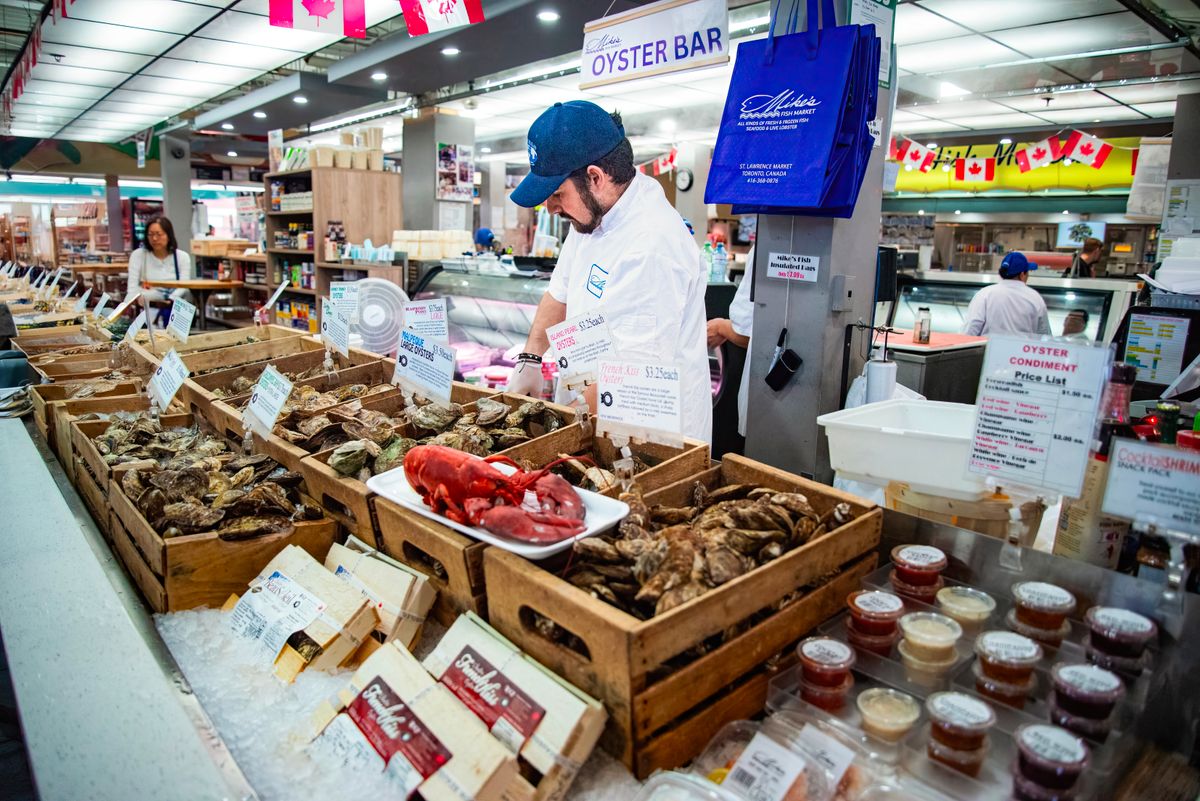
Costco sells everything from salmon and shrimp to crab and lobster. These products require careful temperature control and can’t remain on display indefinitely.
However, Costco hasn’t publicly established one nationwide procedure explaining exactly what happens to every type of unsold seafood.
Some people claiming to work at Costco have described refrigerating or freezing eligible products for donation. Others have mentioned seafood scraps being collected alongside other animal-product waste.
Those accounts offer an interesting glimpse into what might happen at individual warehouses, but they haven’t been independently verified as companywide policy.
So, despite what you might have heard, there’s no confirmed rule that all leftover salmon gets frozen, discounted, donated, or turned into another dish.
Do Costco Employees Mark Down Meat Before It Expires?
If you’re hoping to score a massive discount on steaks right before closing, there’s something you should know.
Costco shoppers have reported finding discounted meat, particularly around holidays. Online examples include reduced-price turkeys after Thanksgiving and discounted corned beef after St. Patrick’s Day.
But those occasional bargains don’t prove that Costco follows a standard markdown schedule for meat or seafood.
No verified nationwide policy requires employees to discount fresh meat a certain number of hours or days before its sell-by date.
Your local warehouse might occasionally offer a deal, but waiting until the last minute isn’t a guaranteed way to save money.
A Sell-By Date Doesn’t Always Mean Meat Has Gone Bad
Here’s where things get interesting.
Many shoppers assume that once meat reaches its sell-by date, it automatically becomes unsafe. However, the USDA explains that sell-by dates primarily help retailers manage inventory.
A product reaching that date isn’t necessarily spoiled.
That’s important because suitable meat and poultry may still qualify for donation when handled properly, even after certain quality-related dates.
Of course, this doesn’t mean retailers can ignore food-safety requirements. Proper refrigeration, packaging, labeling, and transportation remain essential.
The FDA advises that cold food intended for donation should generally be maintained at 41°F or below. Food banks must also follow applicable rules when receiving and distributing products.
What Happens When Meat Can No Longer Be Used?
Unfortunately, not everything can be saved.
Spoiled or otherwise unsuitable meat or seafood can’t simply be donated or turned into another dinner.
Costco identifies several methods for reducing waste, including recycling organic materials and using suitable waste streams to produce fertilizer, biofuels, or electricity.
The company also describes partnerships that redirect certain organic materials toward animal-feed programs.
However, its public information doesn’t establish exactly which of these methods each U.S. warehouse uses for discarded meat and seafood.
Online accounts sometimes mention animal-product waste being collected for rendering, but there’s insufficient evidence to describe that as a universal Costco practice.
The key distinction is that removing something from the sales floor doesn’t automatically mean it goes straight to a landfill.
Related:7 Items You Should Never Buy at the Grocery Store
Costco’s Food Waste Numbers Are Bigger Than You Might Think
Costco’s efforts go beyond dealing with leftover chicken or fish.
According to the company’s fiscal 2025 reporting, it diverted 82.8% of its overall waste away from landfills. That represented more than 1.7 million tons of unsold products, recyclable materials, and hazardous waste.
That’s a considerable amount of material finding destinations other than landfills.
However, the 82.8% figure applies to overall waste, not specifically food waste. Costco hasn’t publicly broken down exactly how many pounds of unsold meat and seafood were donated, repurposed, recycled, or discarded.
Its broader goal is to divert at least 80% of overall waste from landfills, a benchmark it exceeded in fiscal 2025.
Can Shoppers Help Reduce Food Waste at Costco?
Absolutely, and you don’t need access to the warehouse’s back rooms to make a difference.
Start by buying only what your household can realistically use. Costco’s bulk packages can offer good value, but that bargain disappears when half the purchase ends up forgotten in the refrigerator.
If you buy a large pack of chicken, beef, or seafood, divide it into smaller portions and freeze what you won’t use right away.
Checking storage instructions and planning a few meals before shopping can also help you avoid unnecessary waste.
Ultimately, Costco’s unsold meat and seafood don’t all share the same fate. Some suitable products can help feed families, certain ingredients find new uses in prepared foods, and other materials may enter waste-diversion programs.
The next time you walk past those enormous refrigerated displays, remember there’s much more happening behind the scenes than stocking shelves and throwing away leftovers.